Why Coloring Is One of the Best Stress Relief Tools
In a world of constant notifications, deadlines, and demands, finding genuine stress relief can feel elusive. Coloring pages offer something rare: a screen-free, accessible, and genuinely effective way to quiet your nervous system. The act of coloring engages both hemispheres of the brain — the logical side that keeps lines neat and chooses colors deliberately, and the creative side that finds pleasure in expression and beauty. This bilateral engagement is part of why coloring produces such a reliable calming effect.
Research supports what colorists have known intuitively for years: structured creative activities like coloring reduce activity in the amygdala, the brain region responsible for the stress response. As your focus narrows to the page in front of you — the texture of the paper, the pressure of your pencil, the gradual filling of a petal or wing — worries about the past and future simply have less space to occupy your mind. This is mindfulness in its most accessible form.
Why Intricate Designs Work Best for Stress Relief
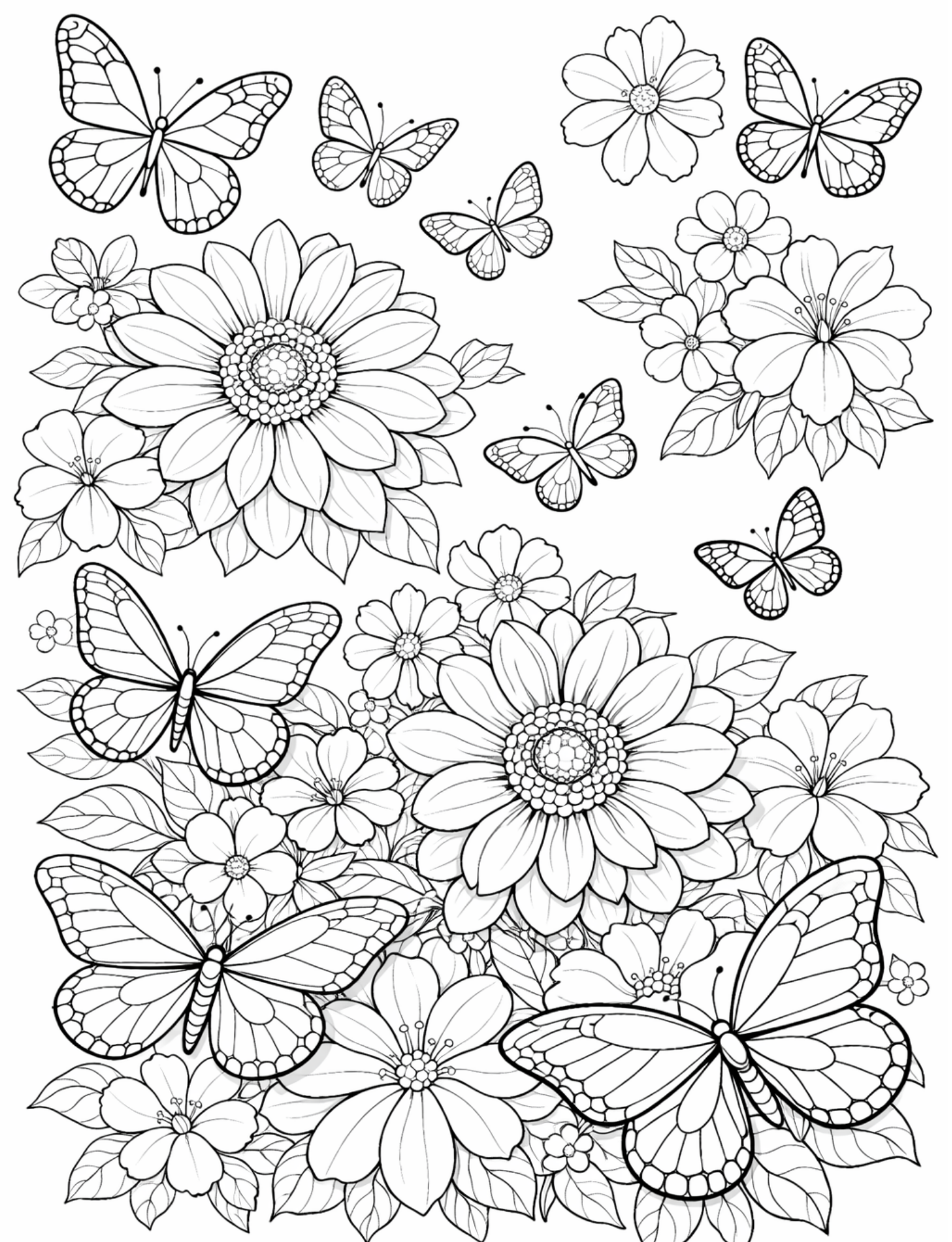
Not all coloring pages deliver the same stress relief benefits. Simple designs — large shapes with minimal detail — can feel too easy, leaving your mind free to wander back to stressors. The sweet spot for stress relief is a design that demands just enough attention to occupy your mind fully without becoming frustrating or overwhelming. The Butterfly & Beauty series hits this mark consistently.
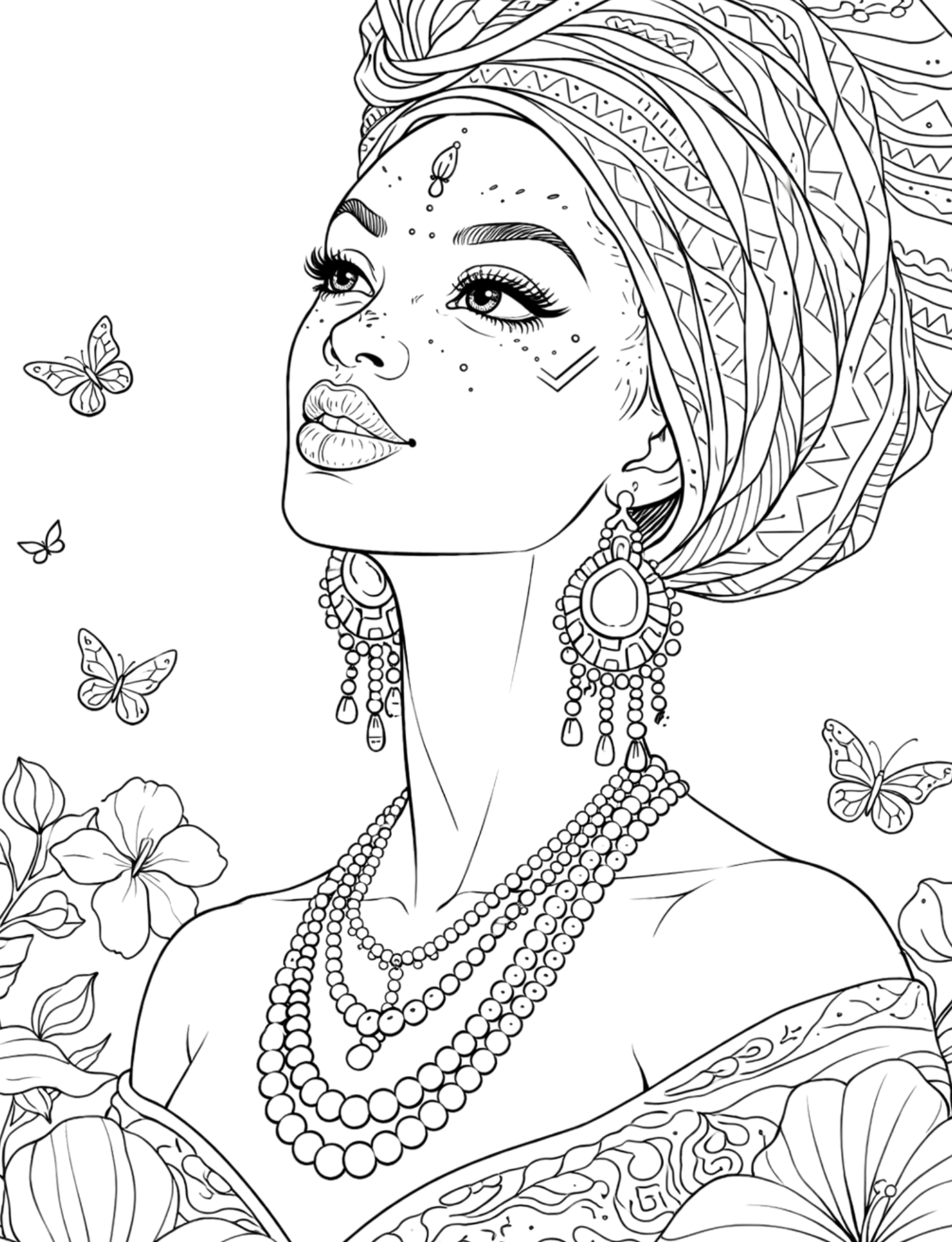
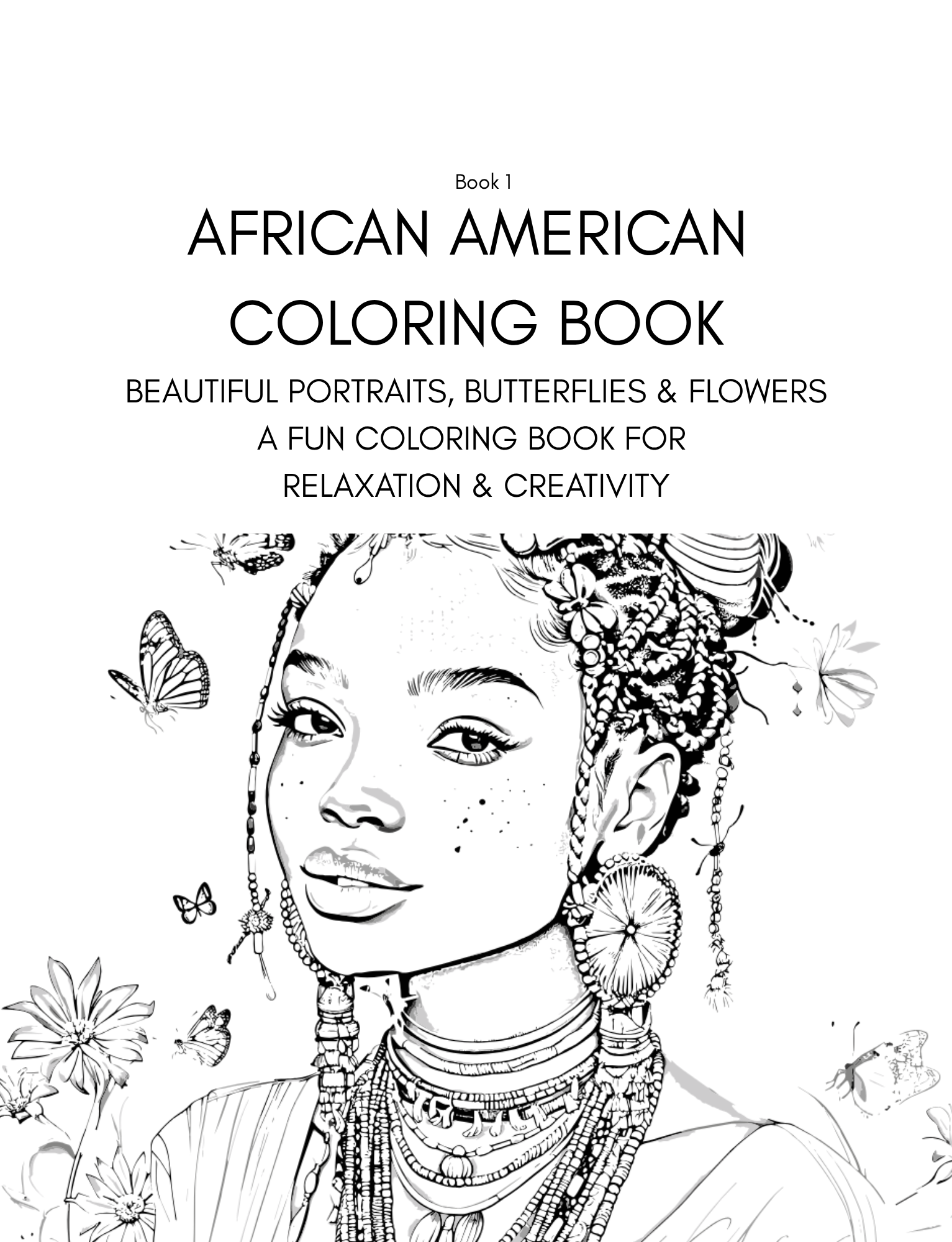
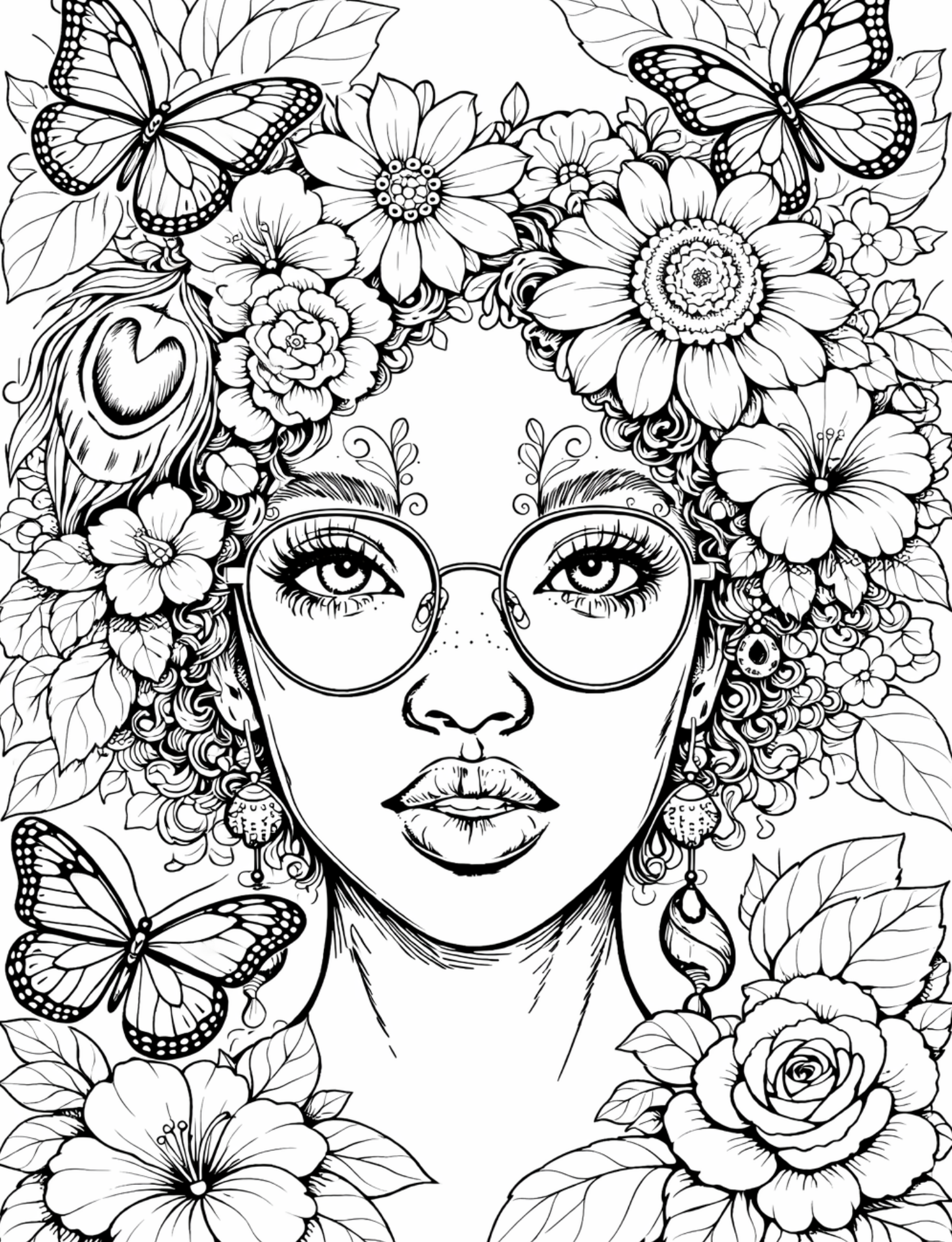
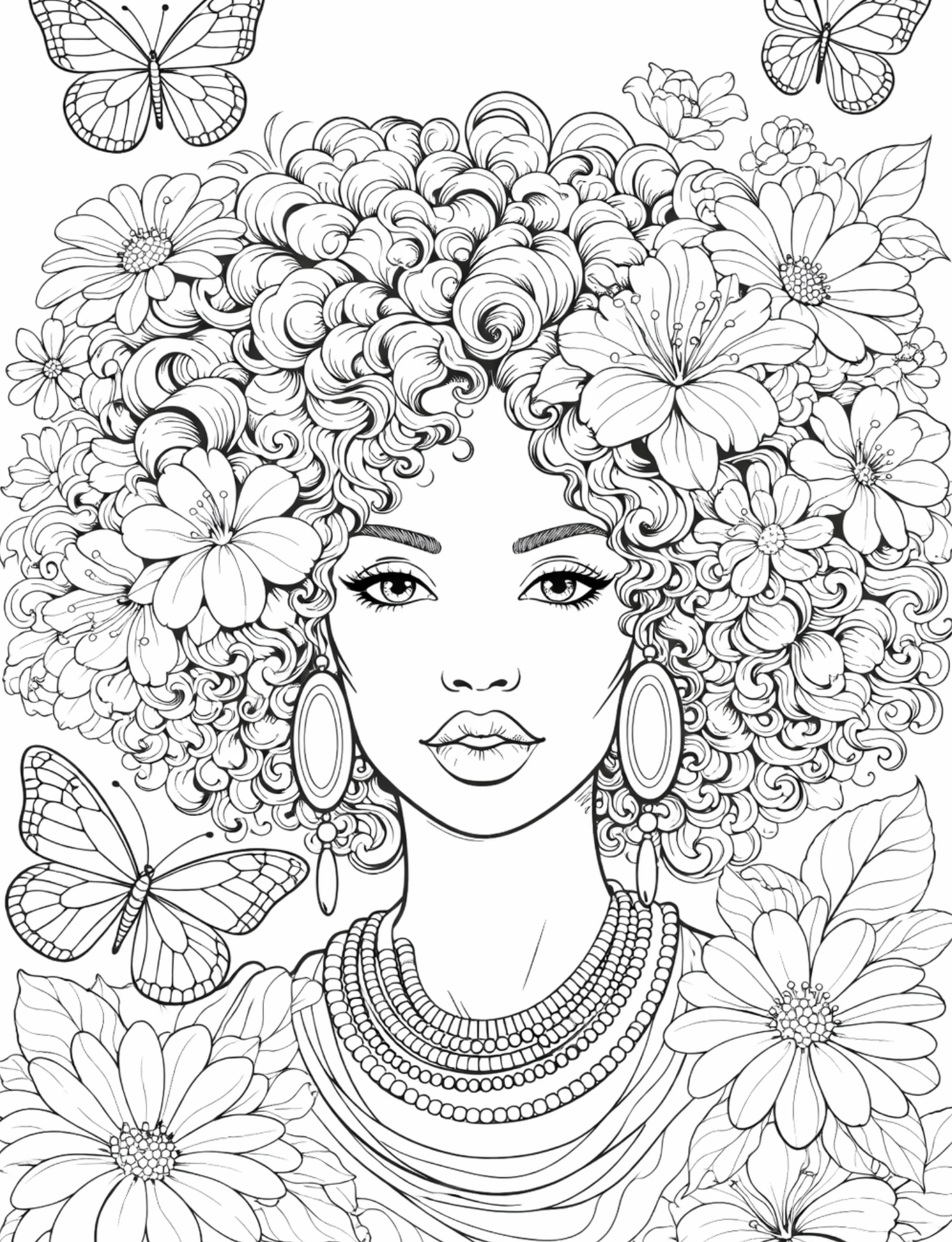
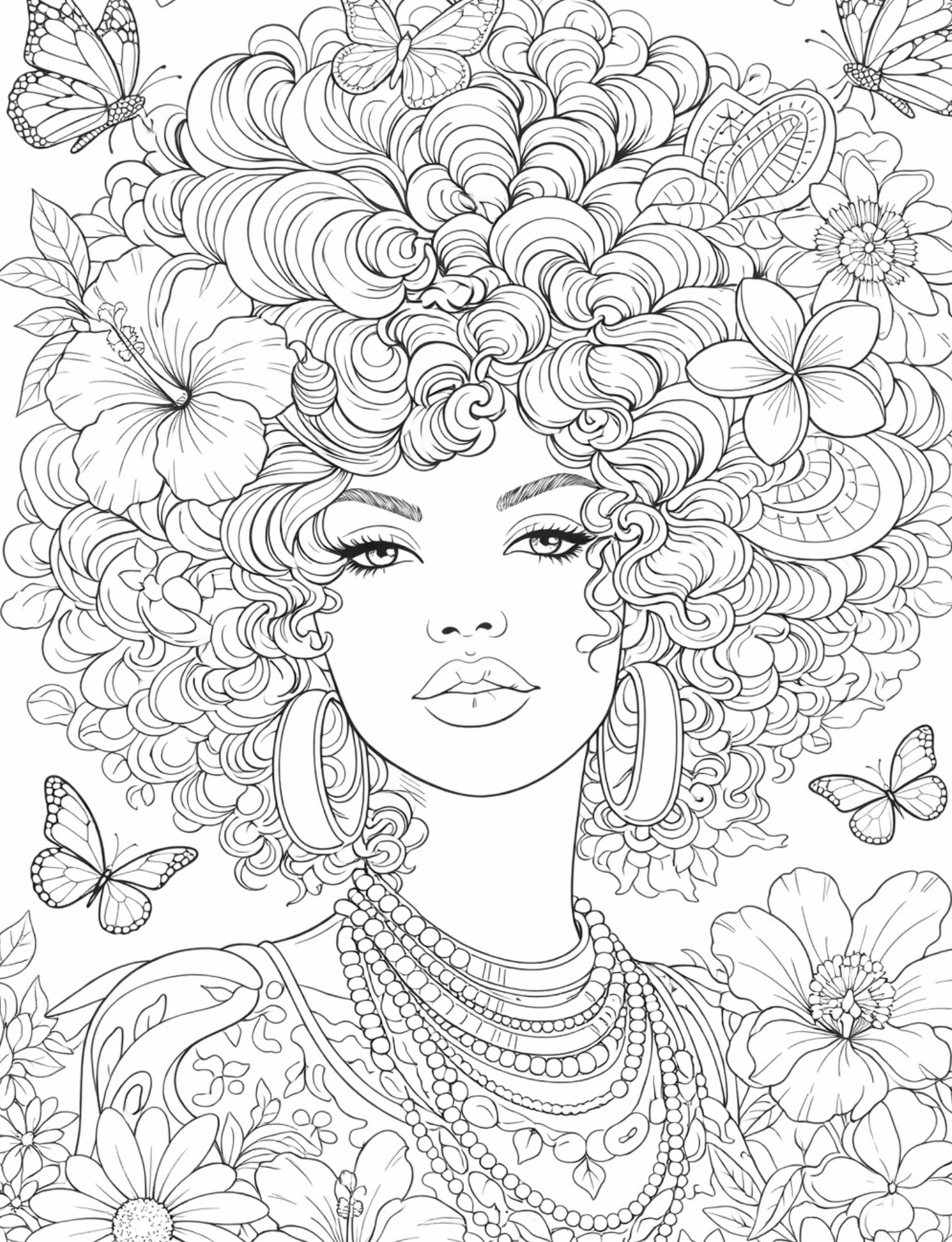
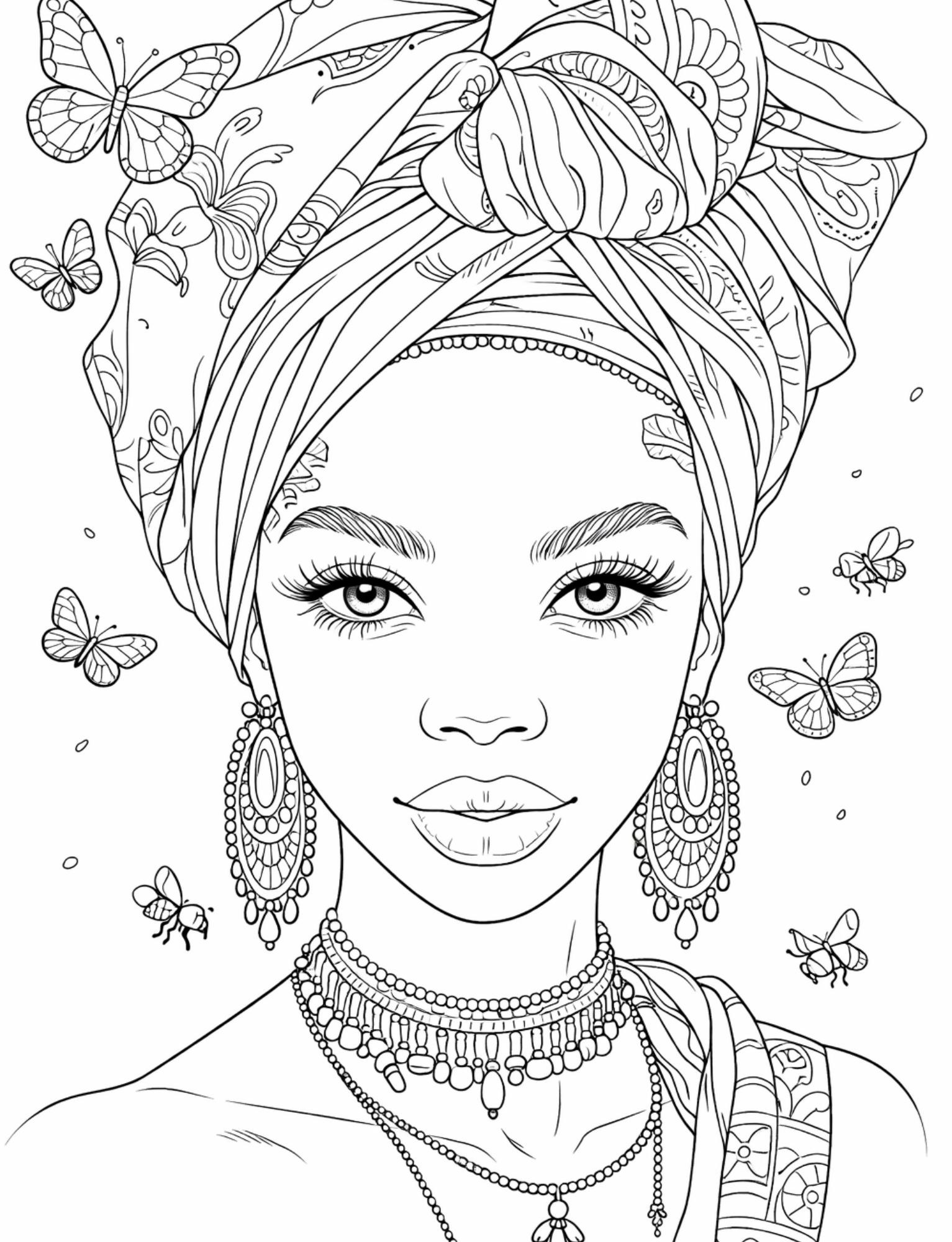
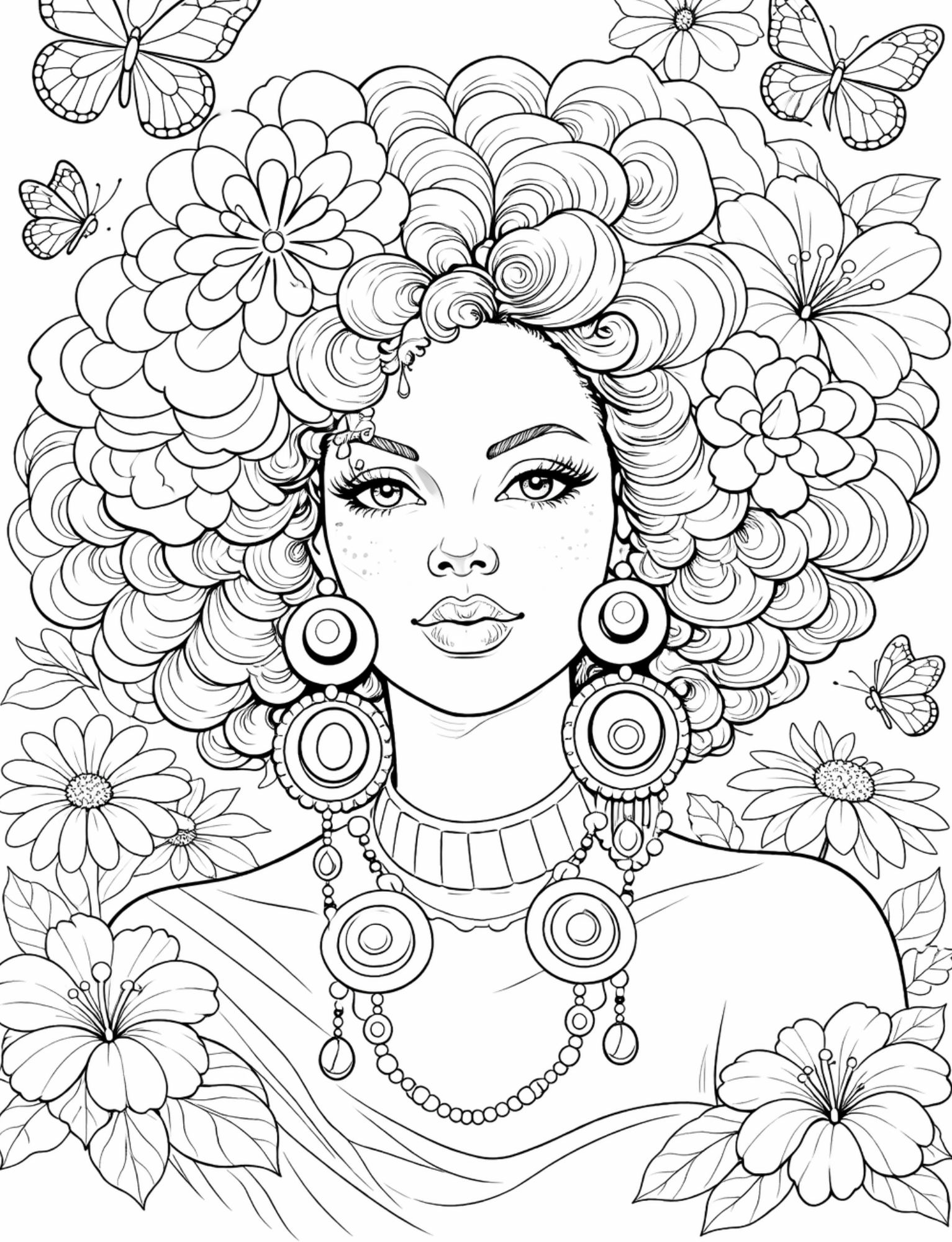
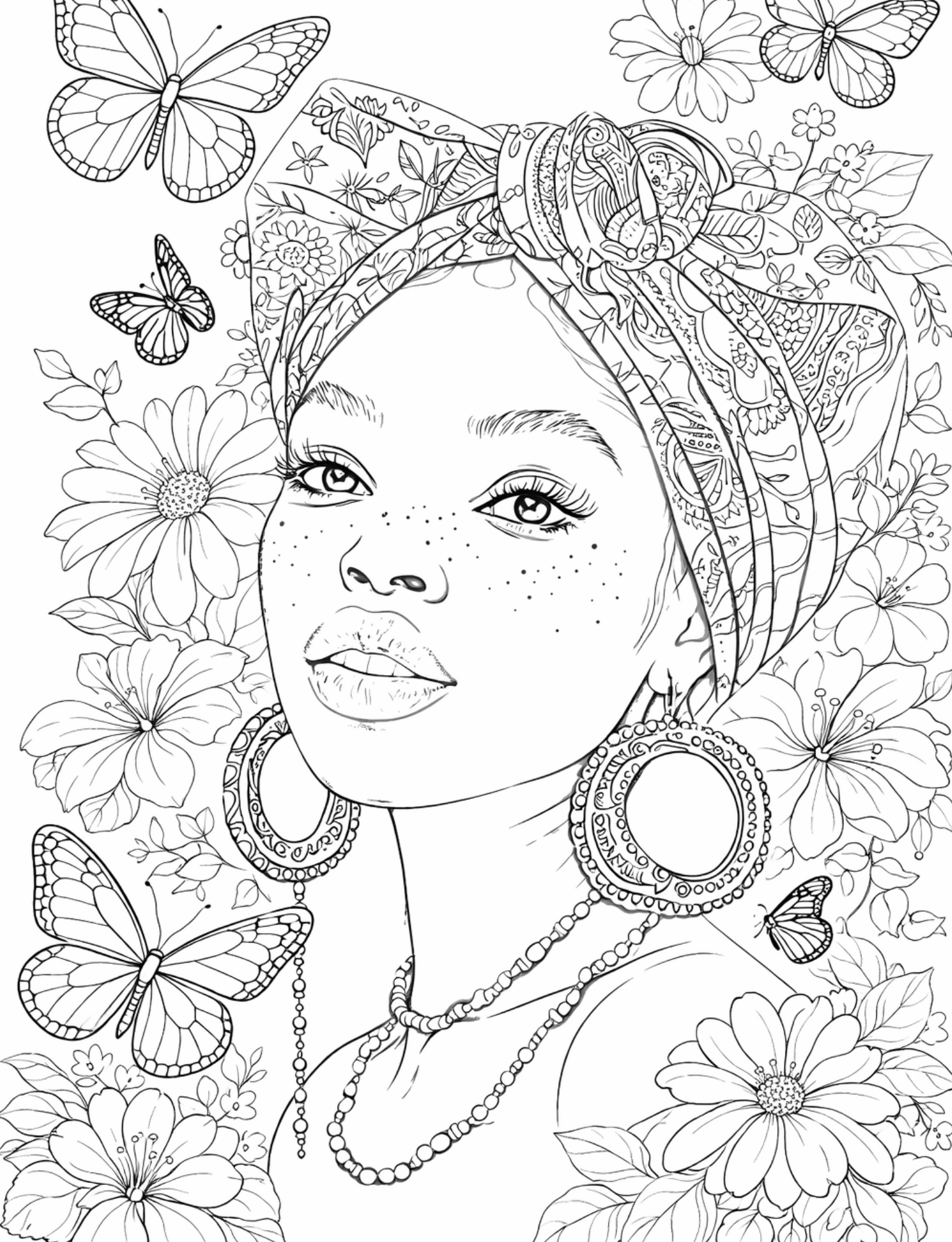
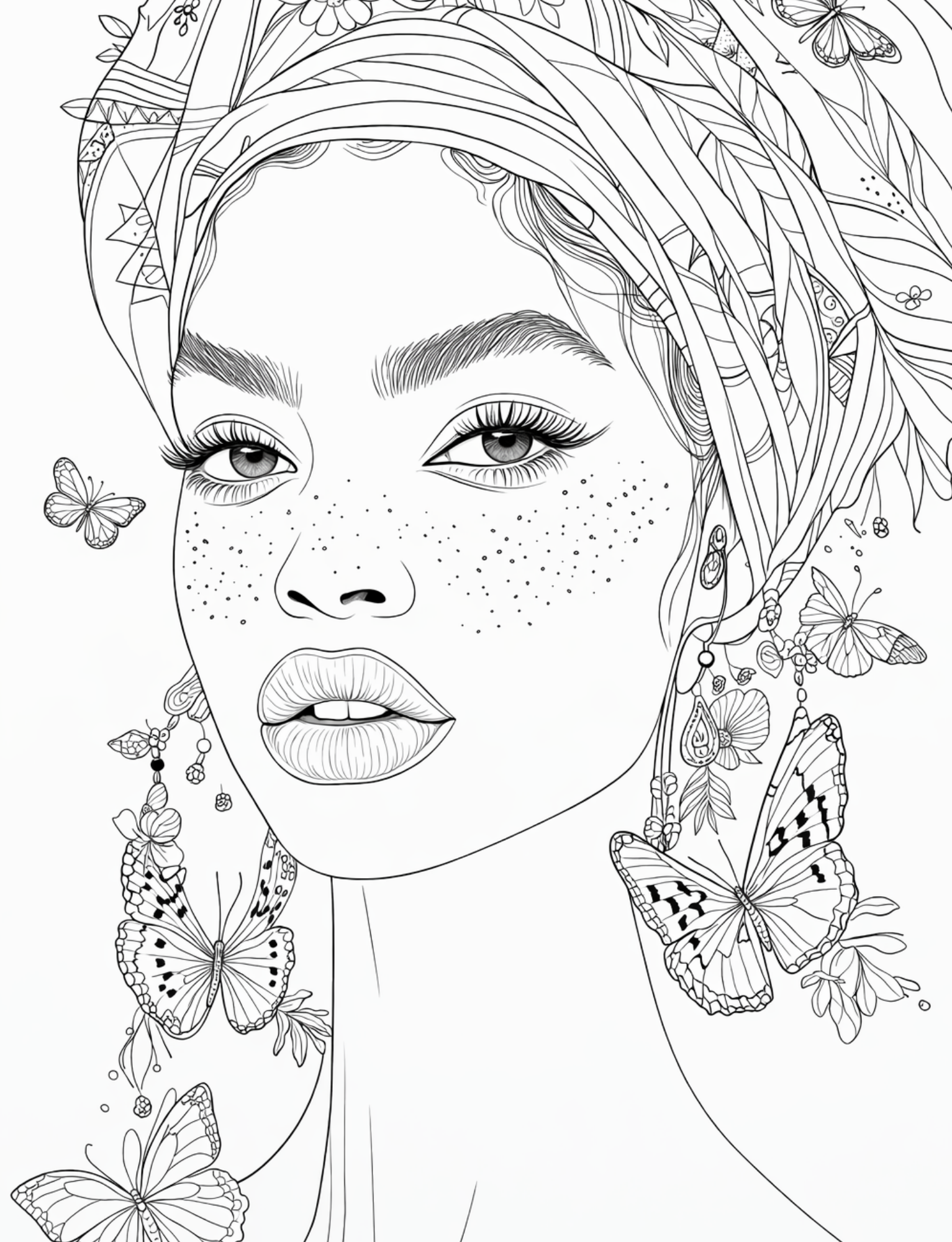
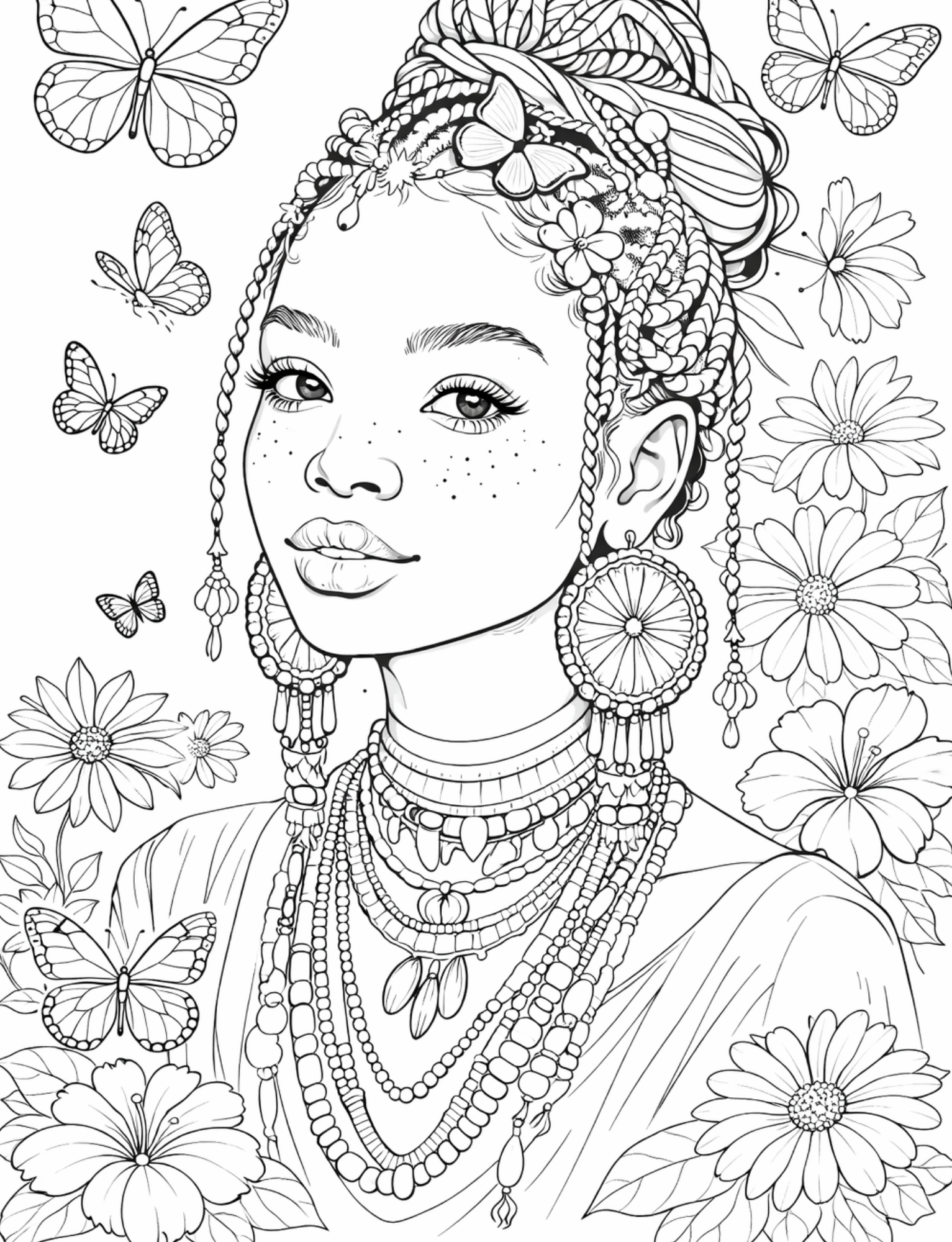
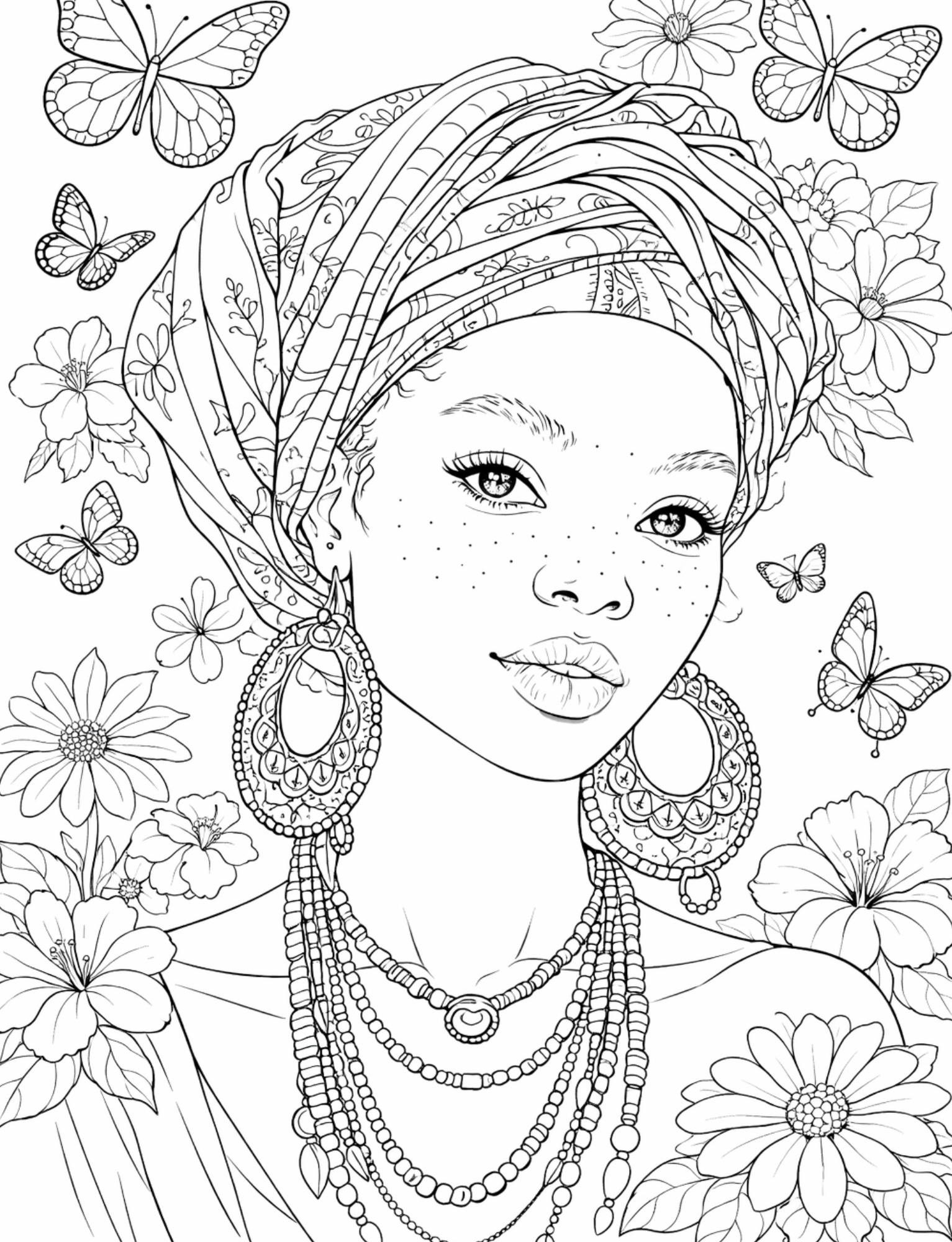
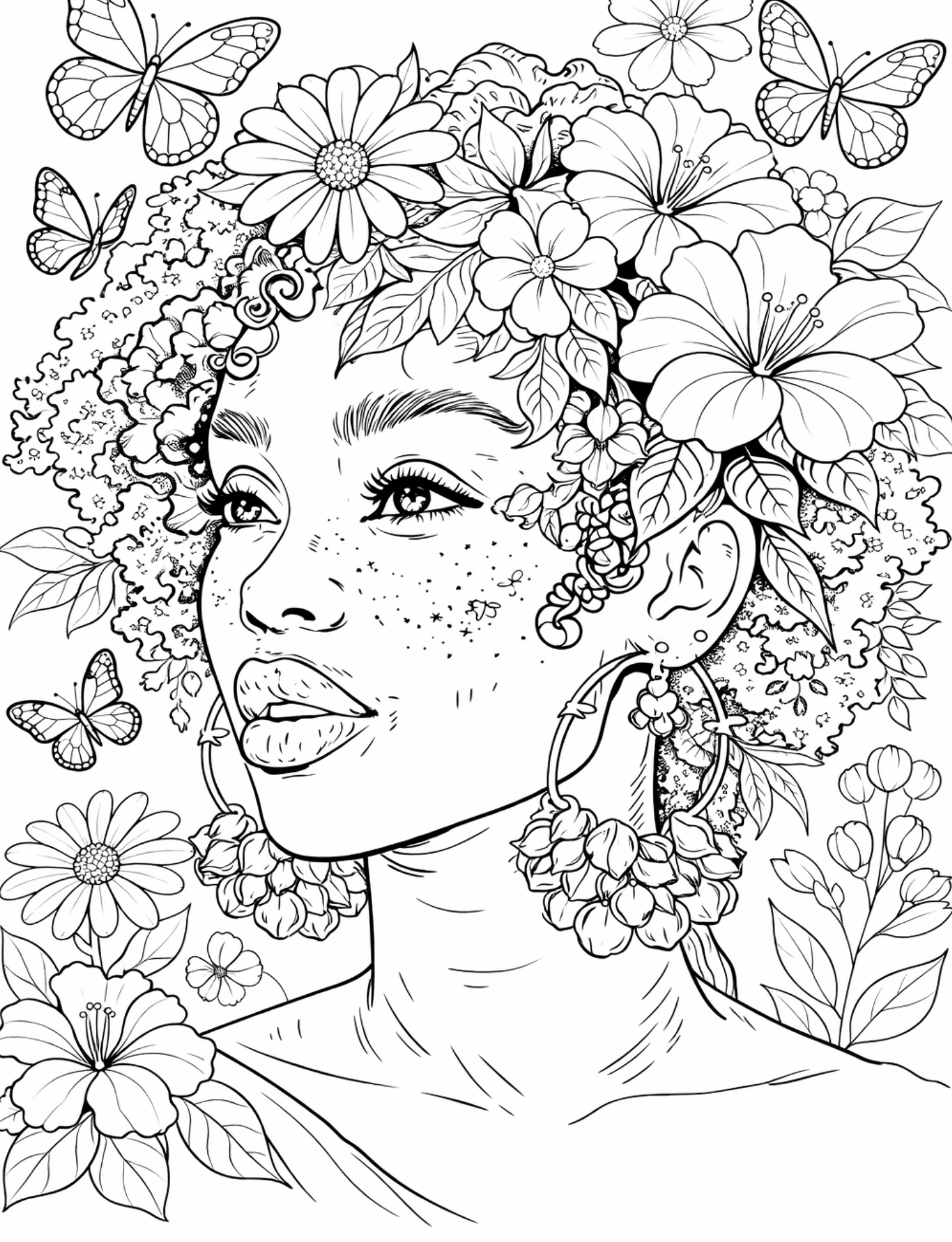
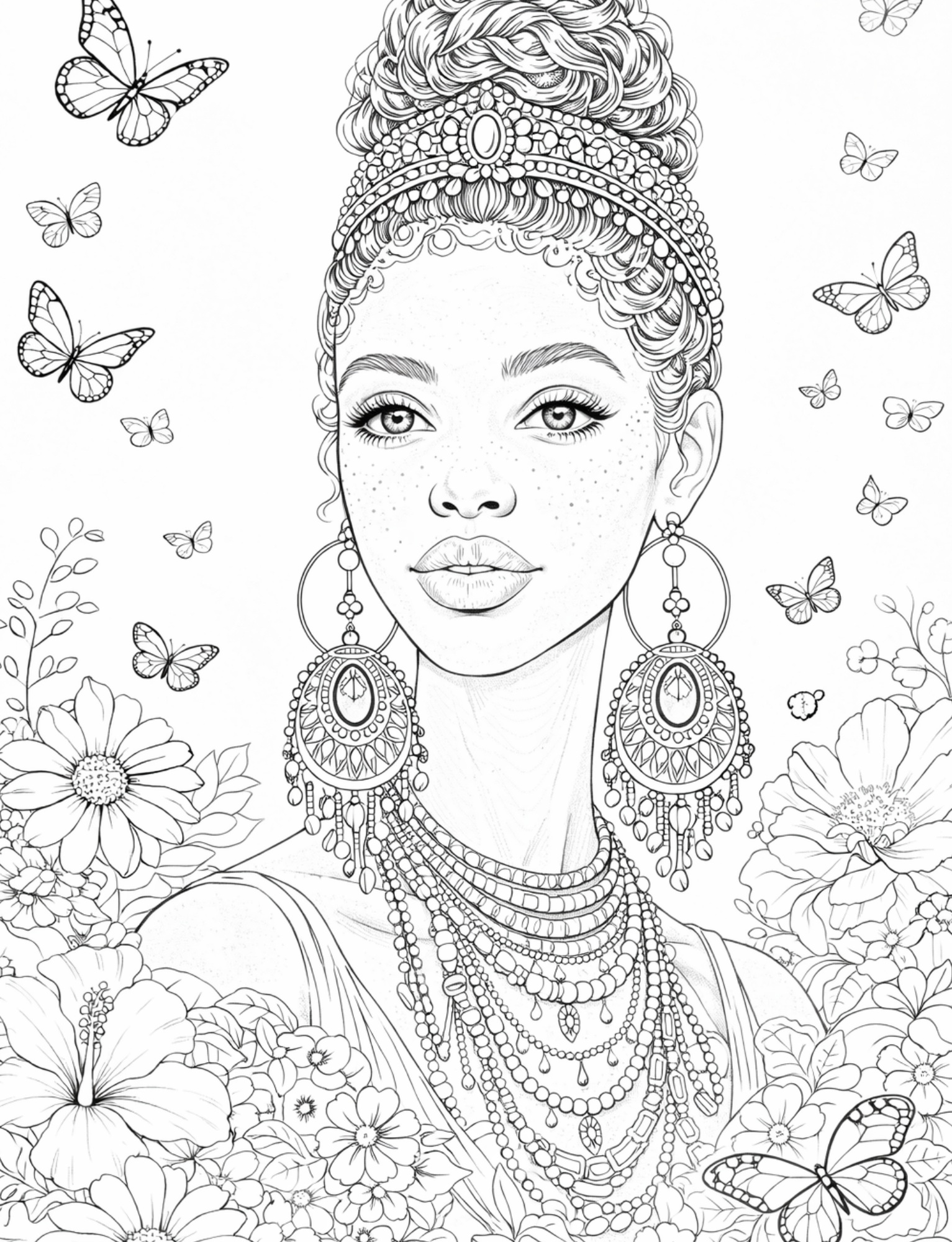
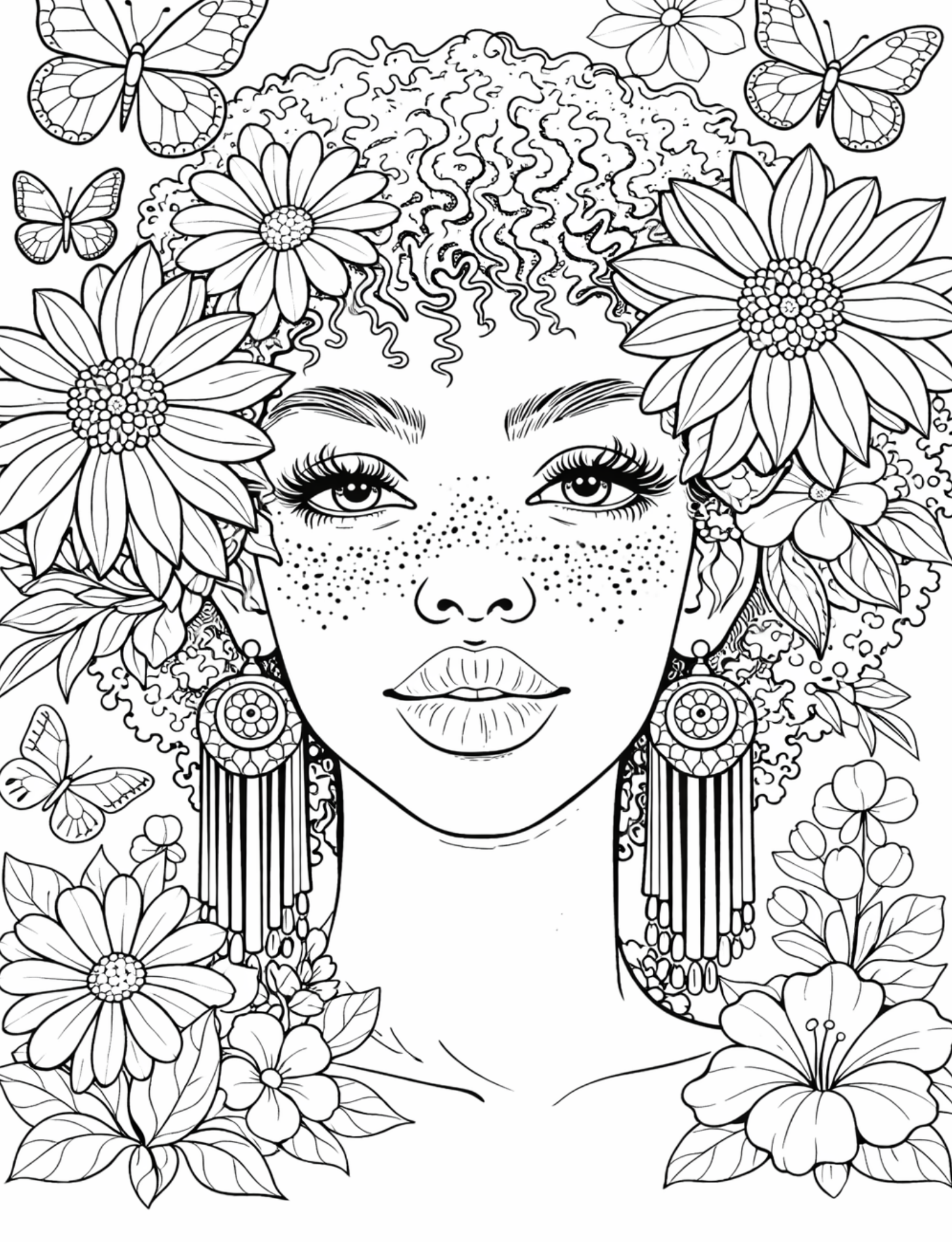
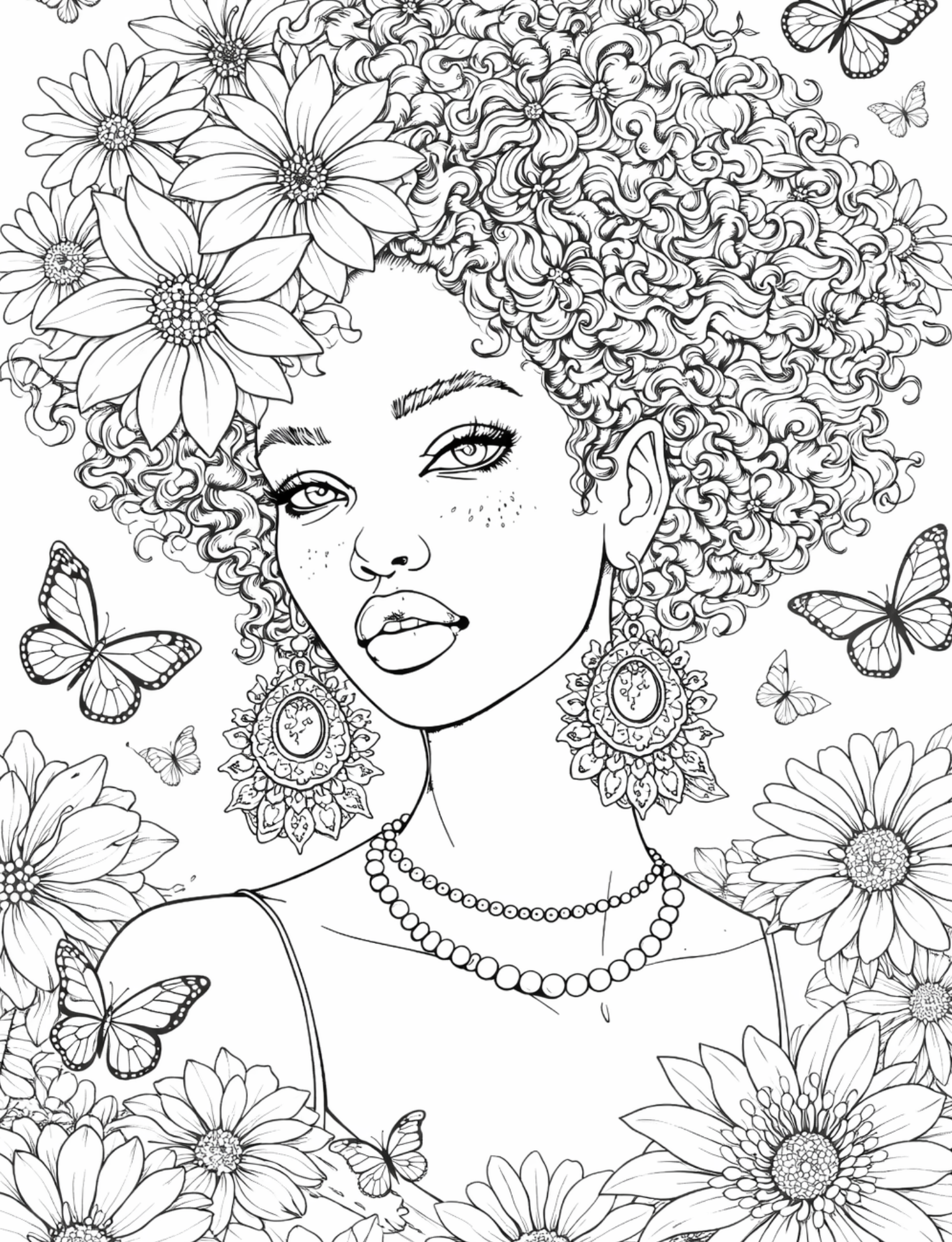
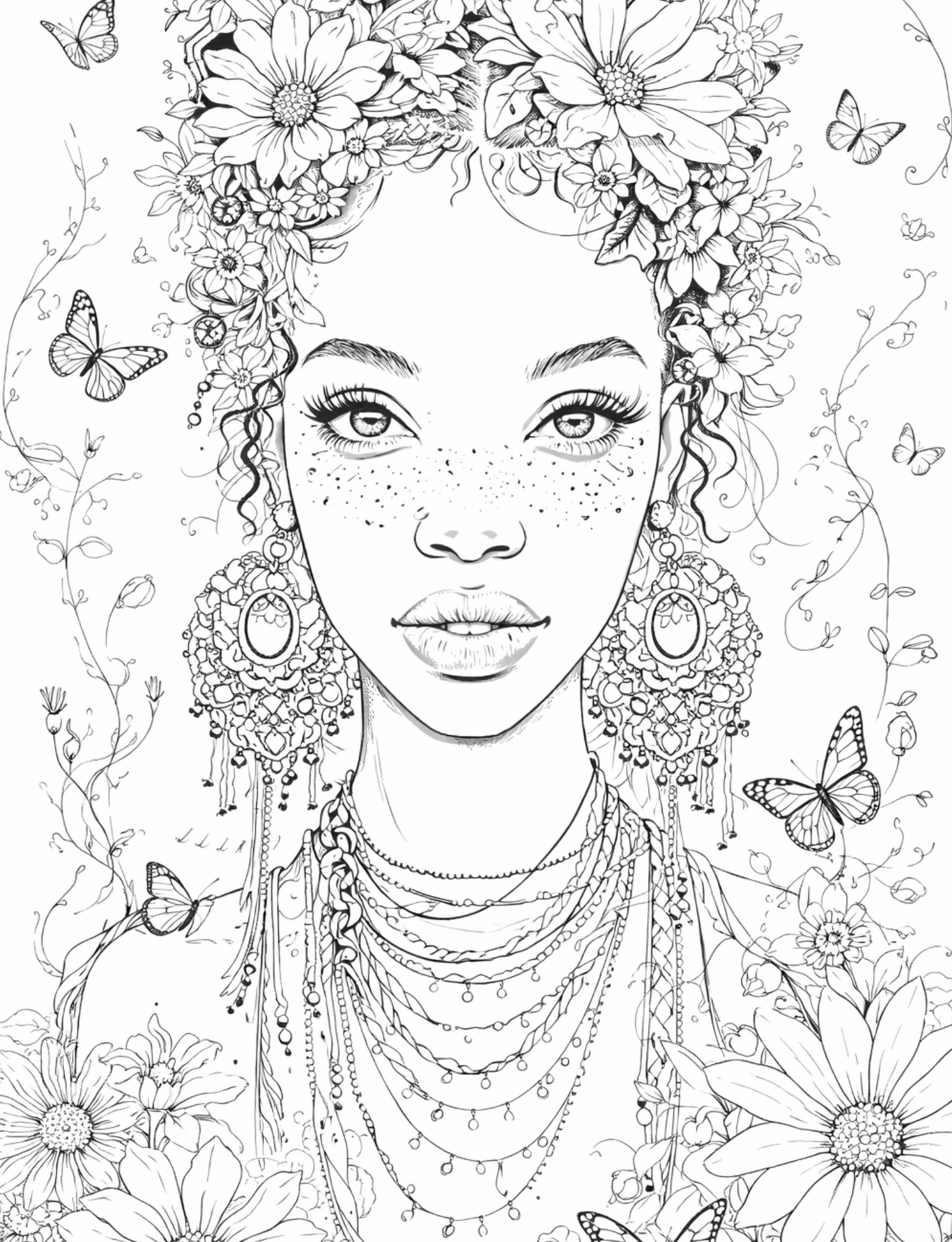
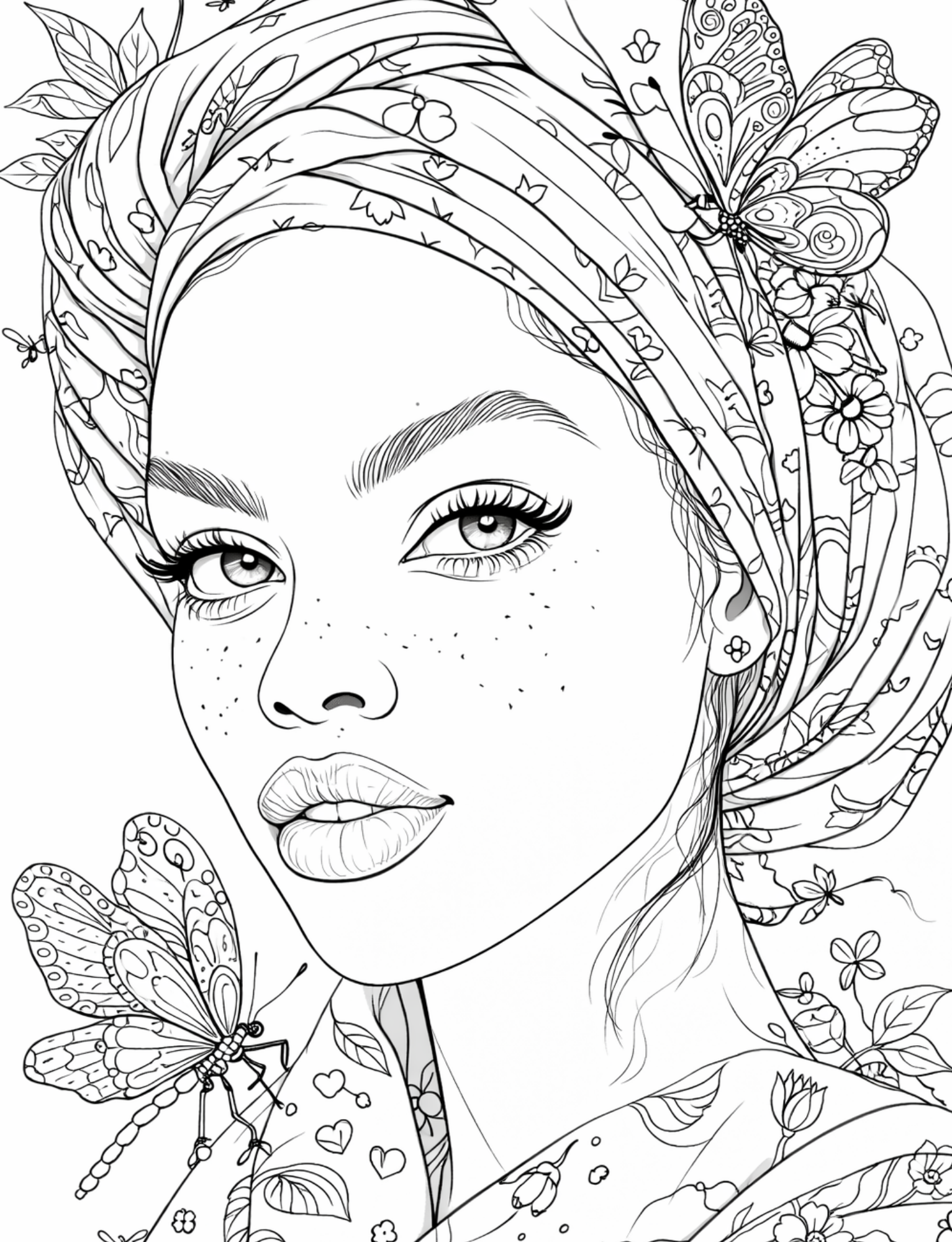
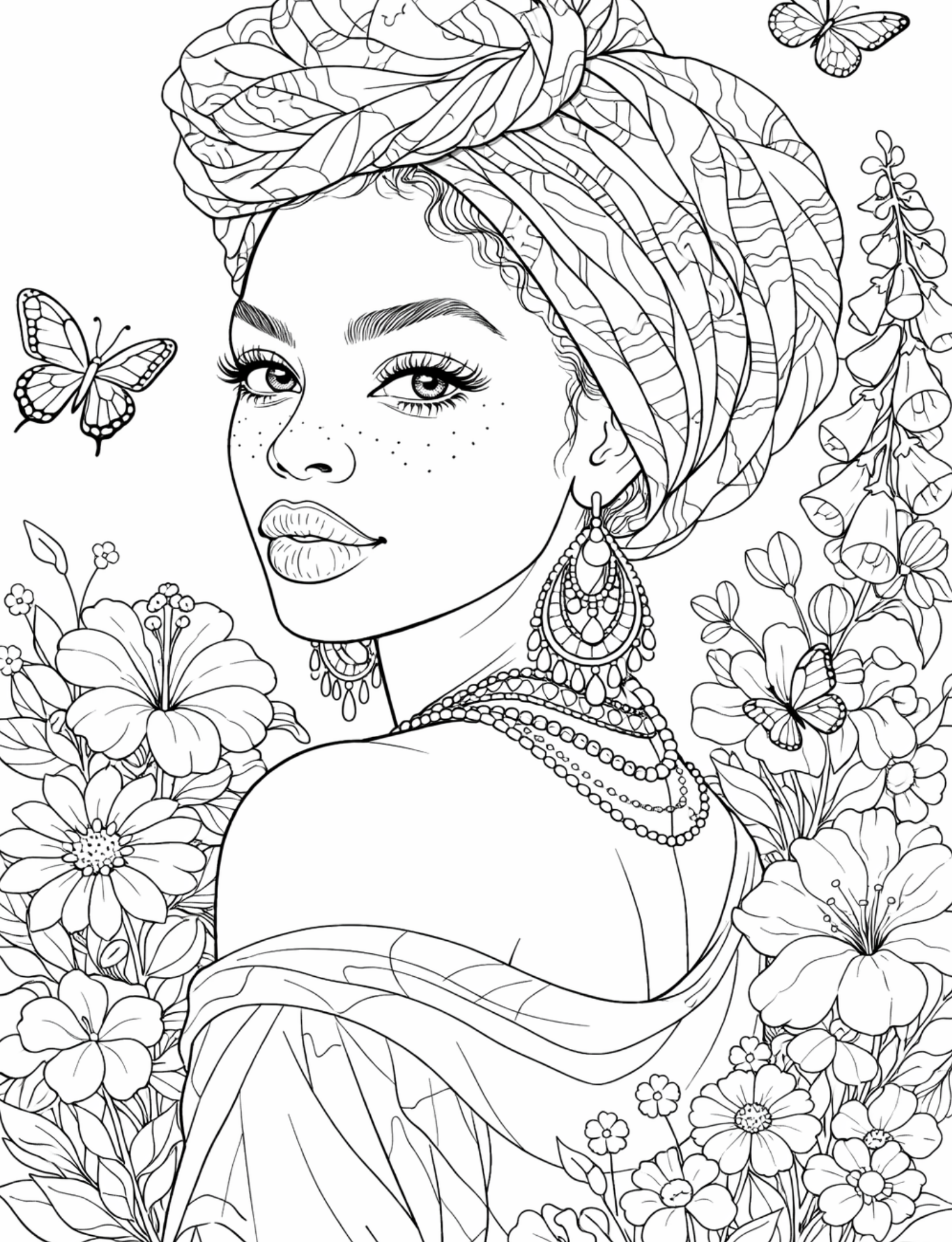
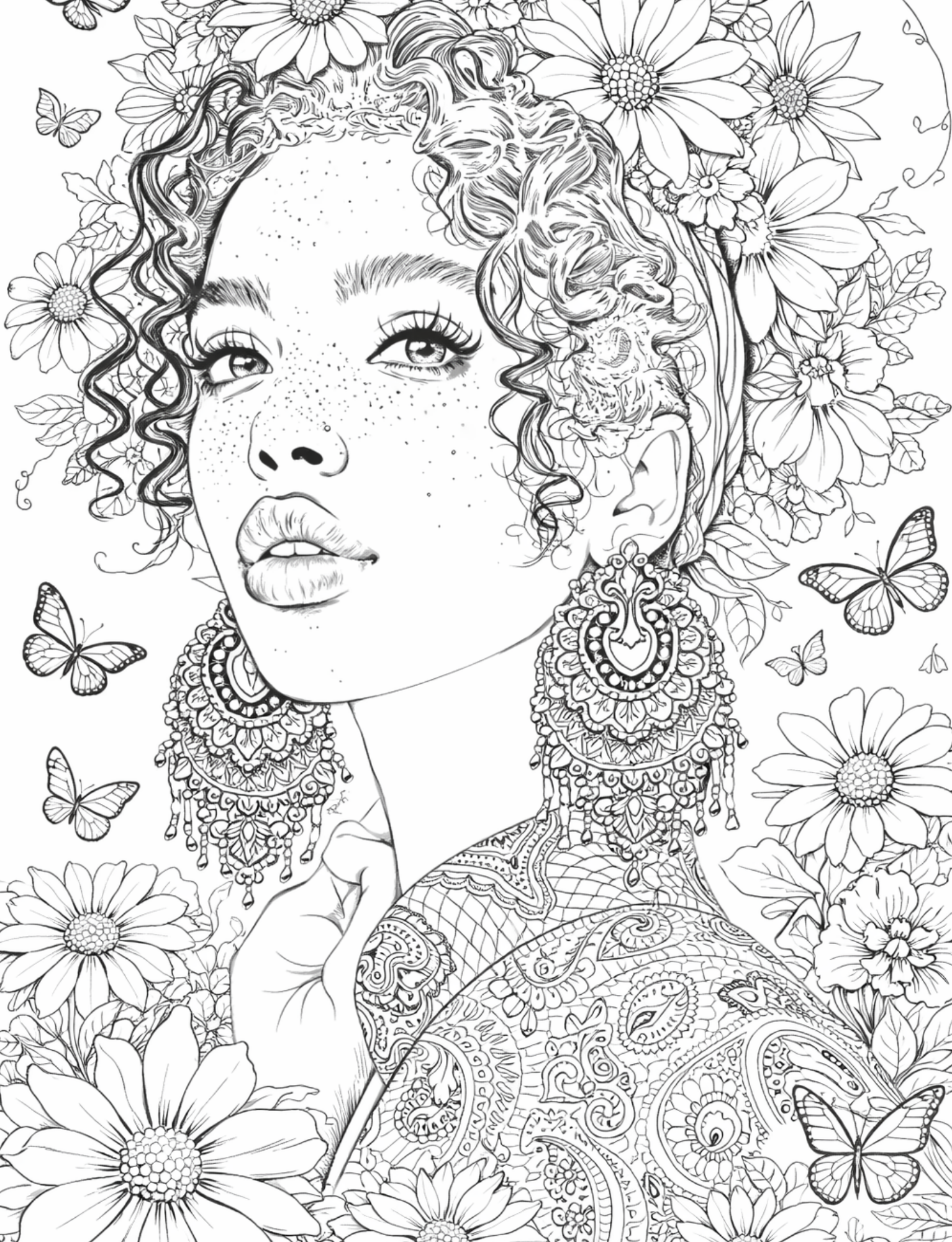
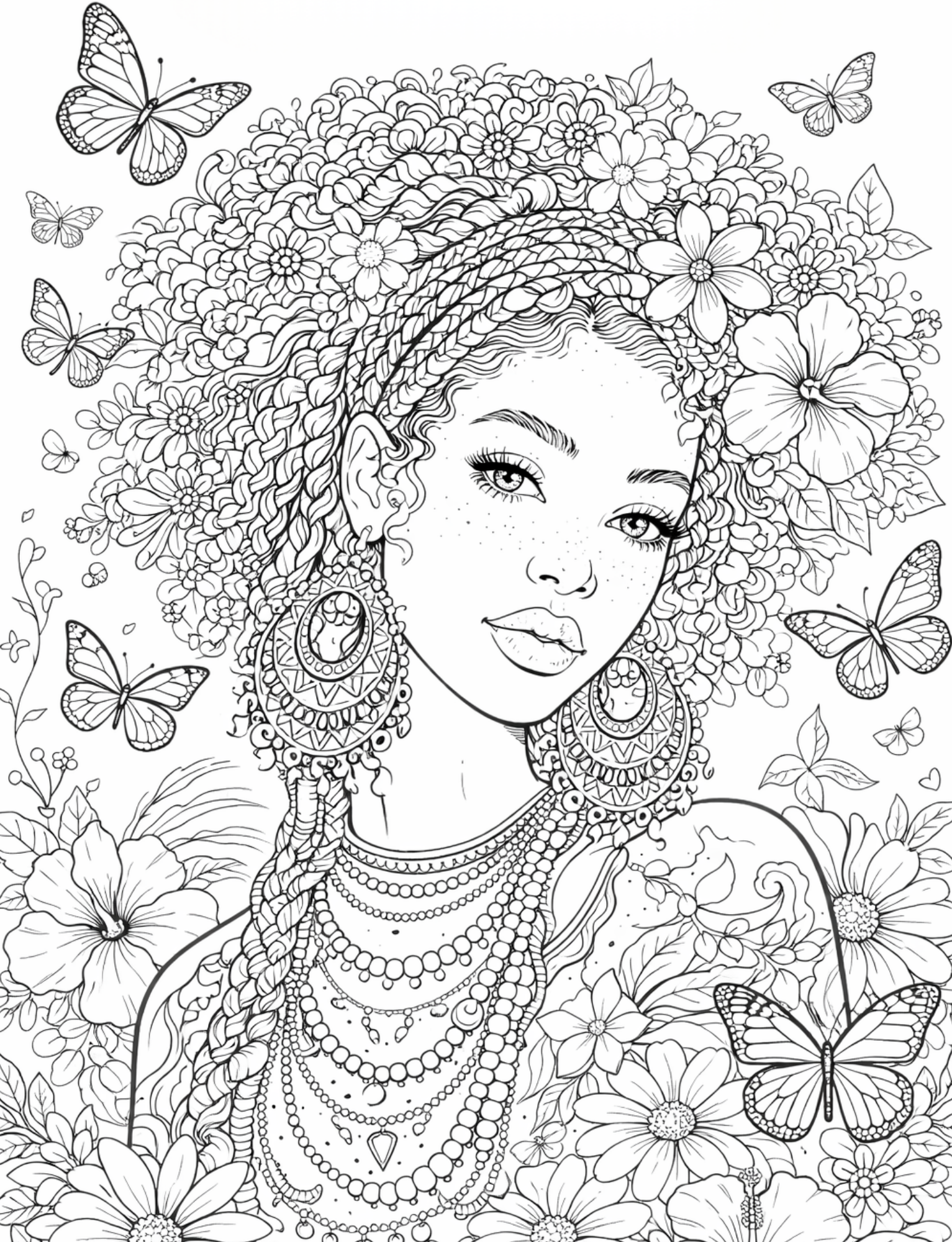
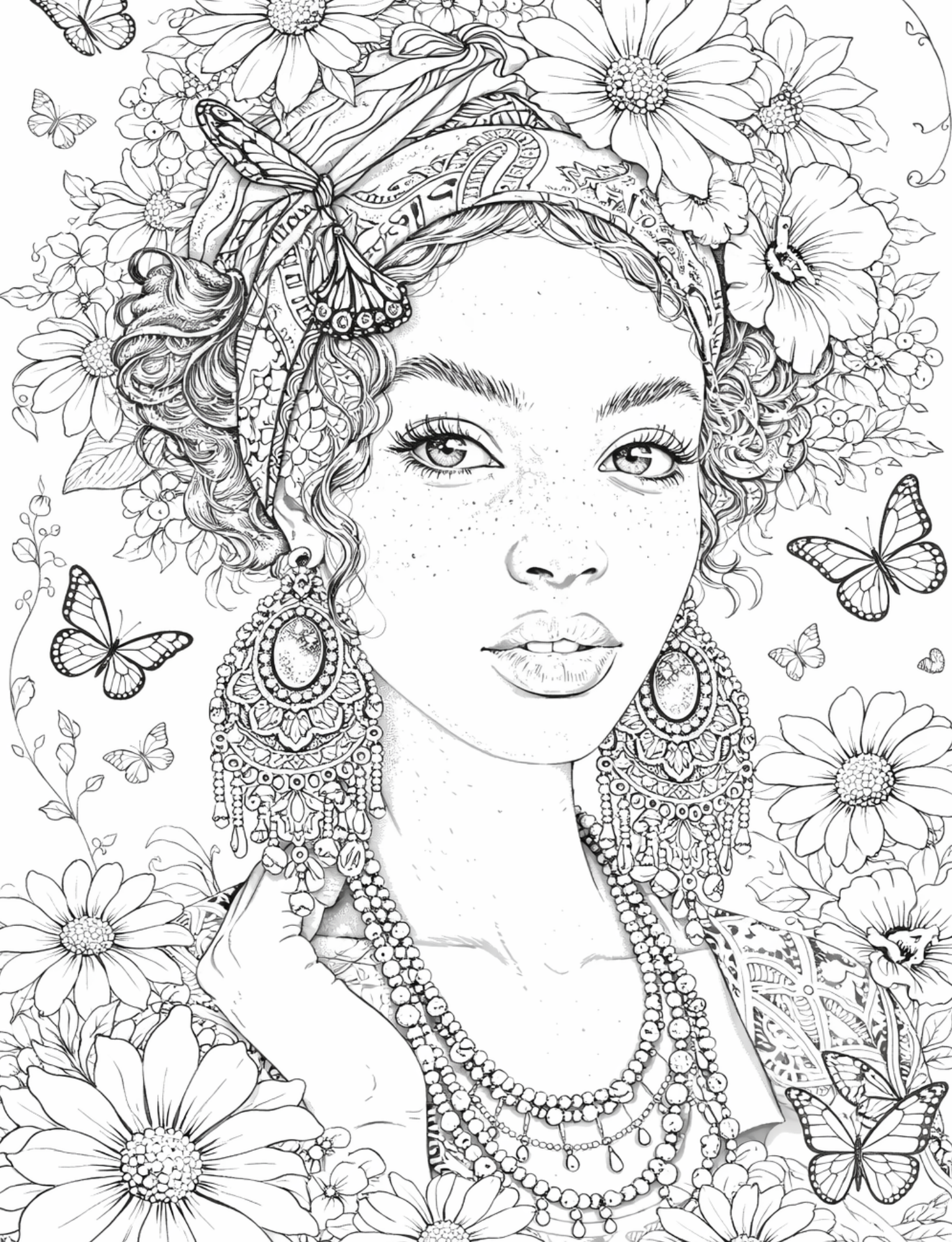
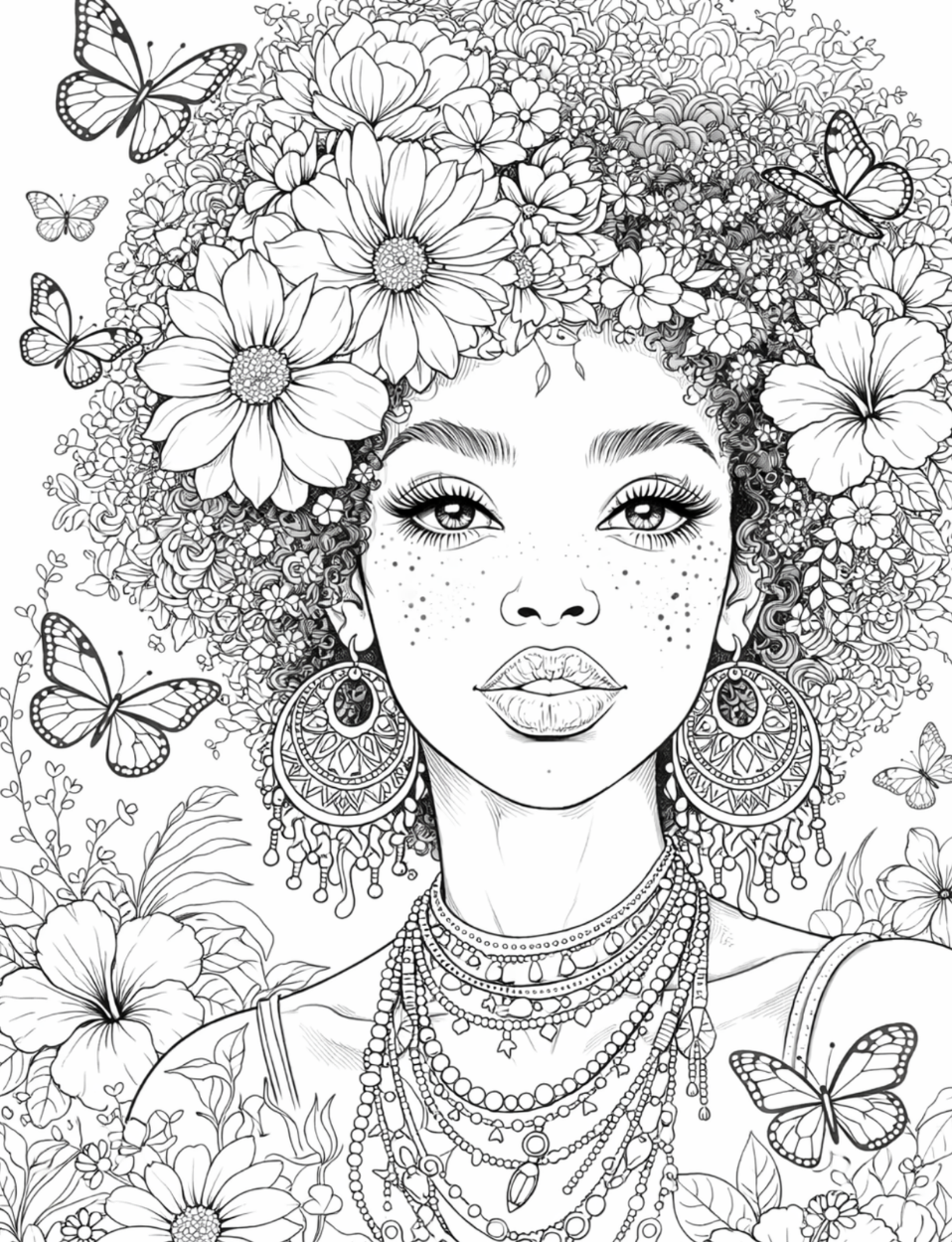
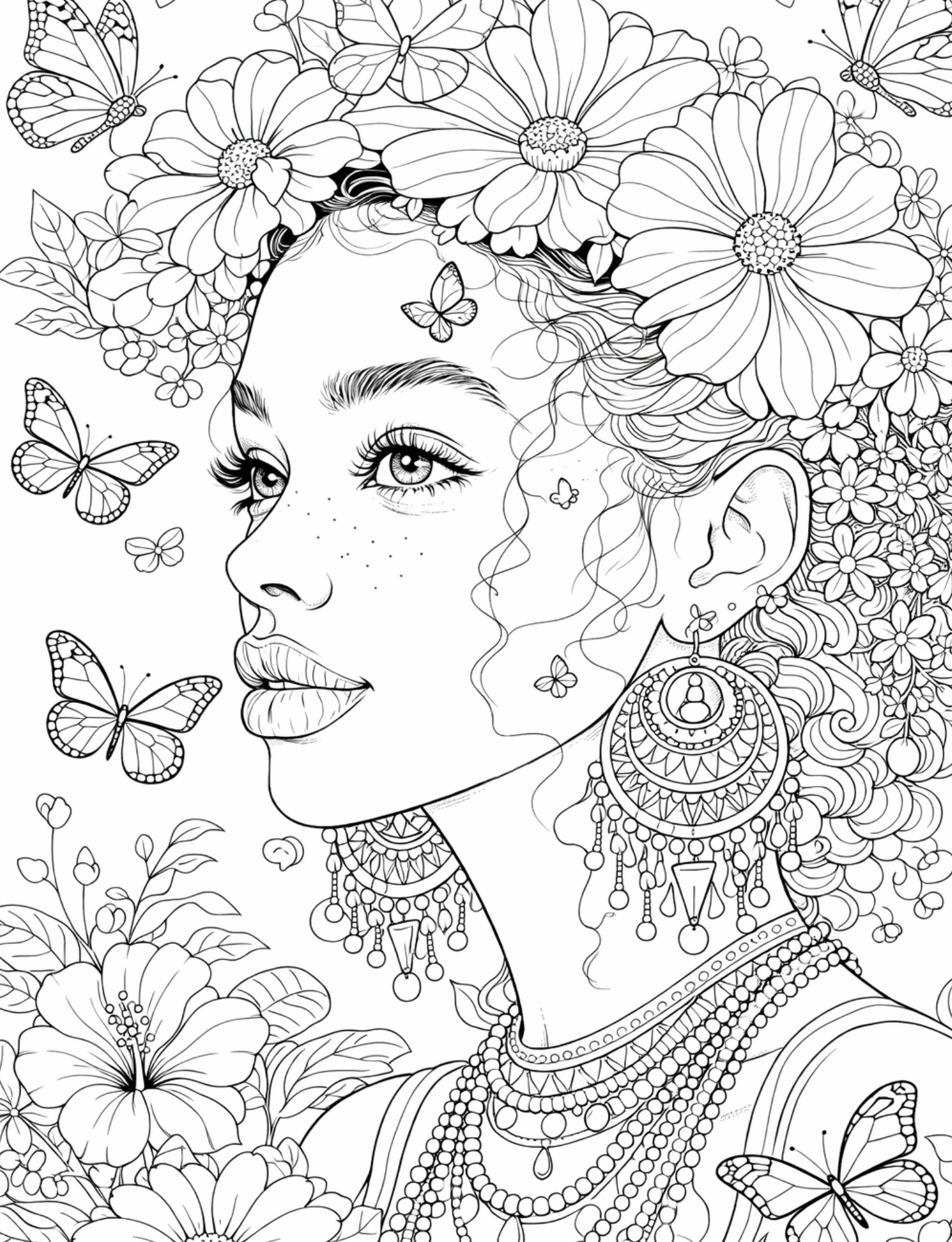
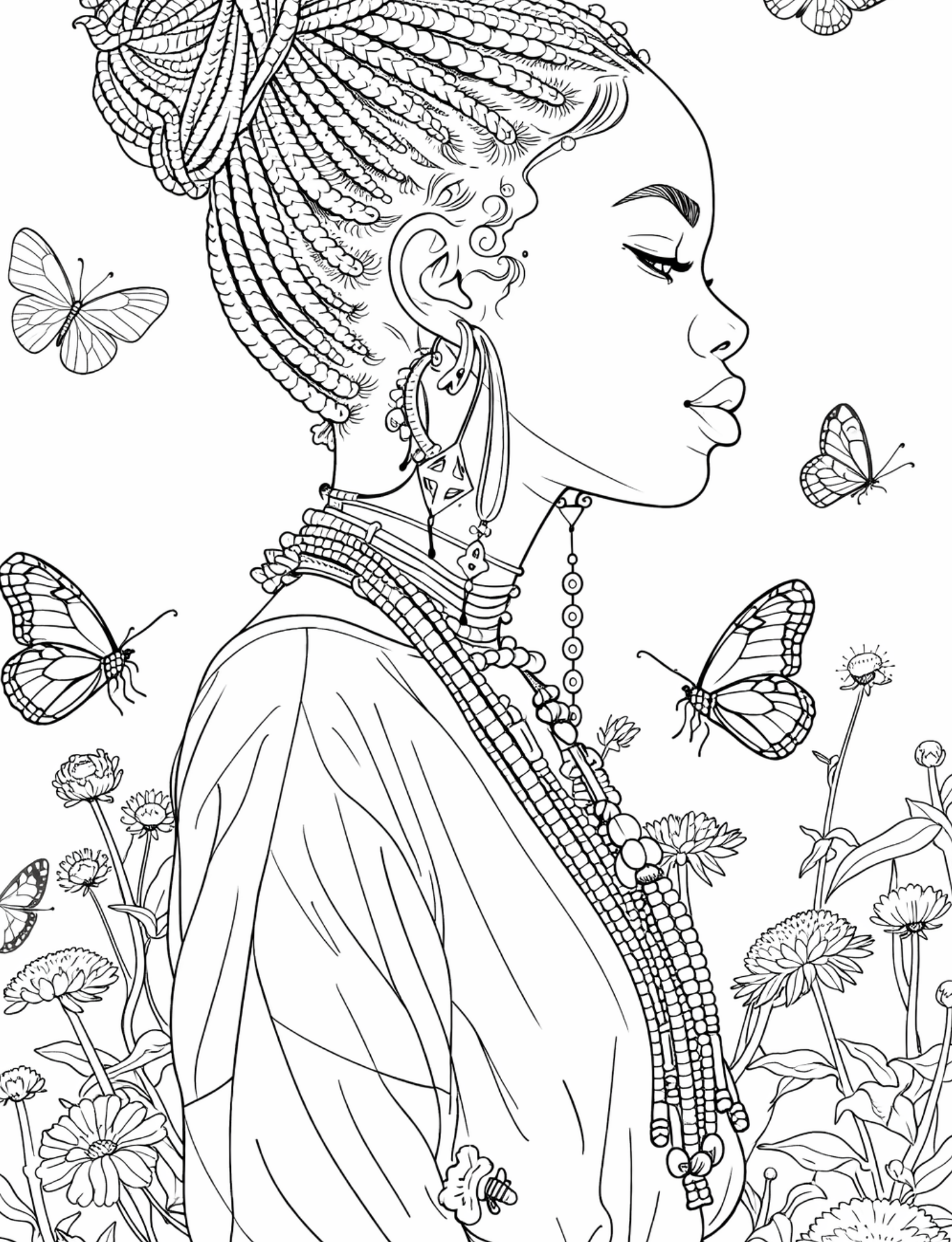
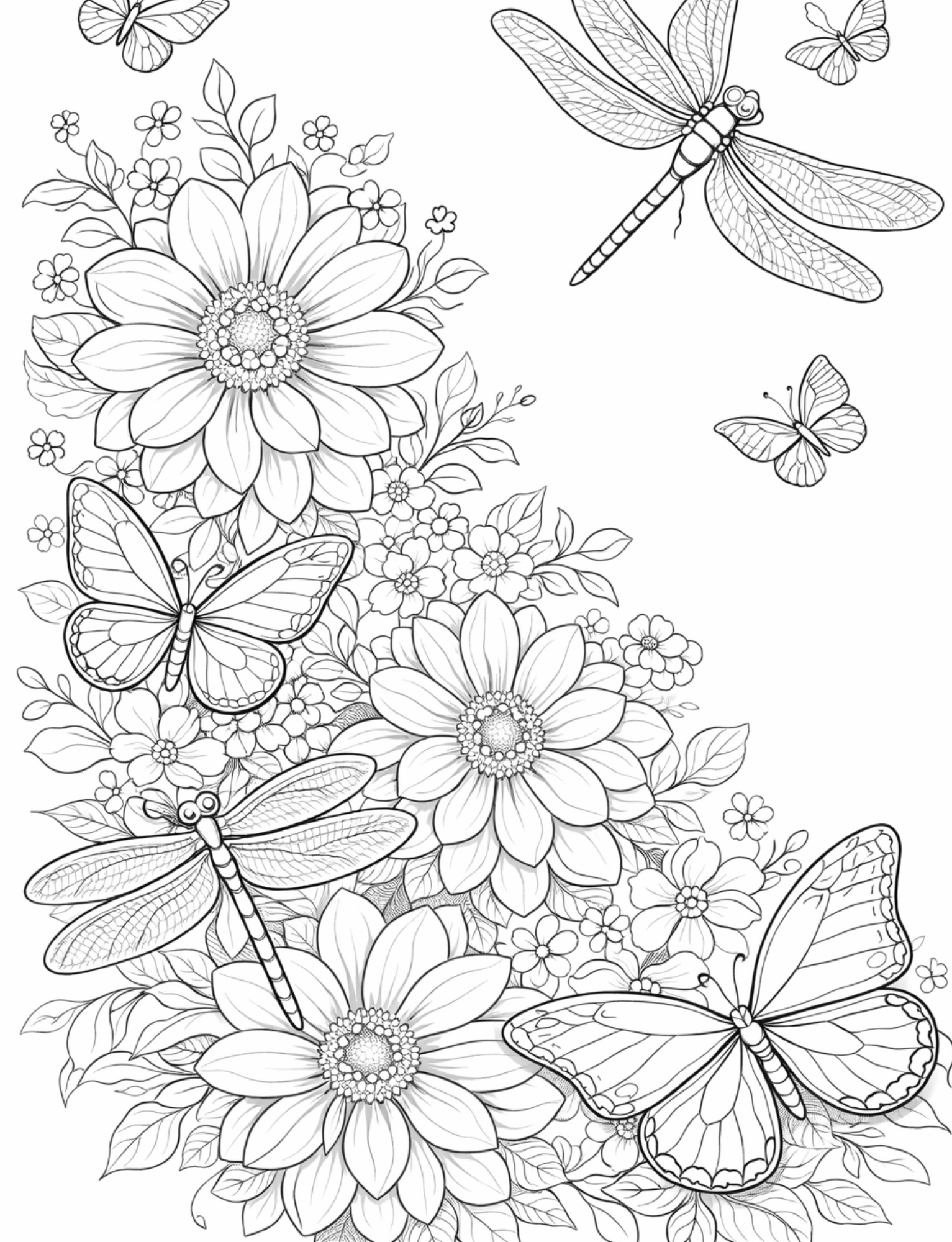
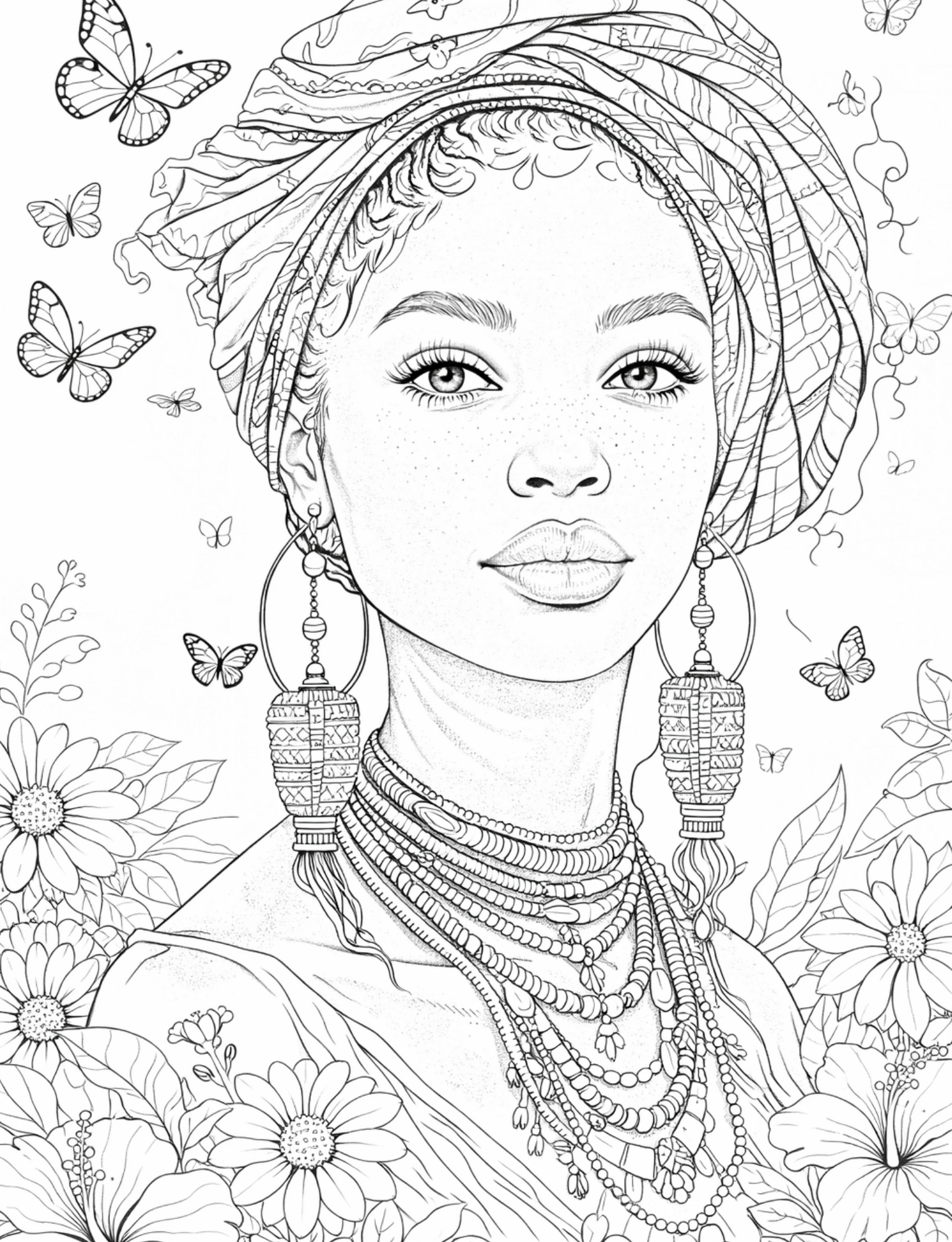
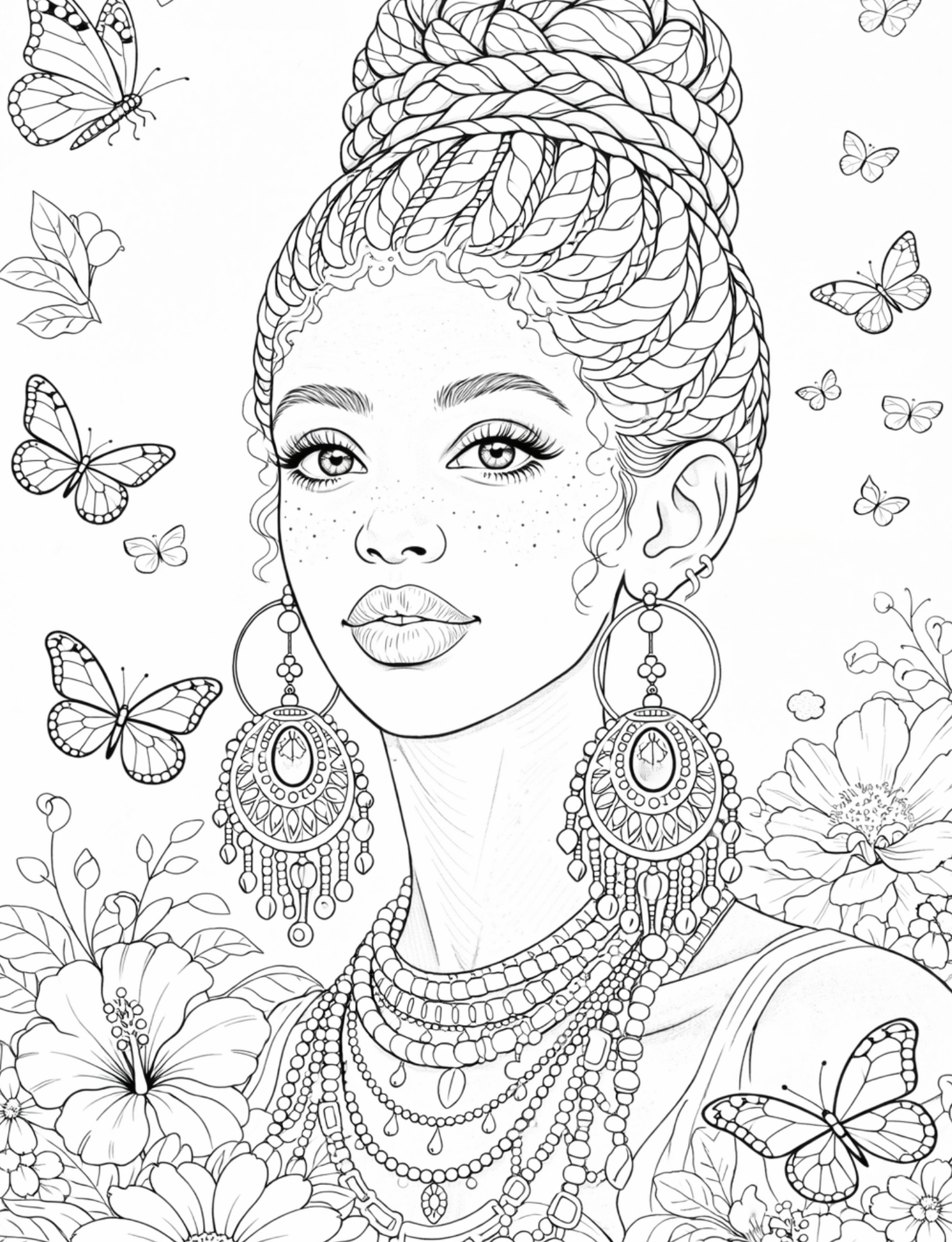
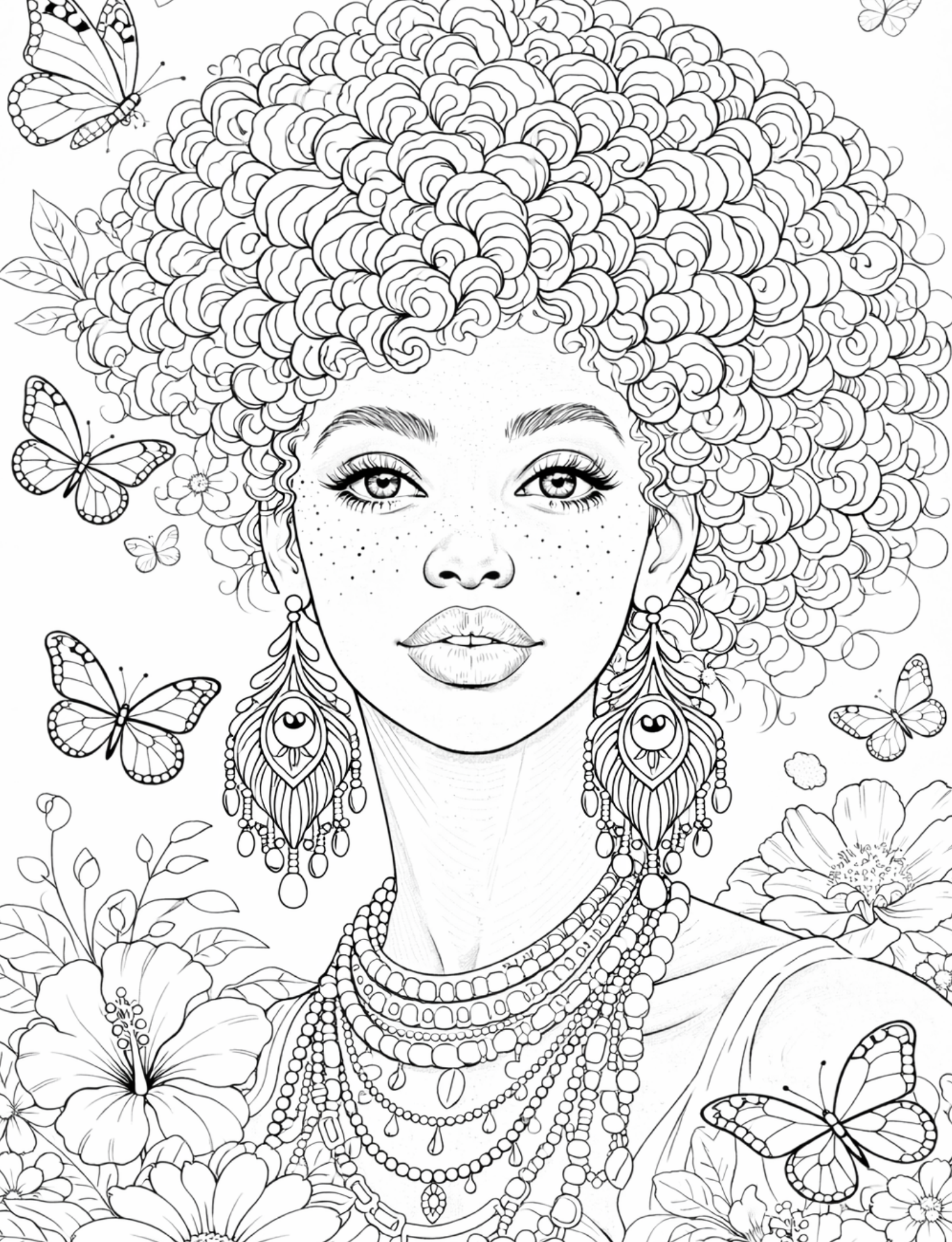
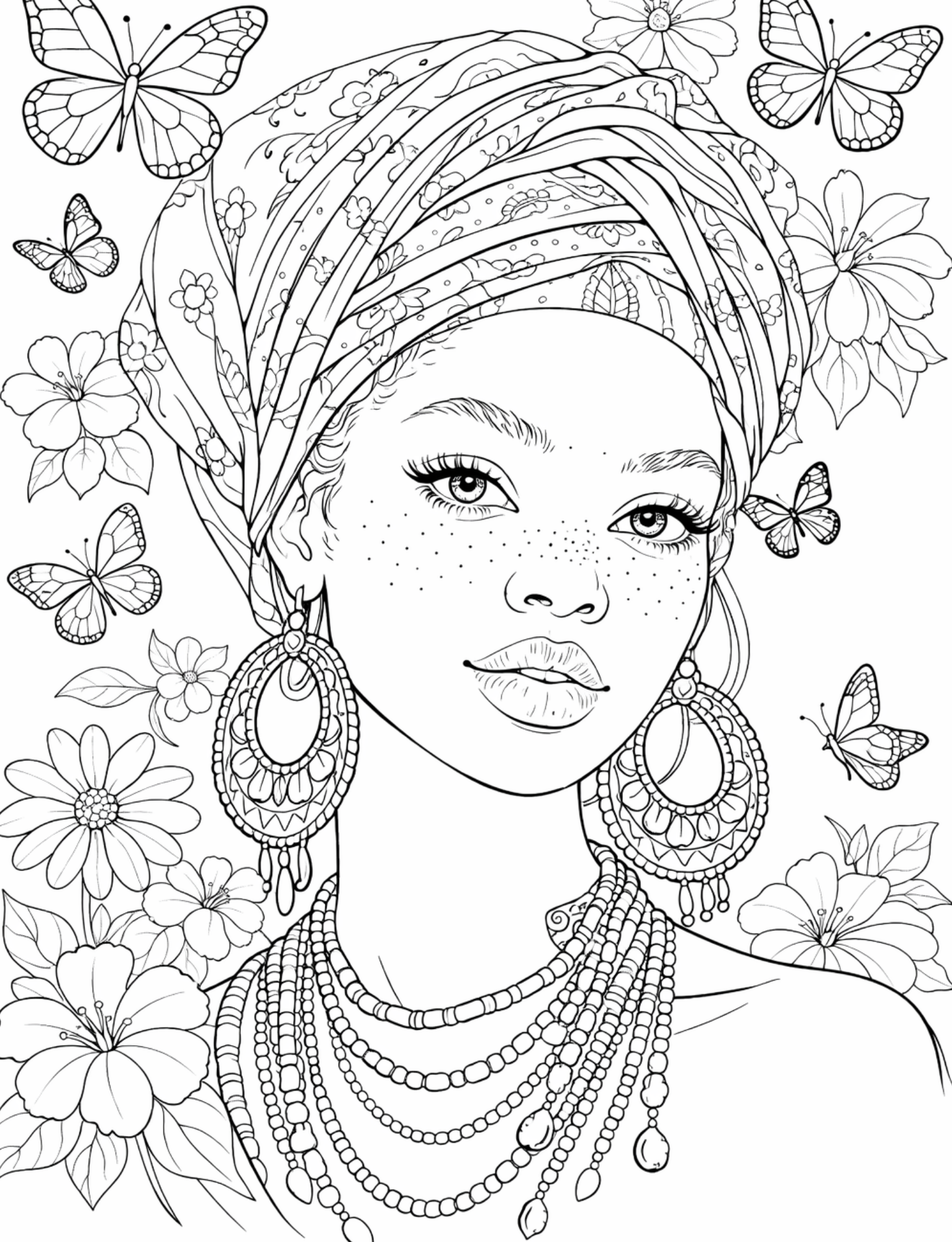
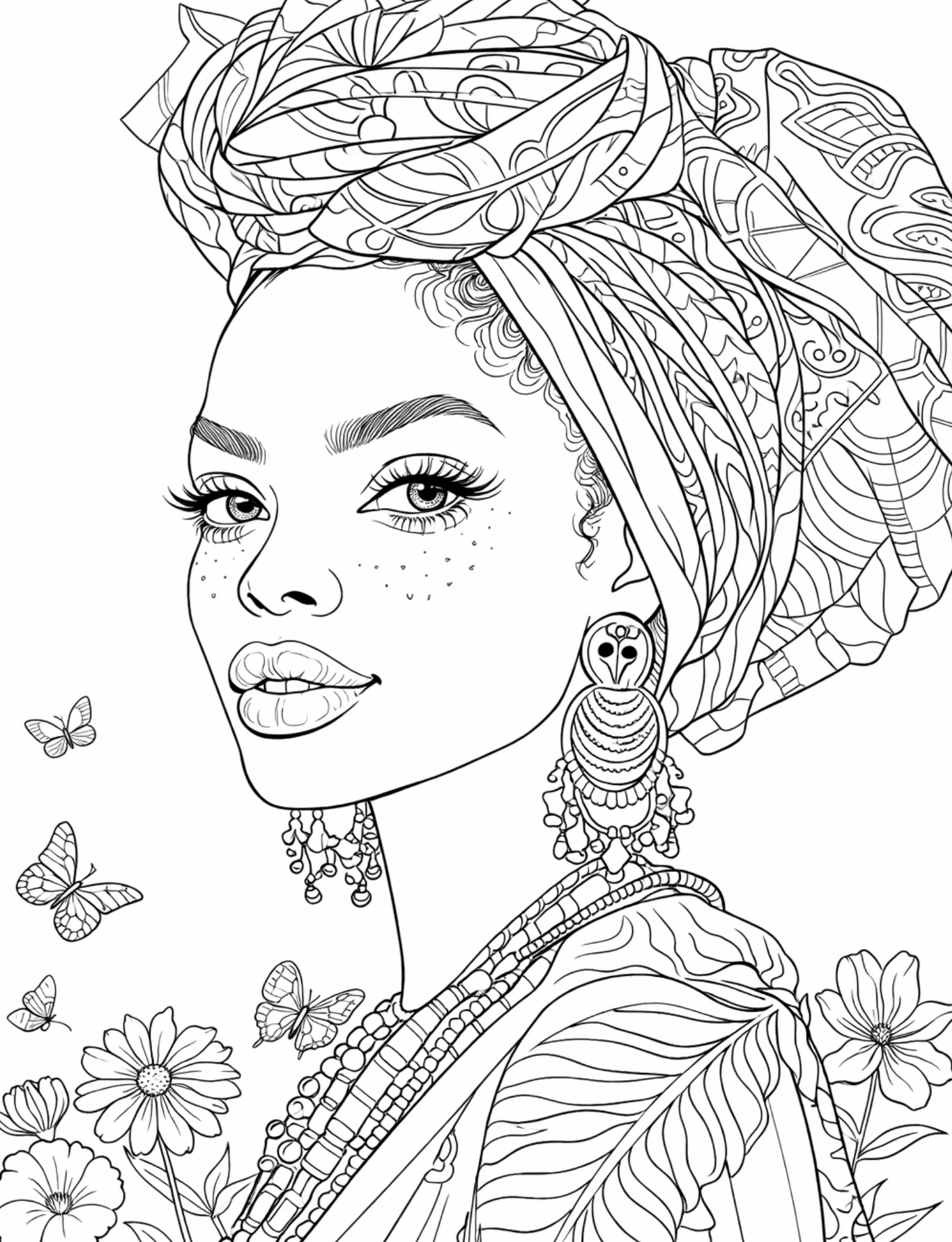
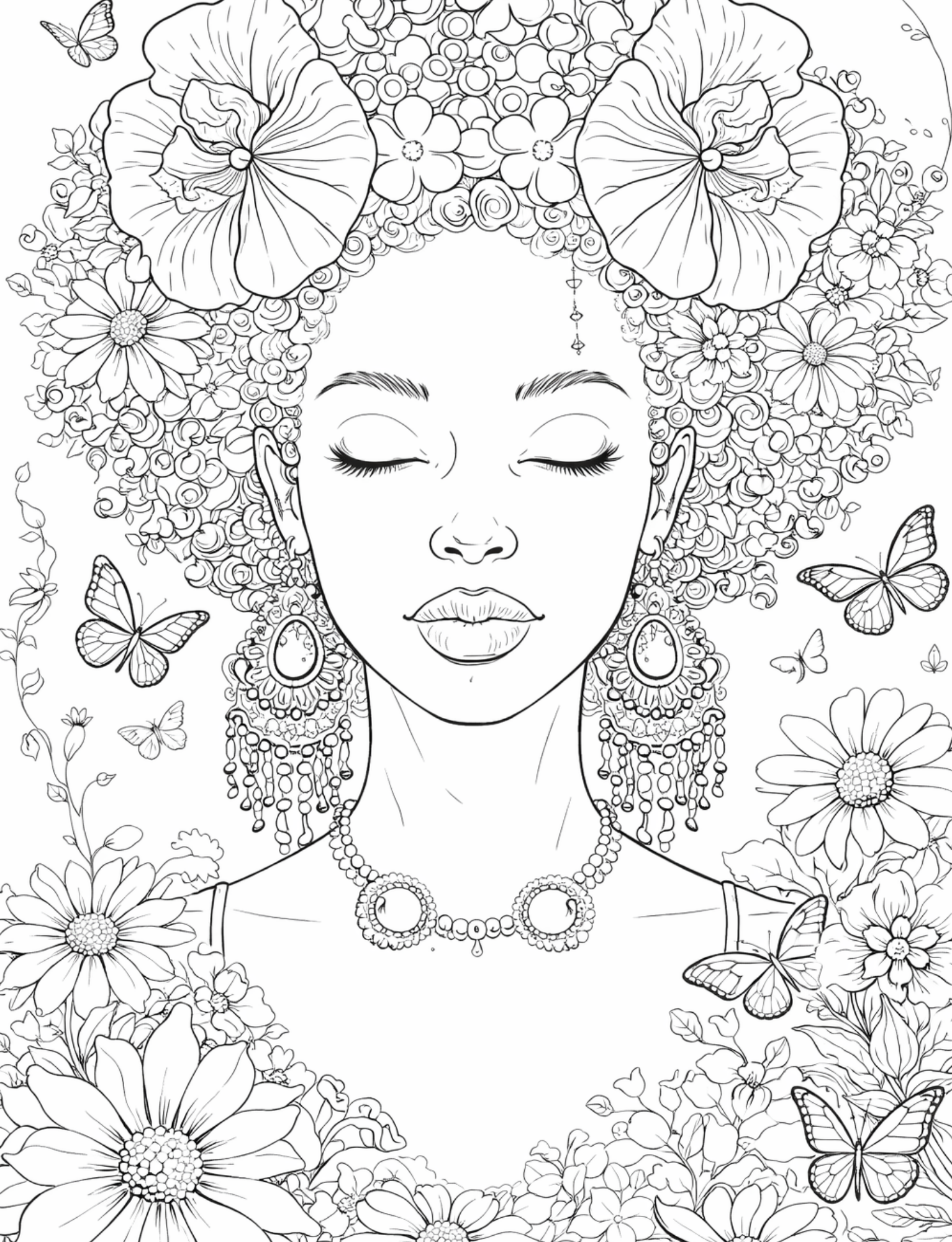
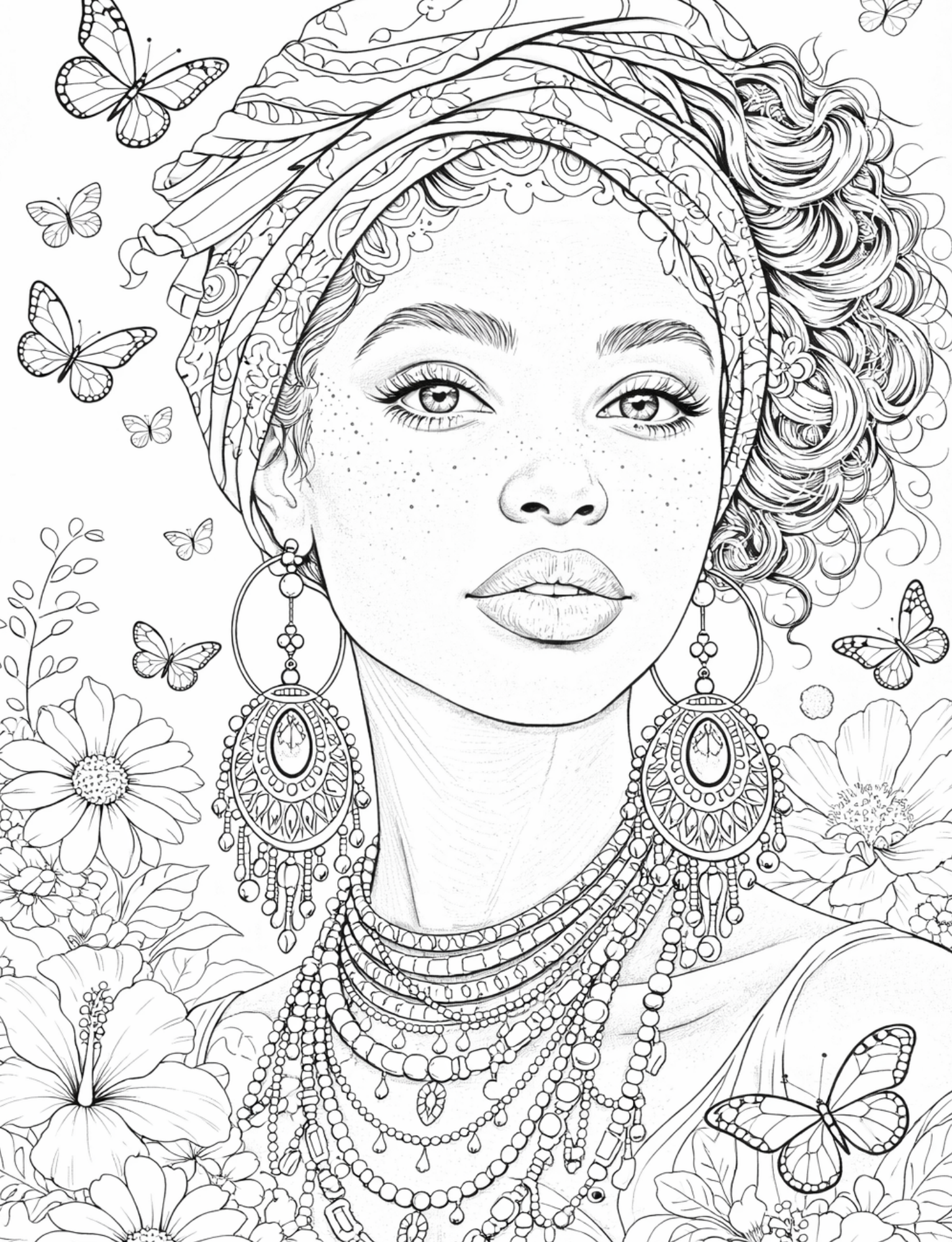
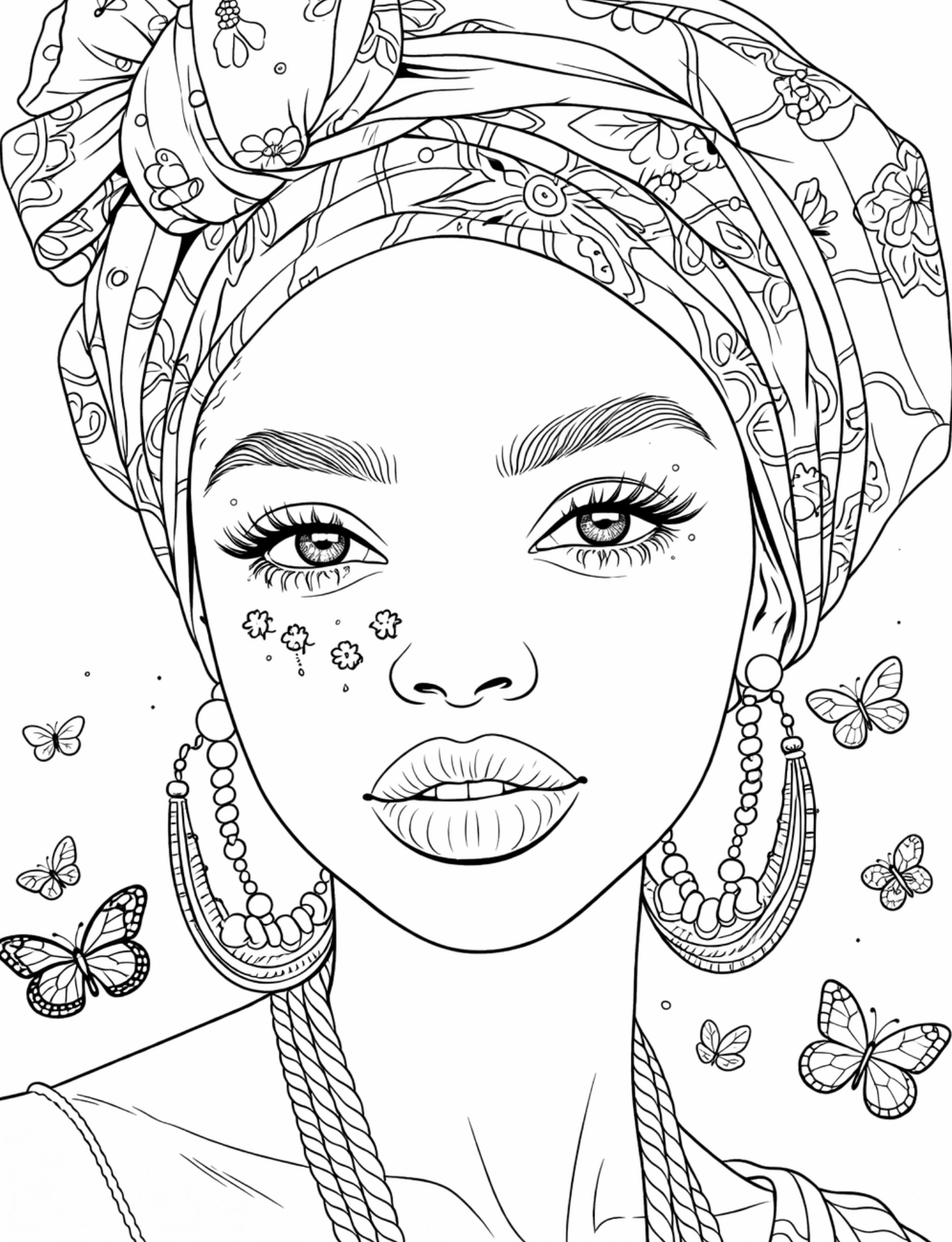
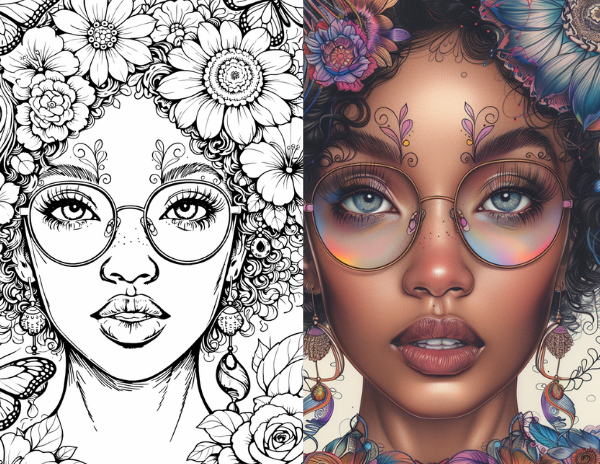
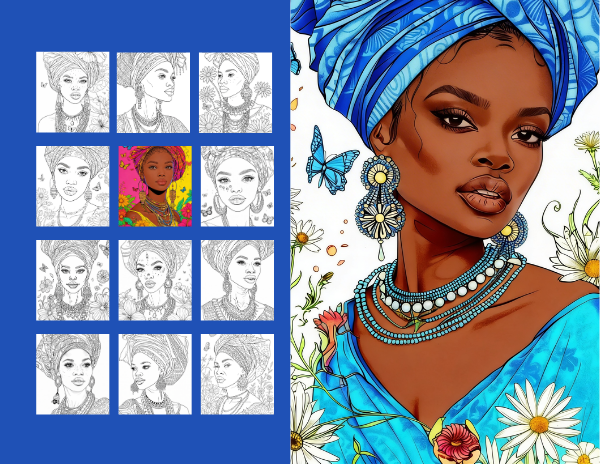
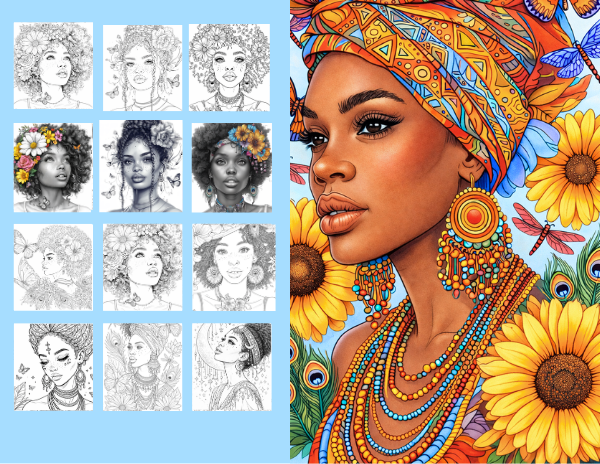
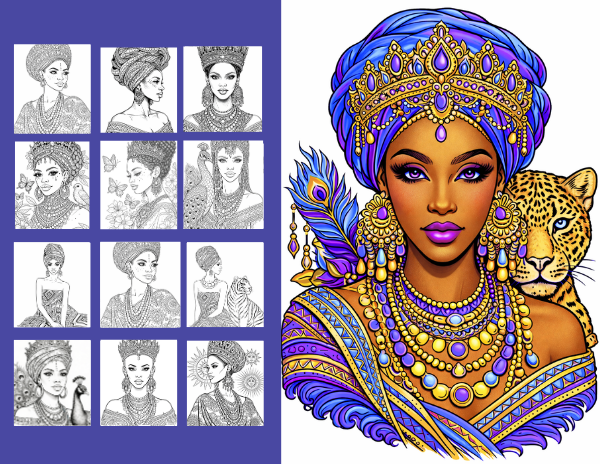
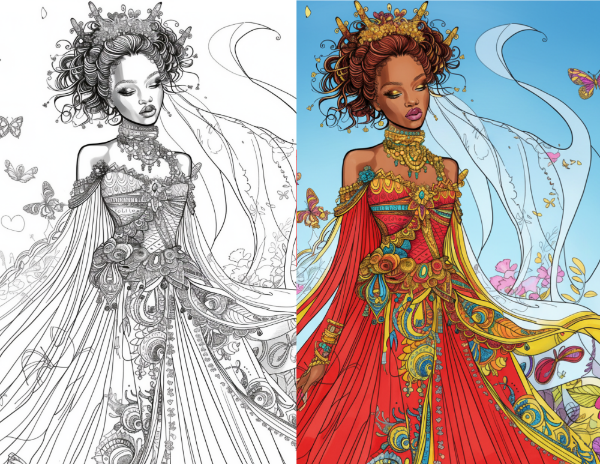
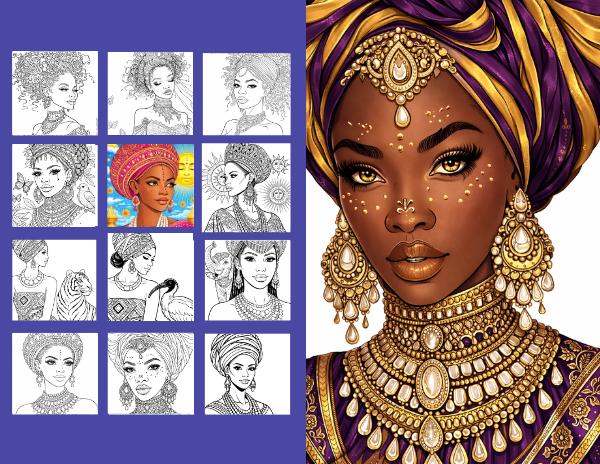
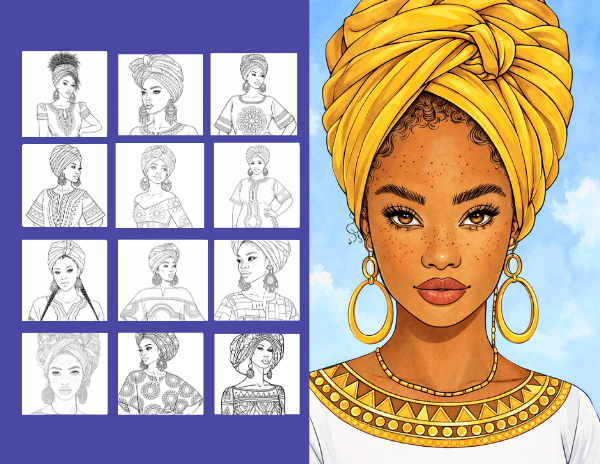
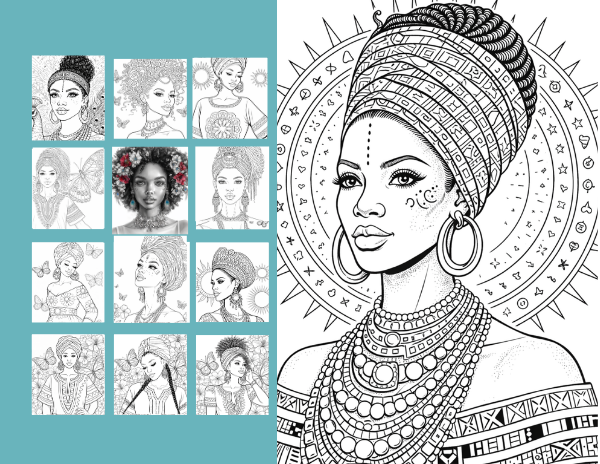
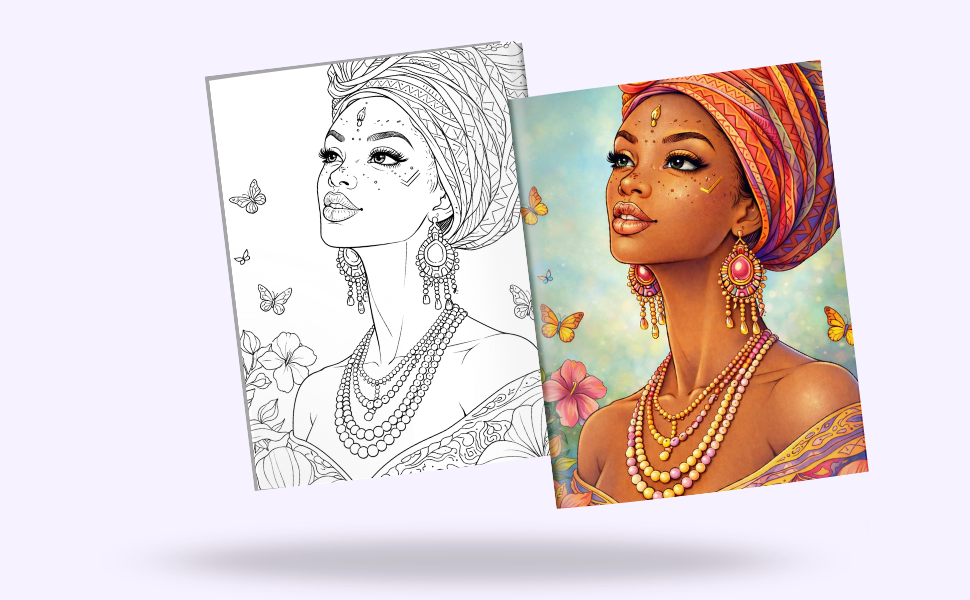
Each page in the series features layered detail: intricate butterfly wing patterns with fine veining, elaborate floral crown headdresses with dozens of individual blossoms and leaves, and portrait elements with expressive detail that rewards careful attention. These are not beginner designs — they're crafted for adults who want a real creative challenge that produces a real sense of accomplishment alongside genuine mental relief.
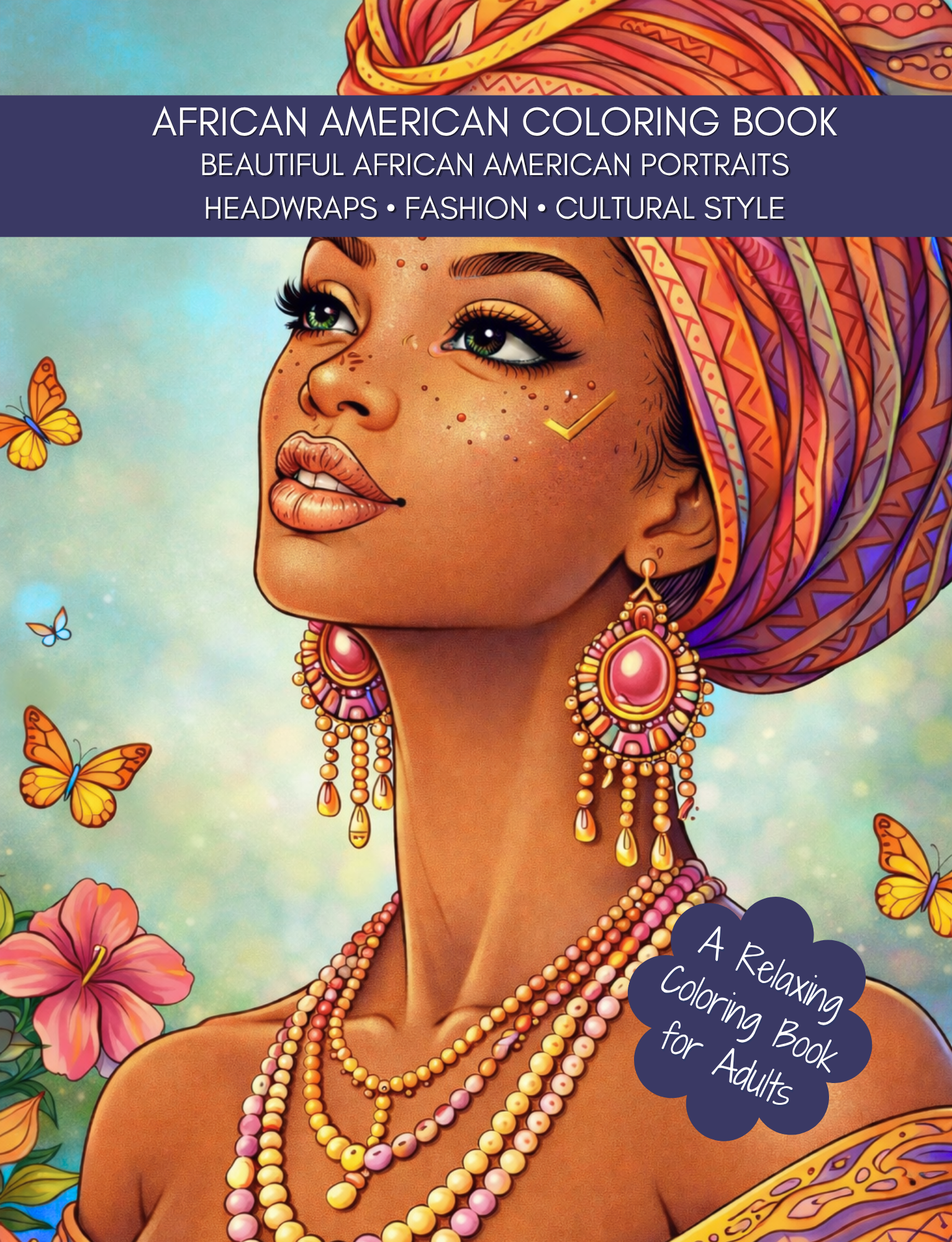
The cultural dimension of the designs adds another layer of meaning. The African American women depicted in each portrait are portrayed with strength, beauty, and serenity — surrounded by nature's most calming imagery. Many colorists find that the representational element deepens the emotional resonance of the coloring experience, making the time feel both creatively fulfilling and personally meaningful.
Building a Stress Relief Coloring Practice
The difference between coloring as a casual activity and coloring as a genuine stress relief practice is largely one of intention and consistency. Treating your coloring time as a real appointment — a daily or weekly ritual you protect — amplifies its benefits significantly. Your brain begins to associate the setup ritual with relaxation: the opening of your pencil case, the choosing of a page, the first deliberate strokes of color. Over time this conditioned response means you relax more quickly and more deeply each session.
Environment matters too. The most effective stress relief coloring sessions happen in spaces free from digital interruption. Put your phone in another room or on do-not-disturb. Choose music or ambient sound that supports a calm state — nature sounds, instrumental music, or silence. Good lighting reduces eye strain and keeps the experience comfortable. Small environmental cues that signal "this is relaxation time" help your nervous system downshift more readily.
Color choice itself can support your stress relief goals. Cool tones — soft blues, lavenders, sage greens — are broadly calming. Warm neutrals like blush, cream, and honey add comfort without stimulation. Starting a session with these palettes rather than high-contrast brights can ease you into a relaxed state more gently. As you settle into the page and your stress levels drop, you may find yourself naturally drawn toward bolder, more expressive color choices — follow that instinct.
Coloring for Anxiety Management
Stress and anxiety often travel together, and the same coloring practices that address stress are equally effective for anxiety relief. When anxiety is acute — heart racing, thoughts spiraling — coloring provides an immediate grounding tool. The tactile experience of pencil on paper, combined with the visual focus required to stay within intricate lines, pulls your attention out of abstract worry and into concrete sensory experience. This is the mechanism behind many mindfulness-based anxiety interventions, available to you for the cost of a coloring book and a set of pencils.
For chronic anxiety, a regular coloring practice builds what therapists call "emotional regulation capacity" — the ability to shift your own nervous system state through deliberate practice. The more consistently you color, the more reliably you can access that calm state on demand. Many people find that a 20-minute coloring session before a stressful event — a difficult conversation, a medical appointment, a challenging workday — meaningfully reduces their baseline anxiety going in.
Gifting Stress Relief Through Coloring
Stress relief coloring pages make one of the most thoughtful gifts you can give, because they offer something genuinely useful to almost everyone. At $2.99 for an instant PDF download, the digital version can be gifted immediately — no shipping, no waiting. Pair it with a note about why you chose it and a set of quality colored pencils for a complete, heartfelt gift bundle that says: I see that you need rest, and I want to help.
Physical copies make equally beautiful gifts. The Butterfly & Beauty series is available in print on Amazon — a tactile, displayable book that feels like a real gift. Consider pairing it with a set of premium colored pencils, a small candle, and a note encouraging the recipient to schedule real time for themselves. Stress relief is most effective when it's prioritized, and a thoughtful gift can be the nudge someone needs to take their own wellbeing seriously.