Why Black Woman Coloring Pages for Adults Matter
Most adult coloring books treat Black women as a secondary consideration — a variation of a standard figure rather than the intentional subject of artistic celebration. The Butterfly & Beauty series inverts this entirely. Black women are not added to this collection; they are the reason the collection exists. Every design decision — the hair styles celebrated, the expressions rendered, the cultural motifs incorporated — flows from that central intention.
For adult colorists who have spent years working with books that don't reflect their identity, these pages offer something rare and meaningful: the experience of coloring art that looks like you. The therapeutic benefits of adult coloring are well-established. The additional layer of cultural recognition — seeing your beauty honored in the art you engage with — elevates the experience in ways that are genuinely difficult to quantify but easy to feel.
What's in These Black Woman Coloring Pages
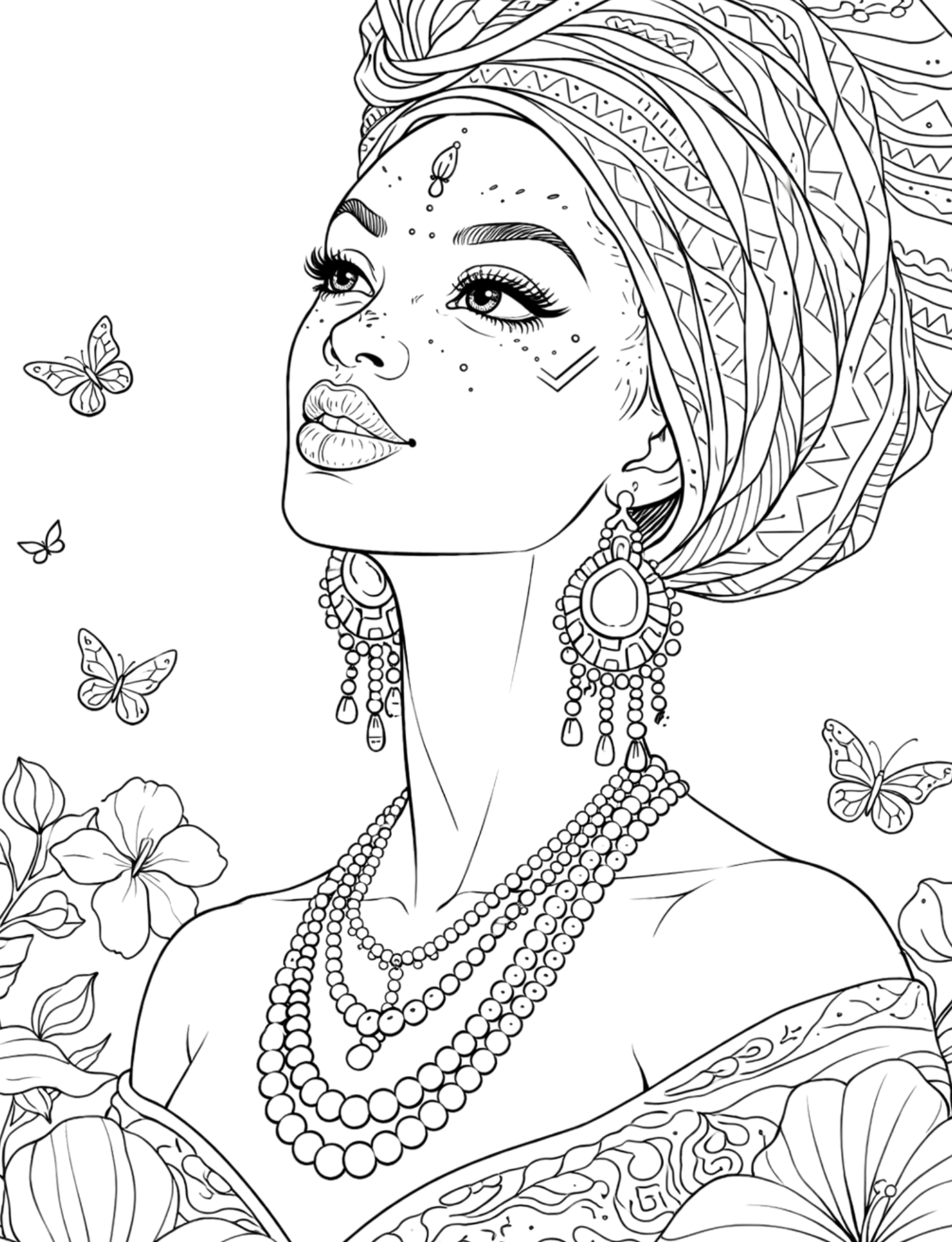
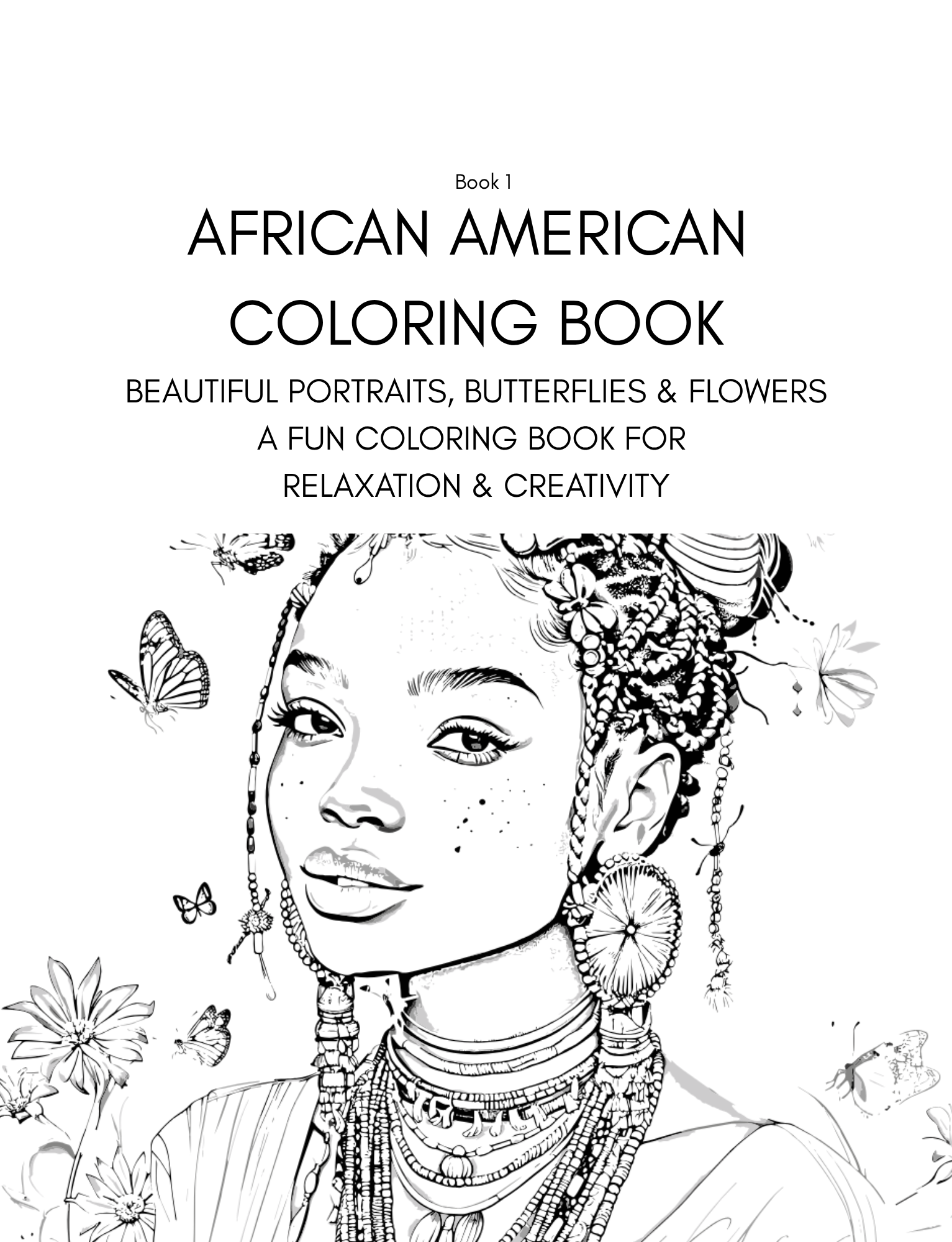
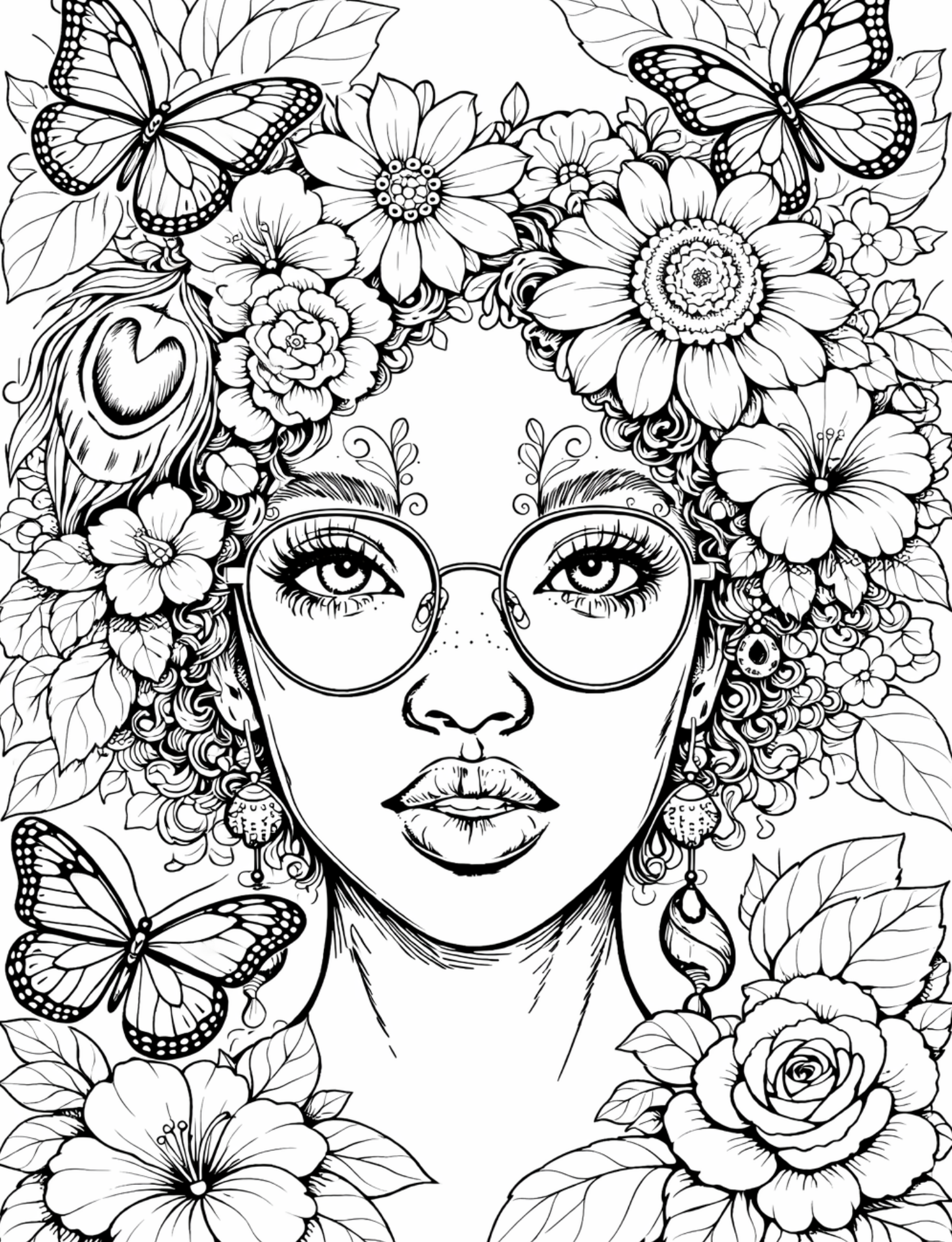
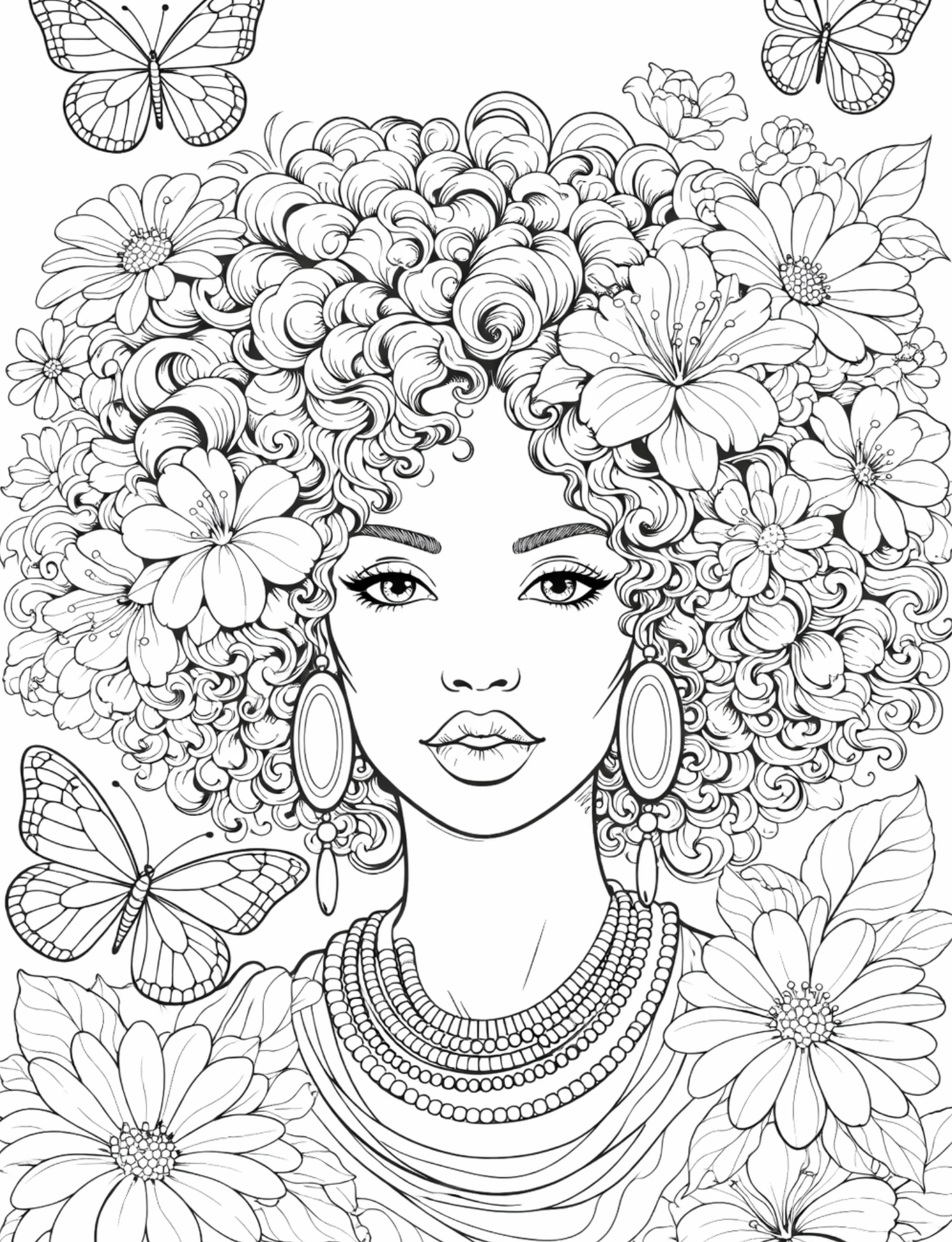
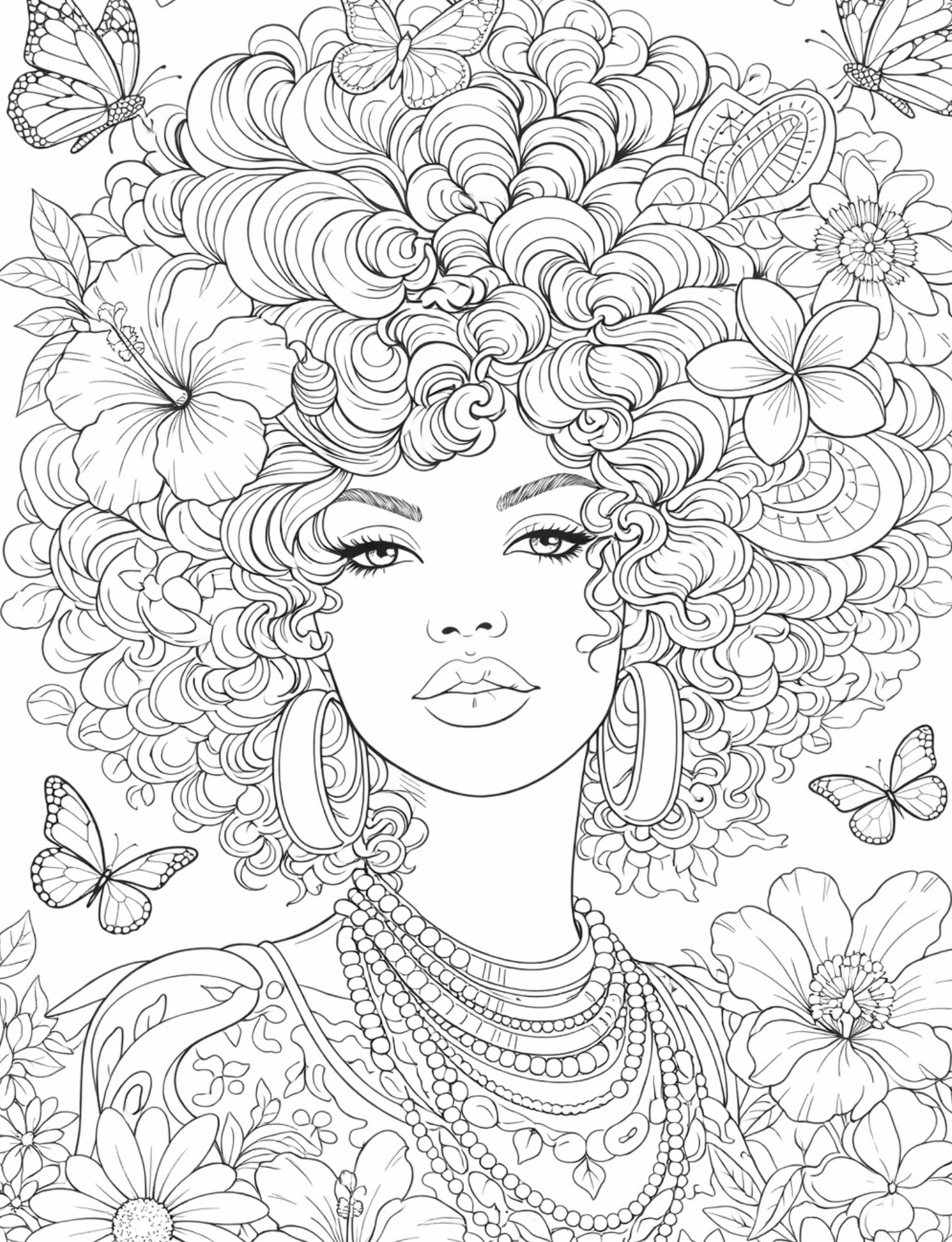
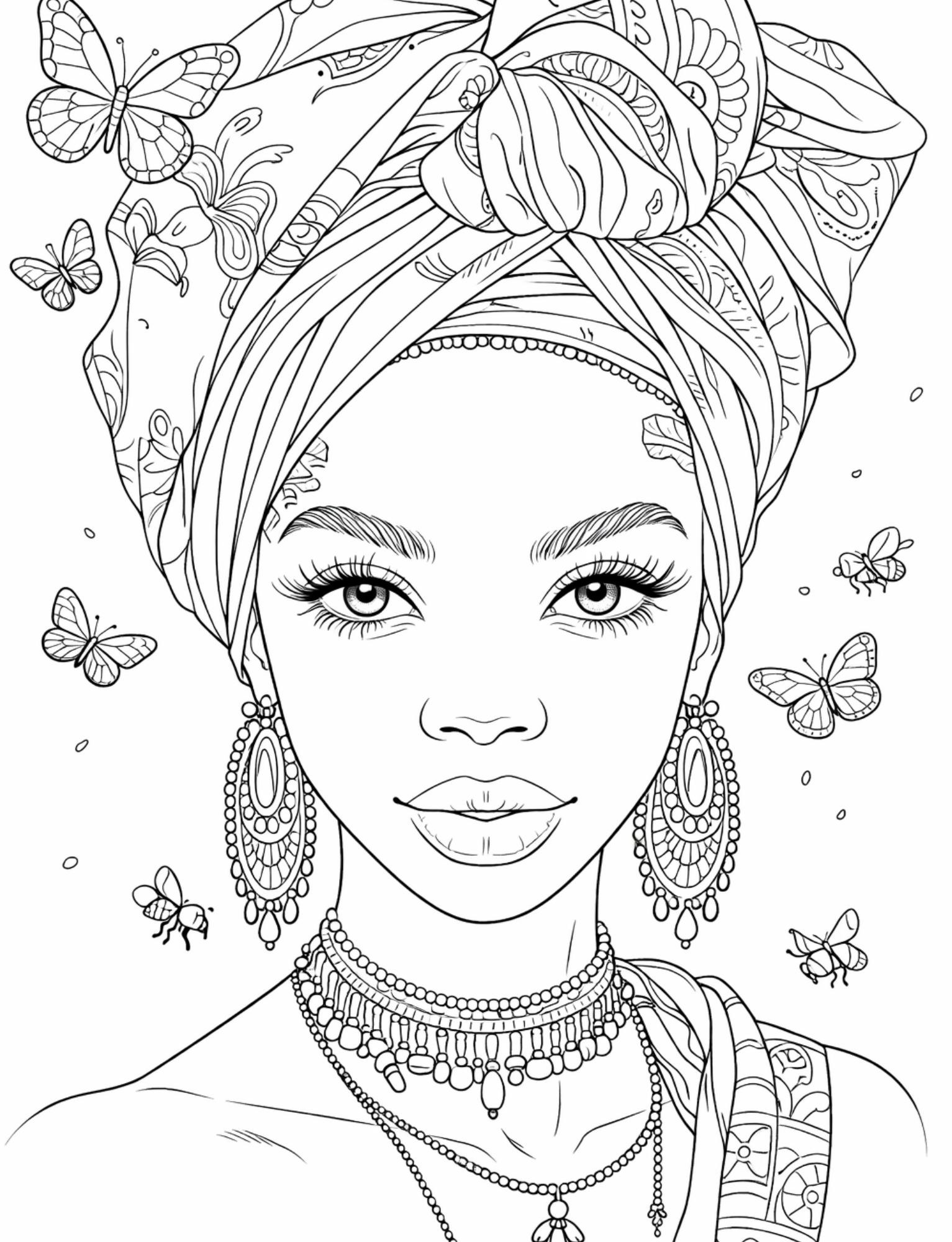
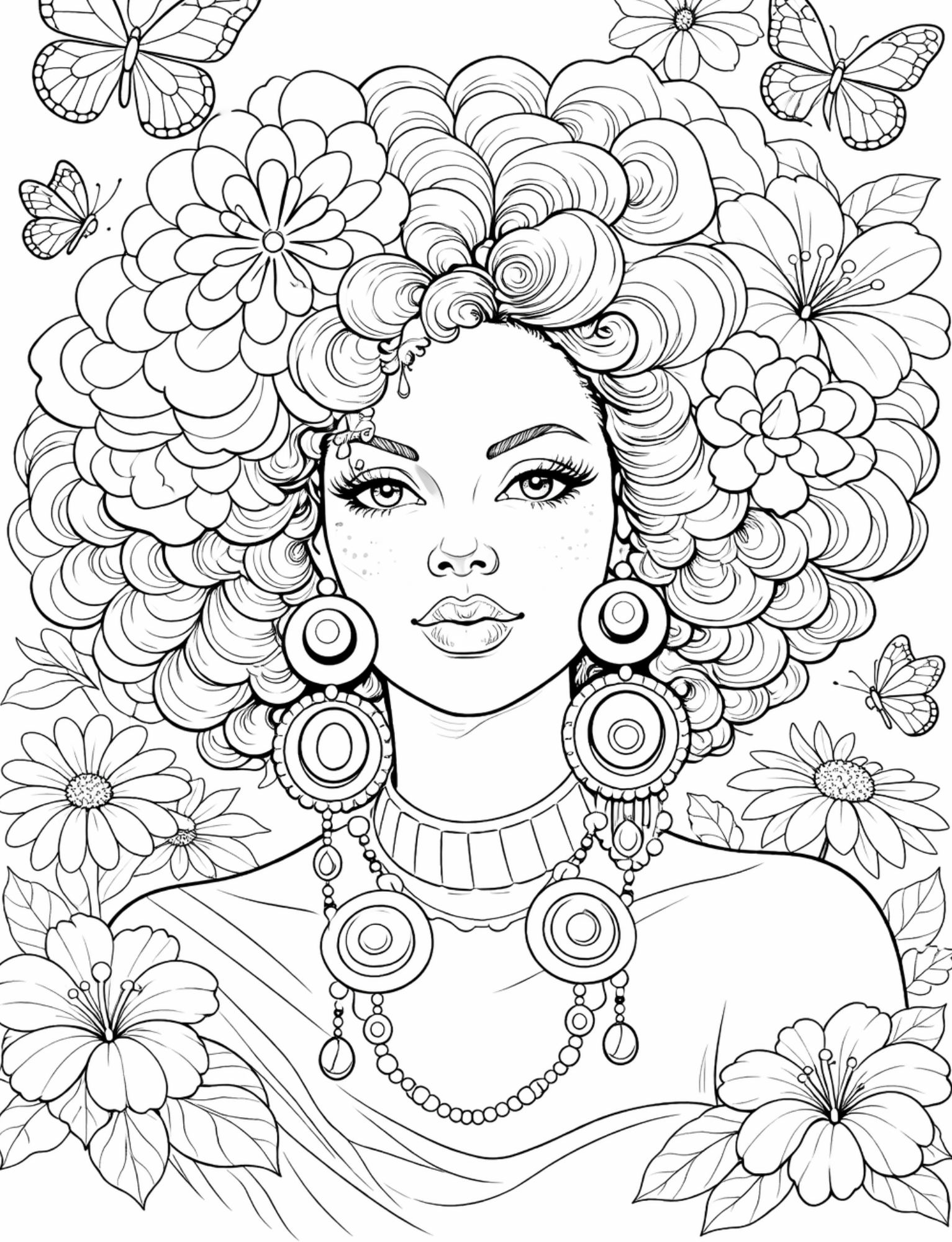
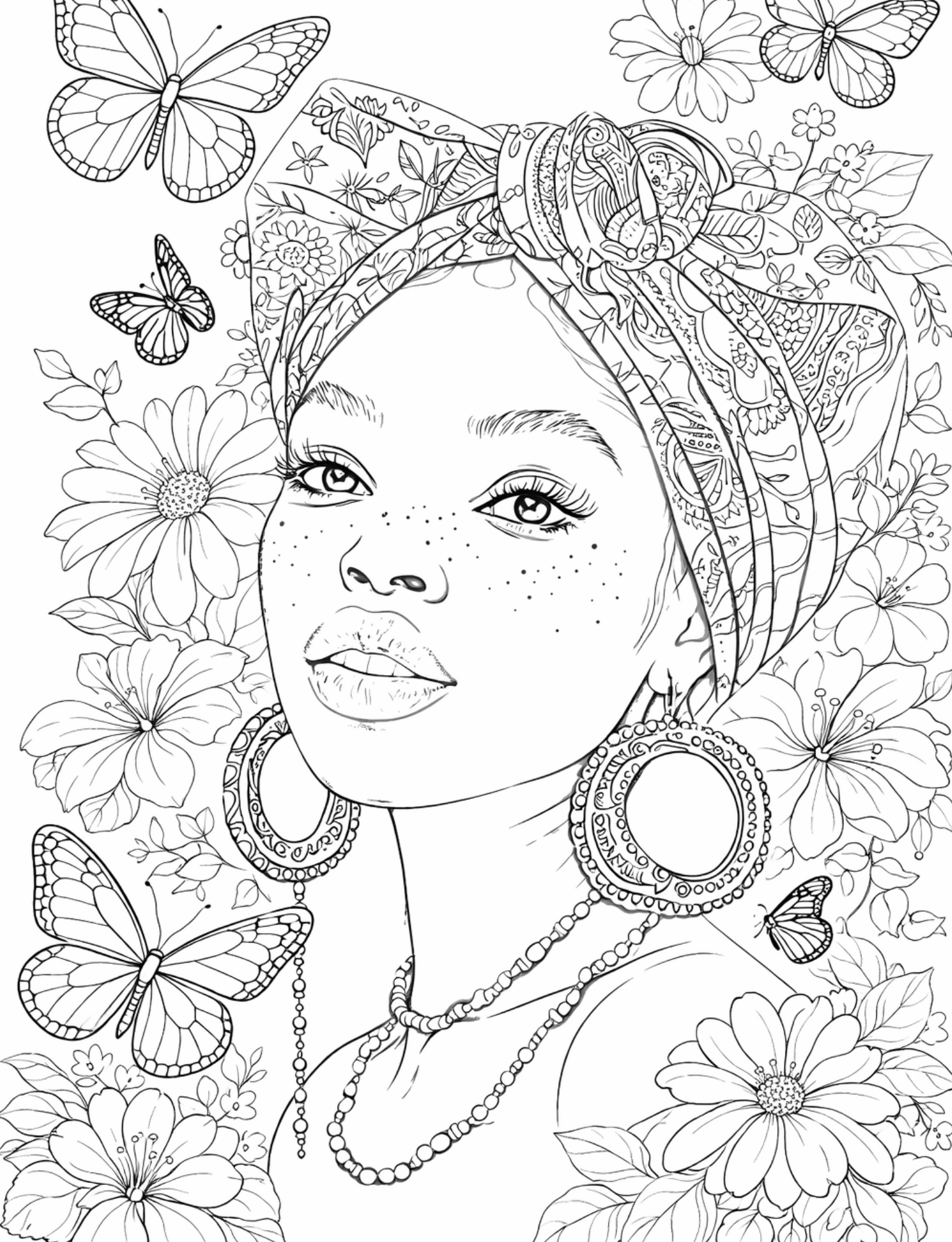
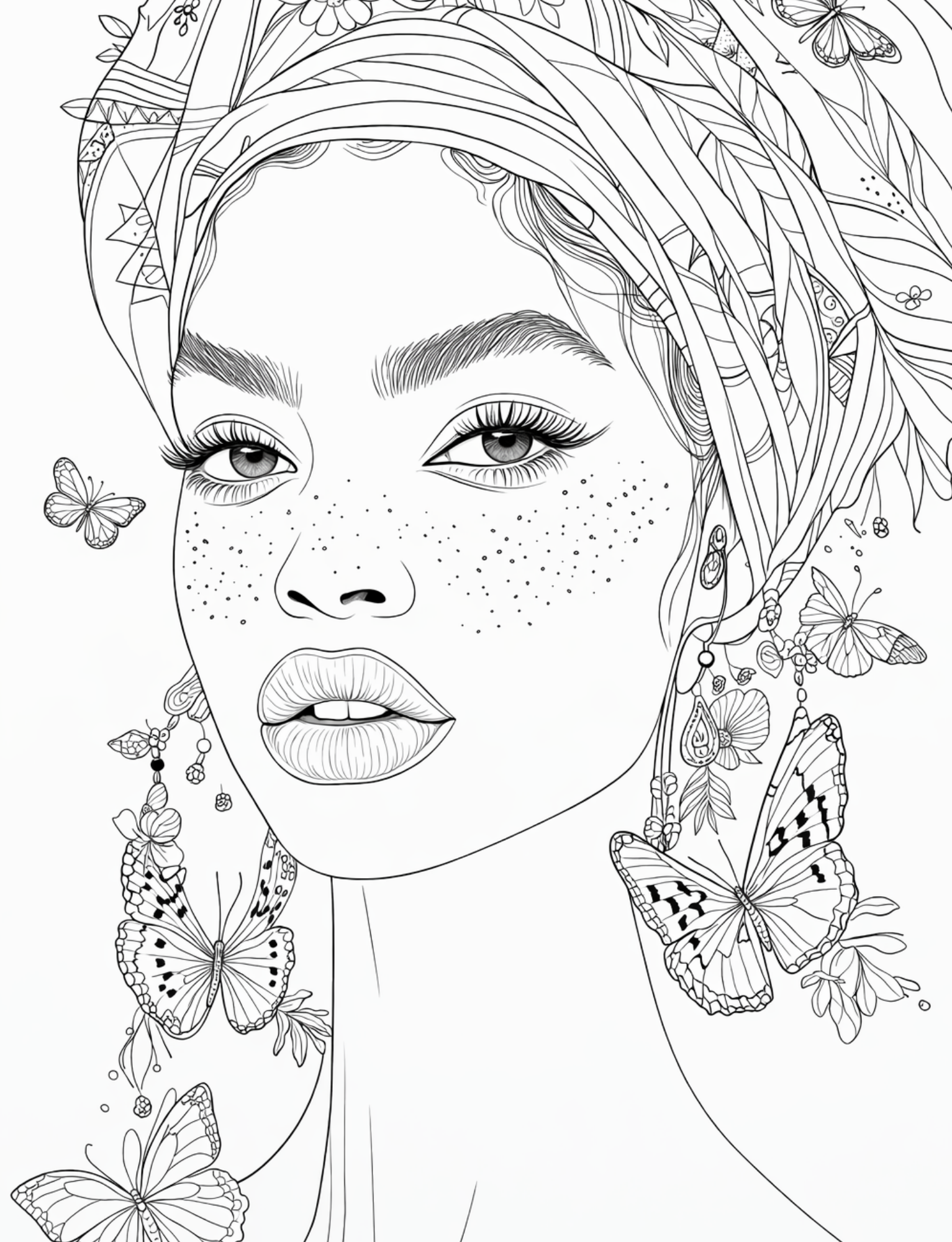
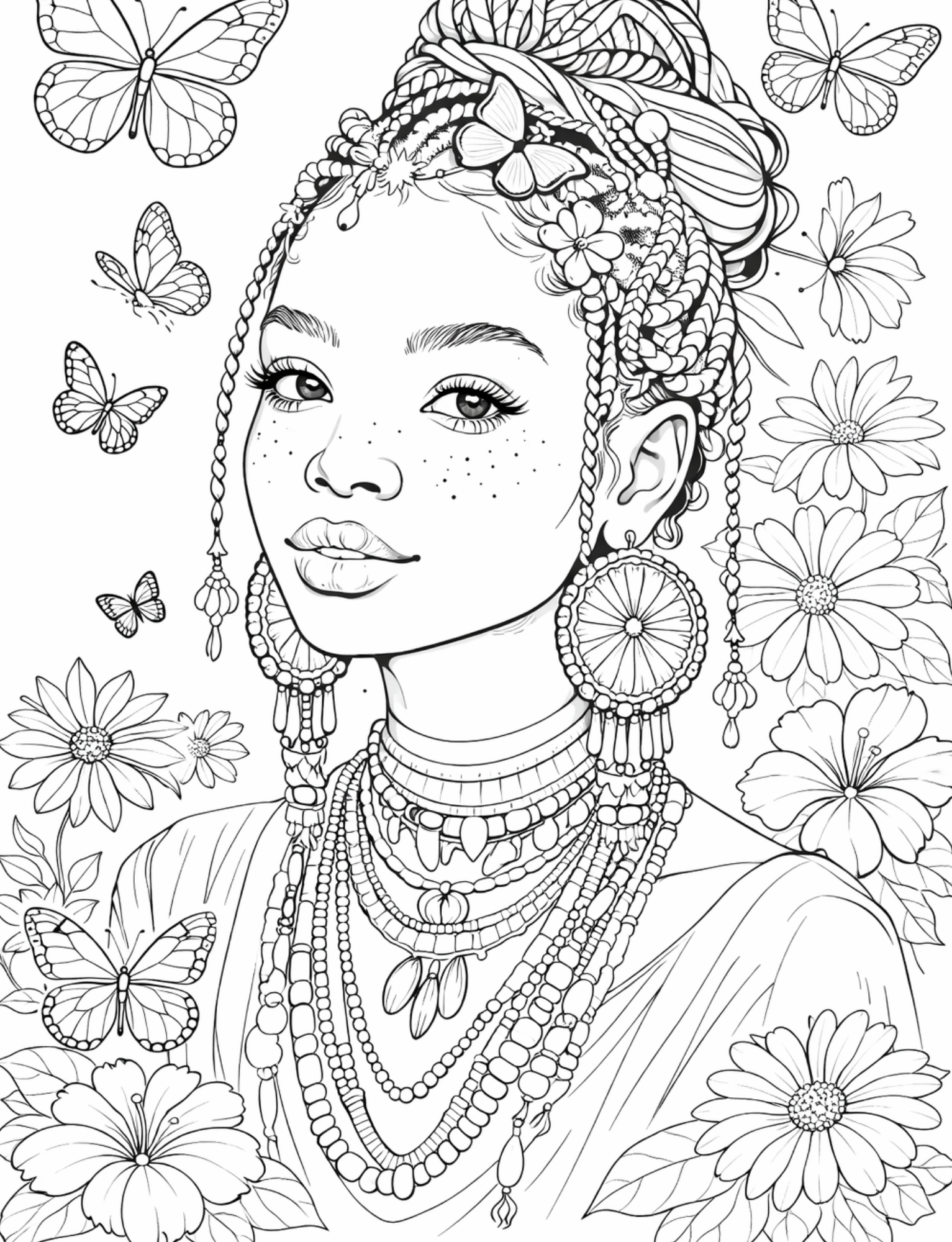
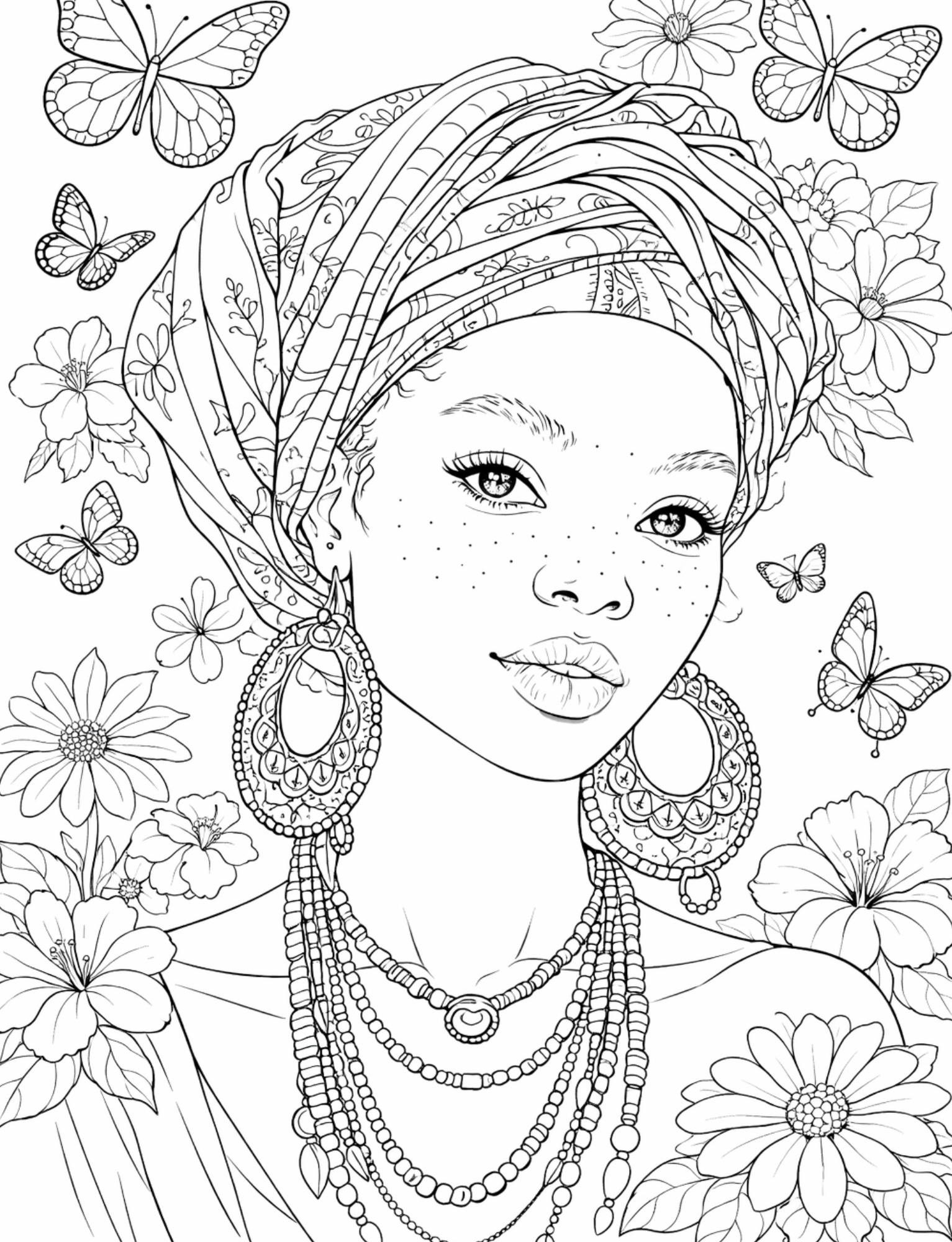
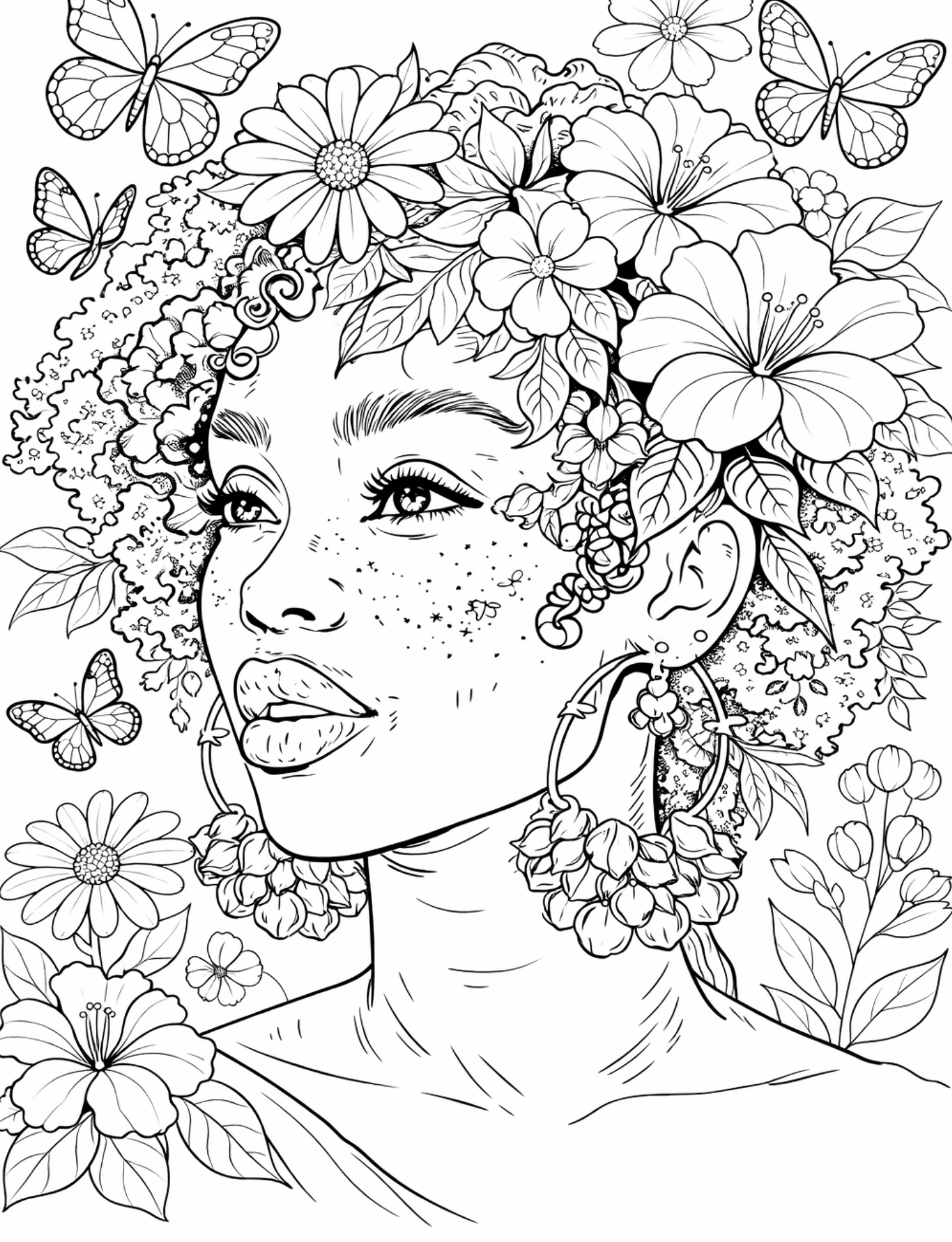
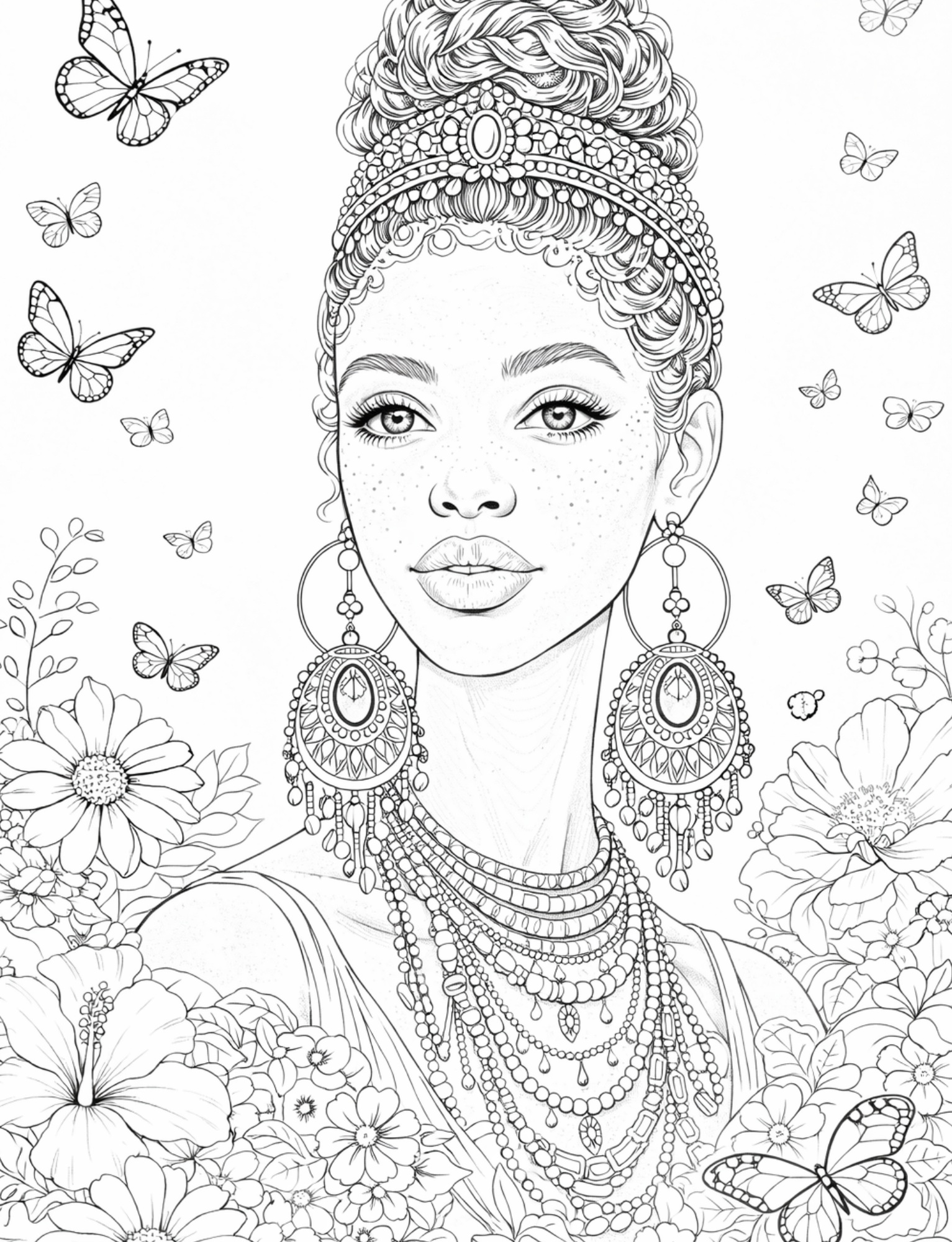
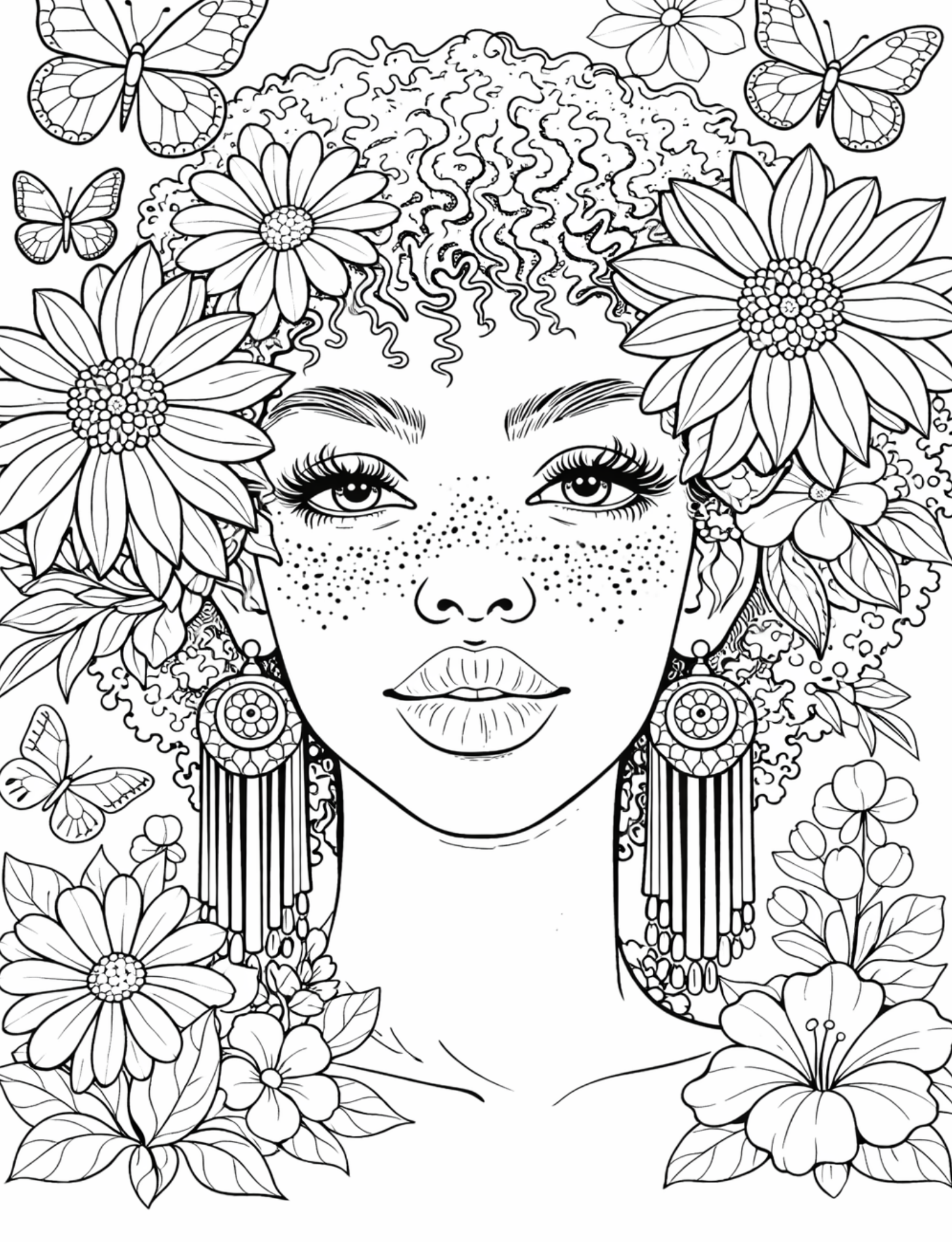
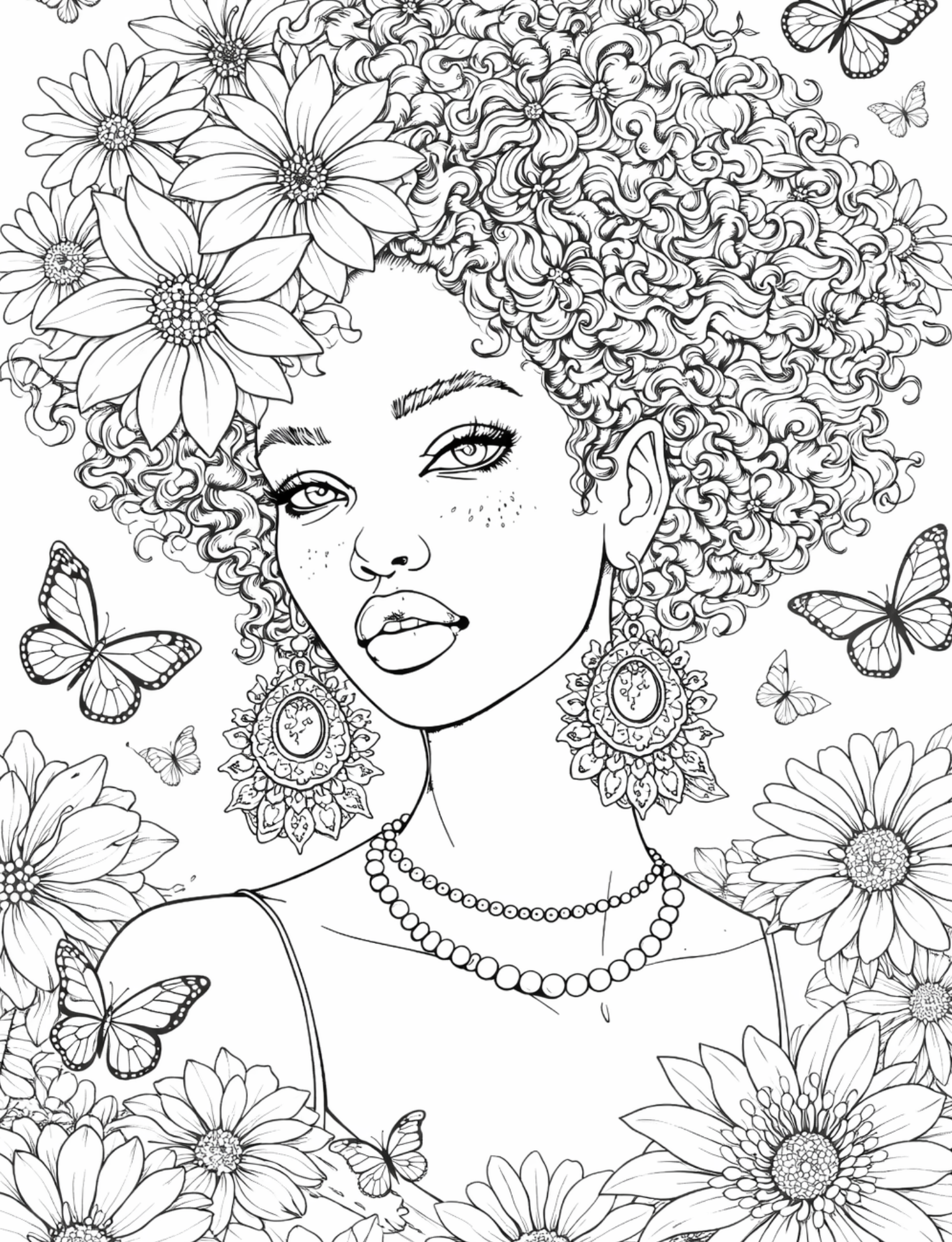
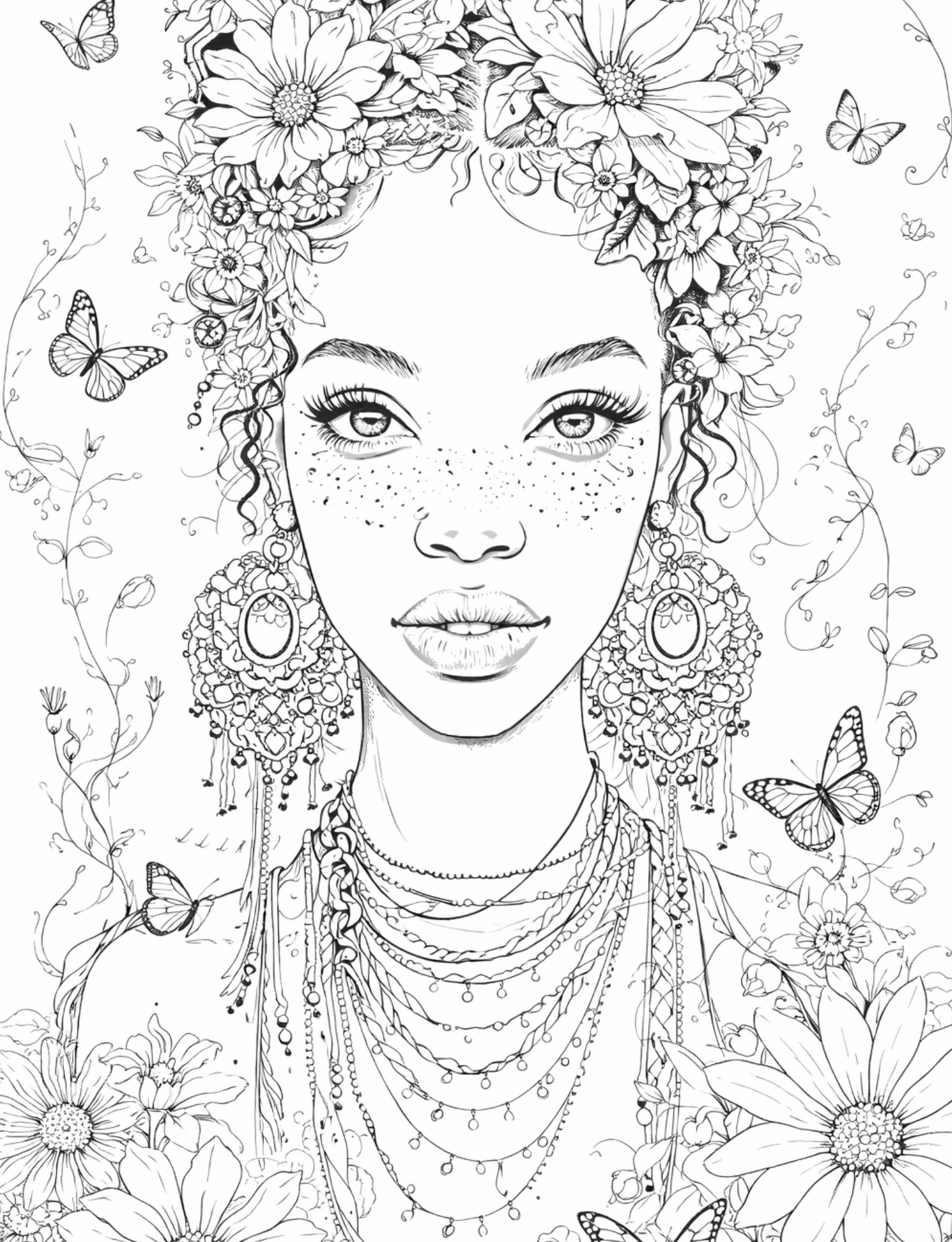
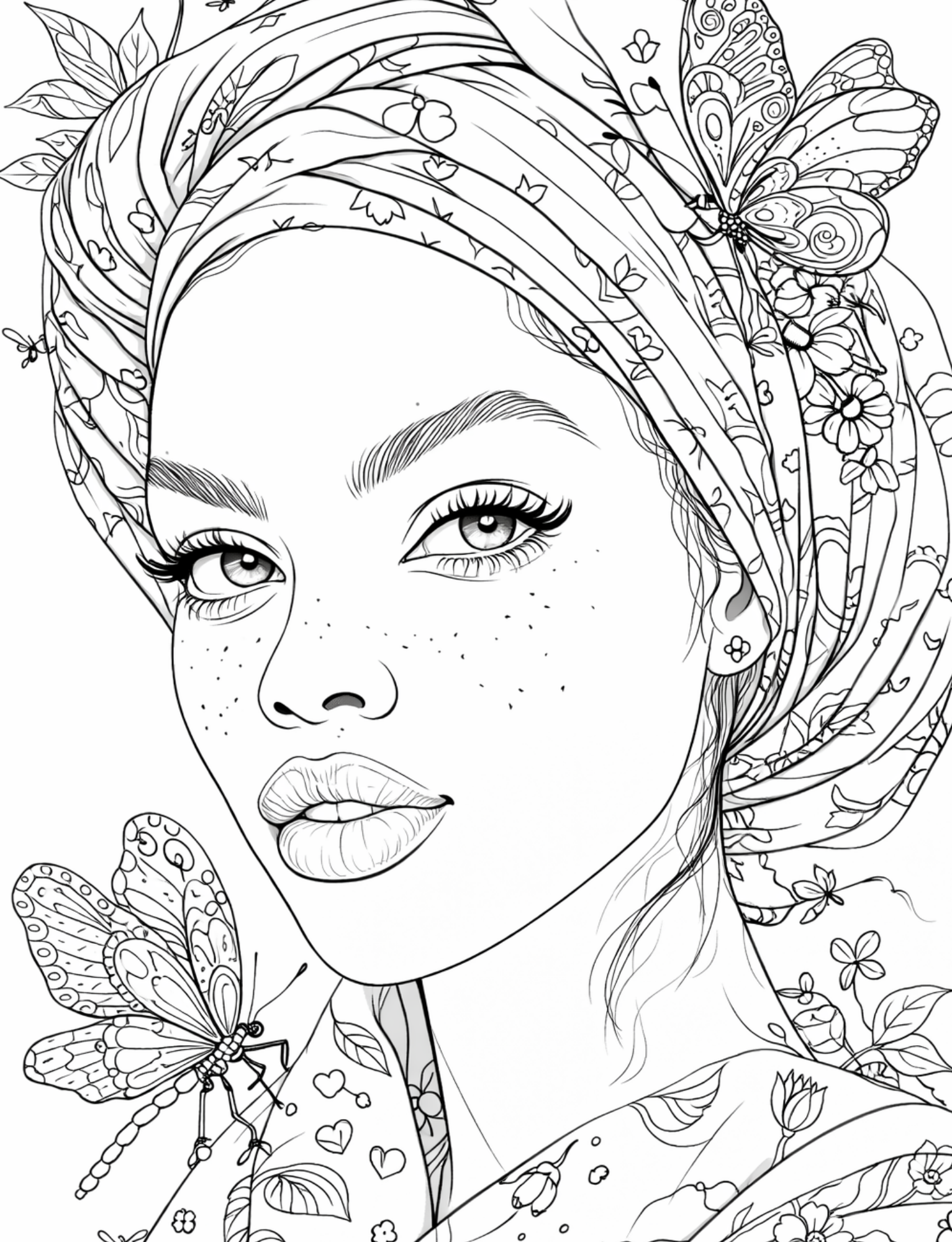
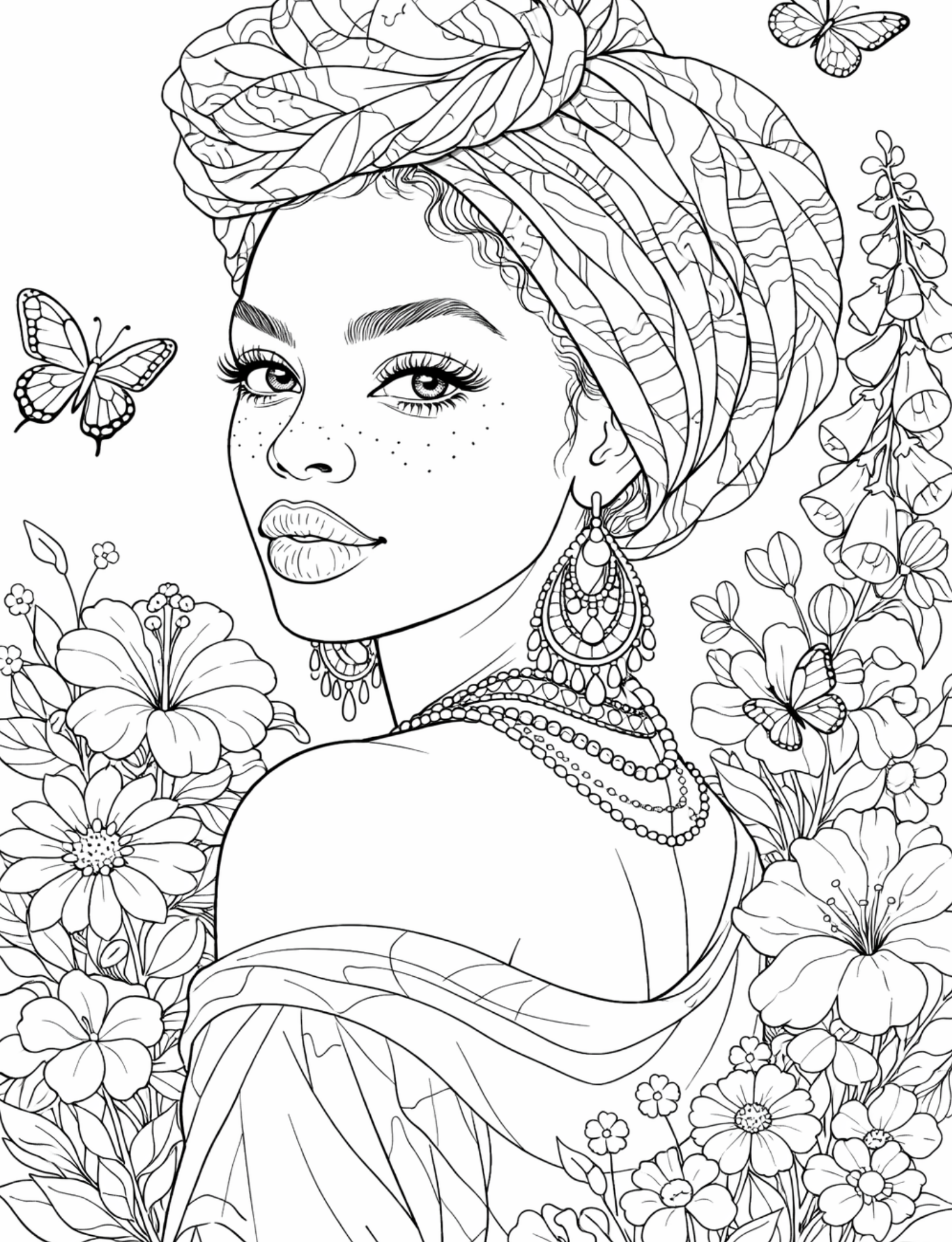
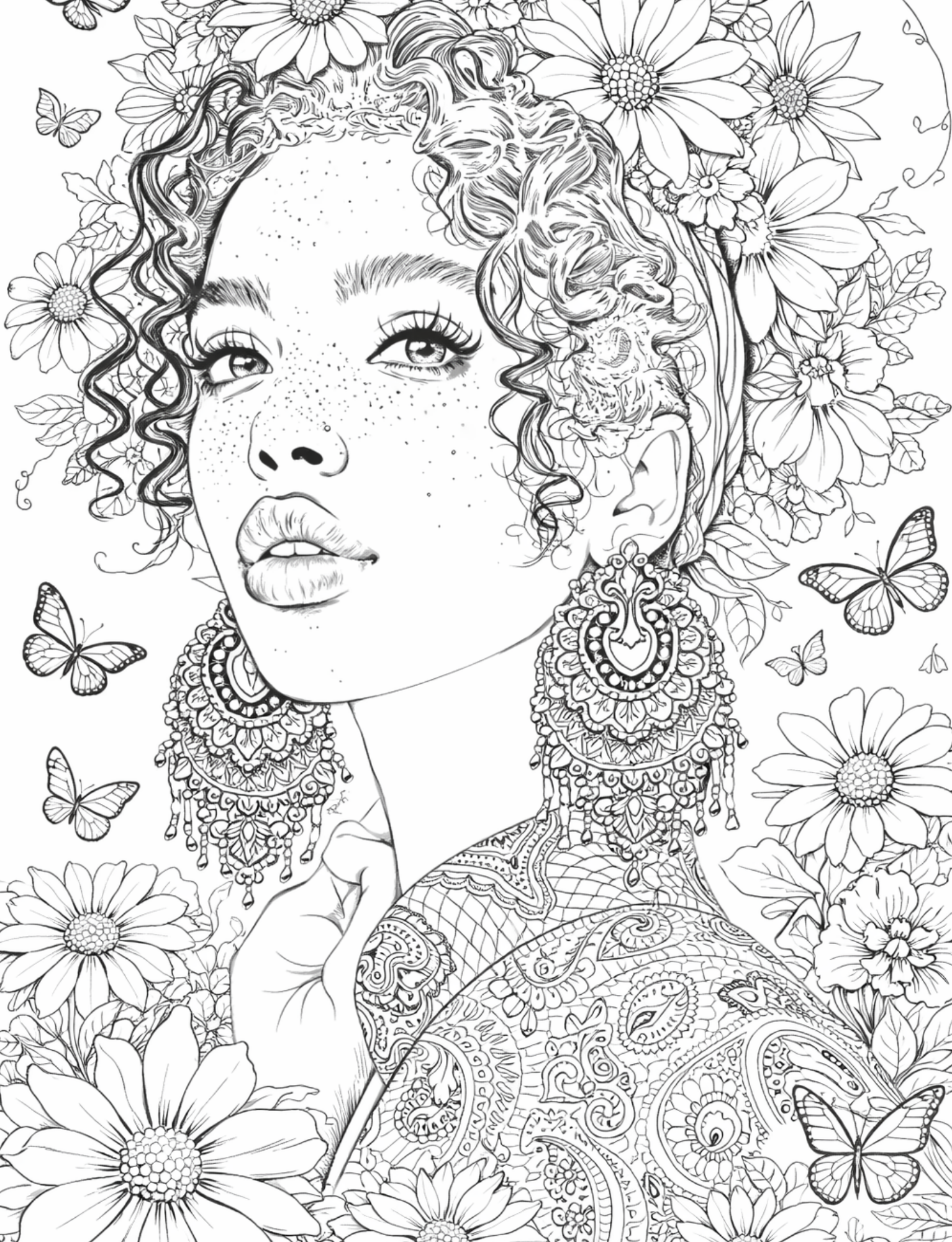
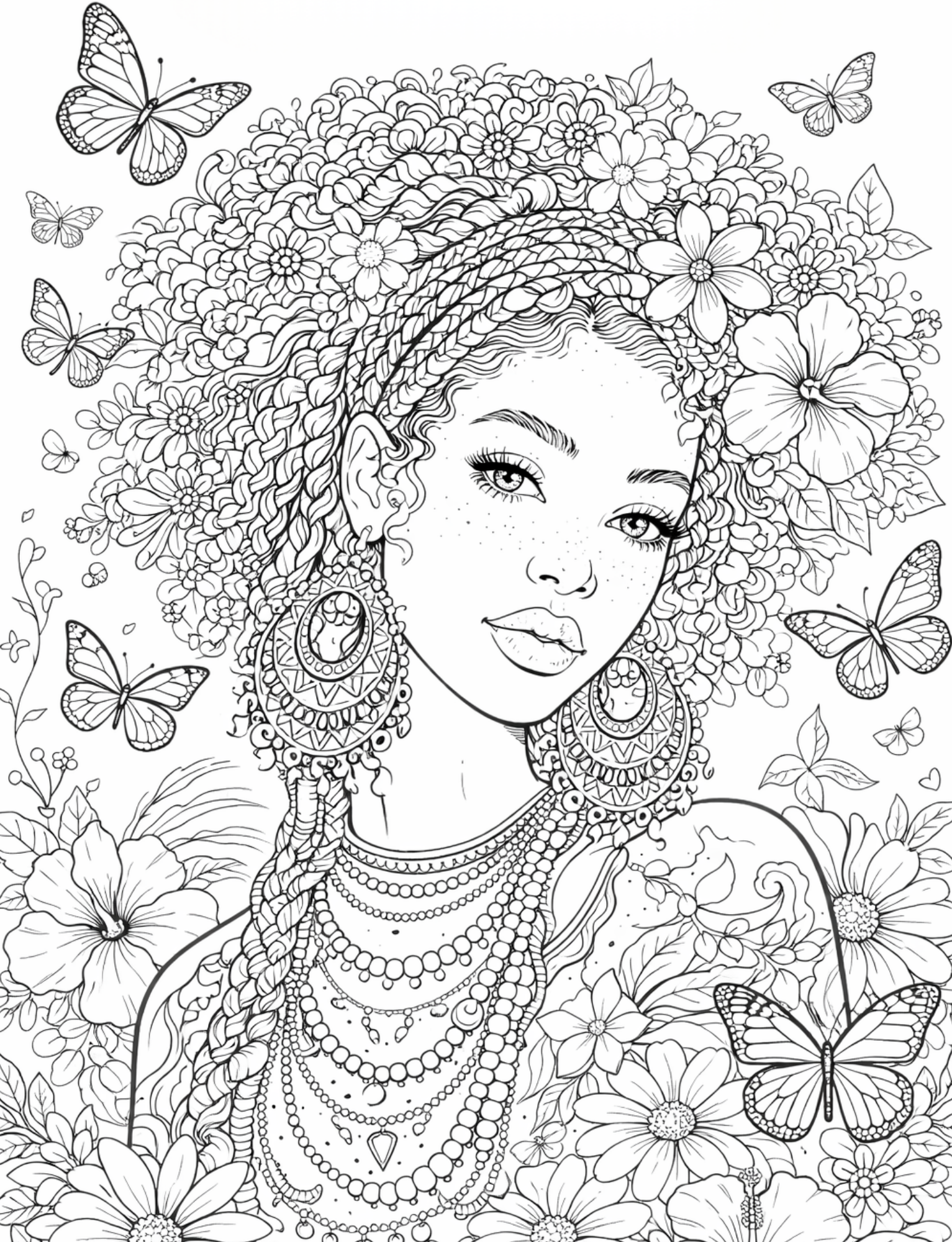
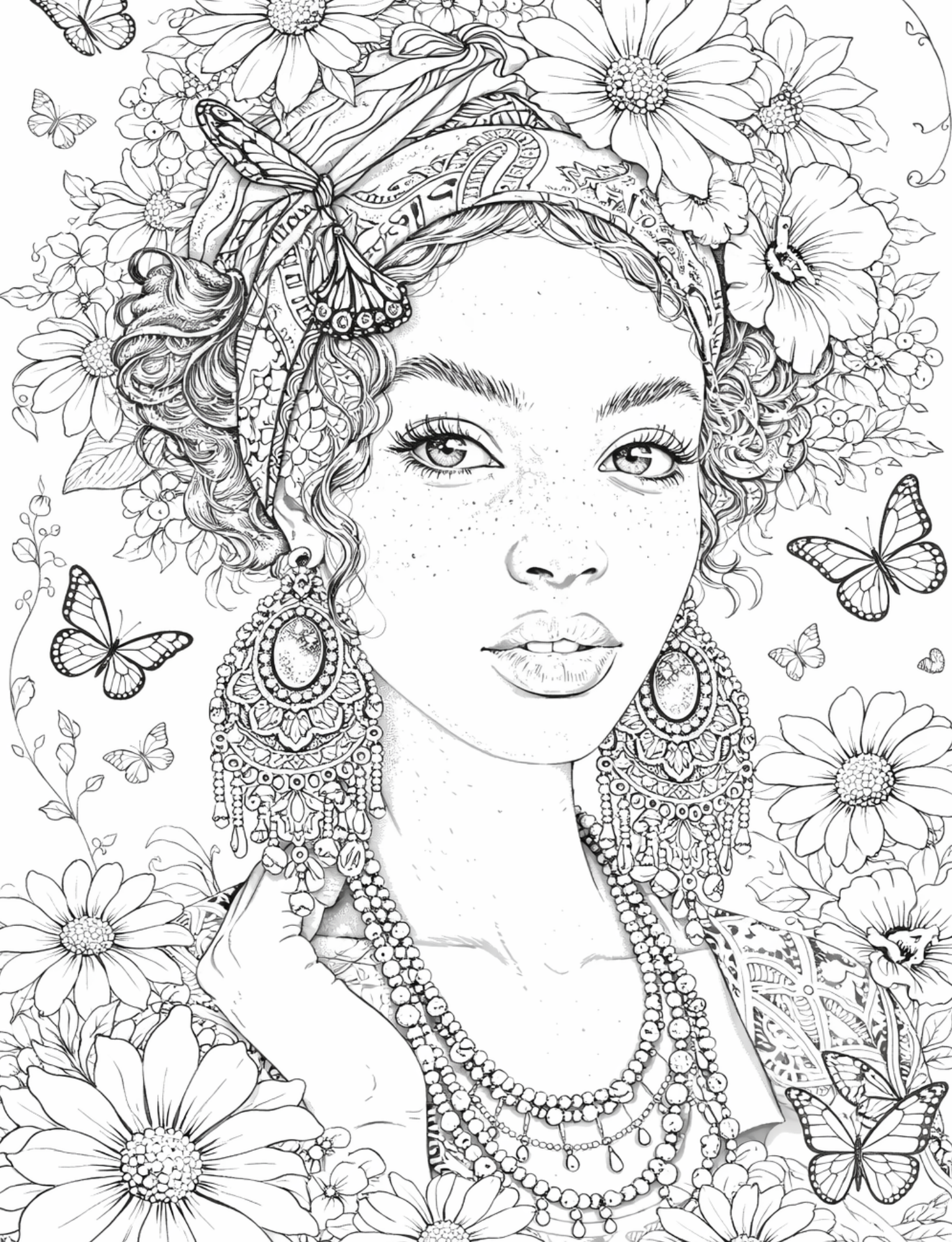
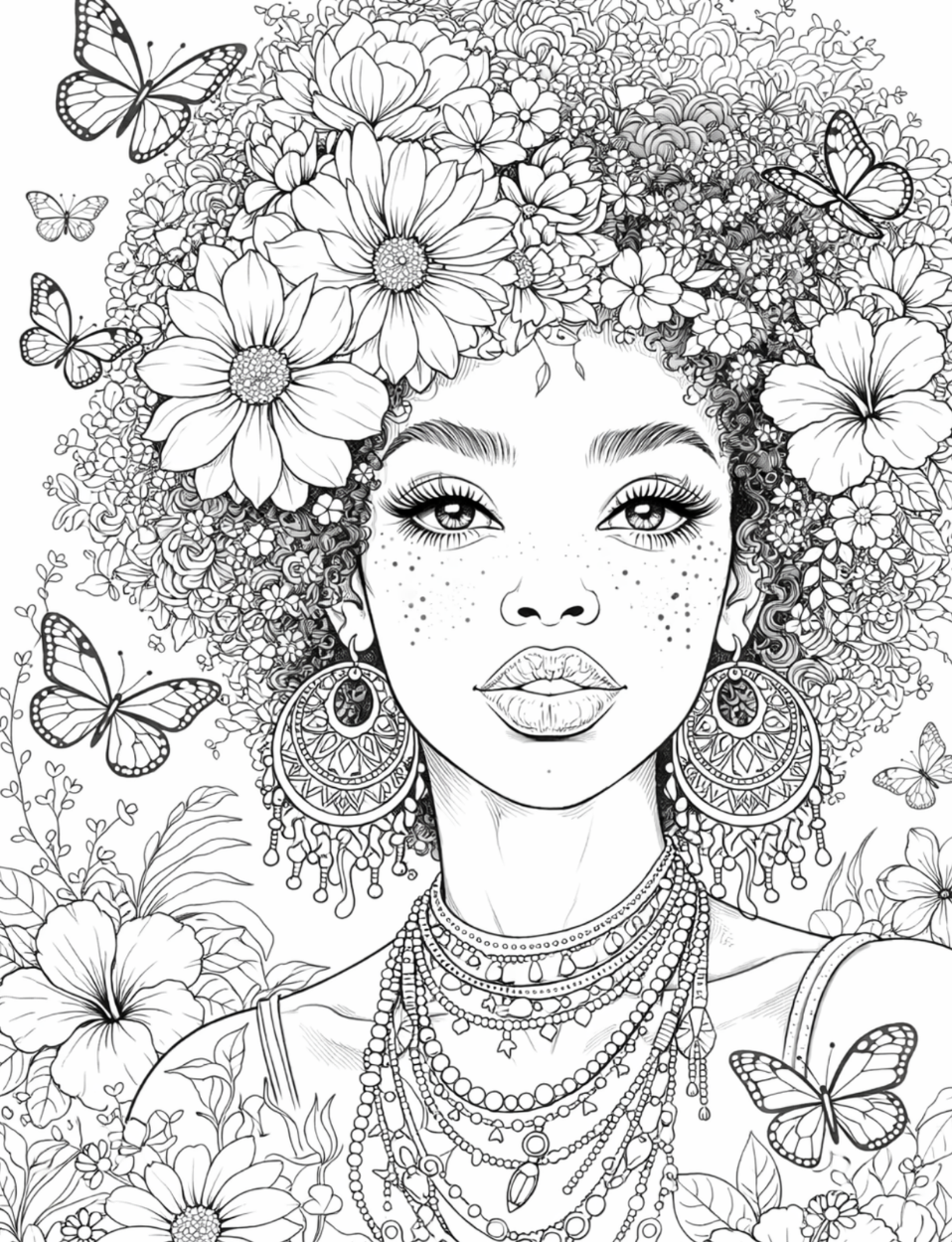
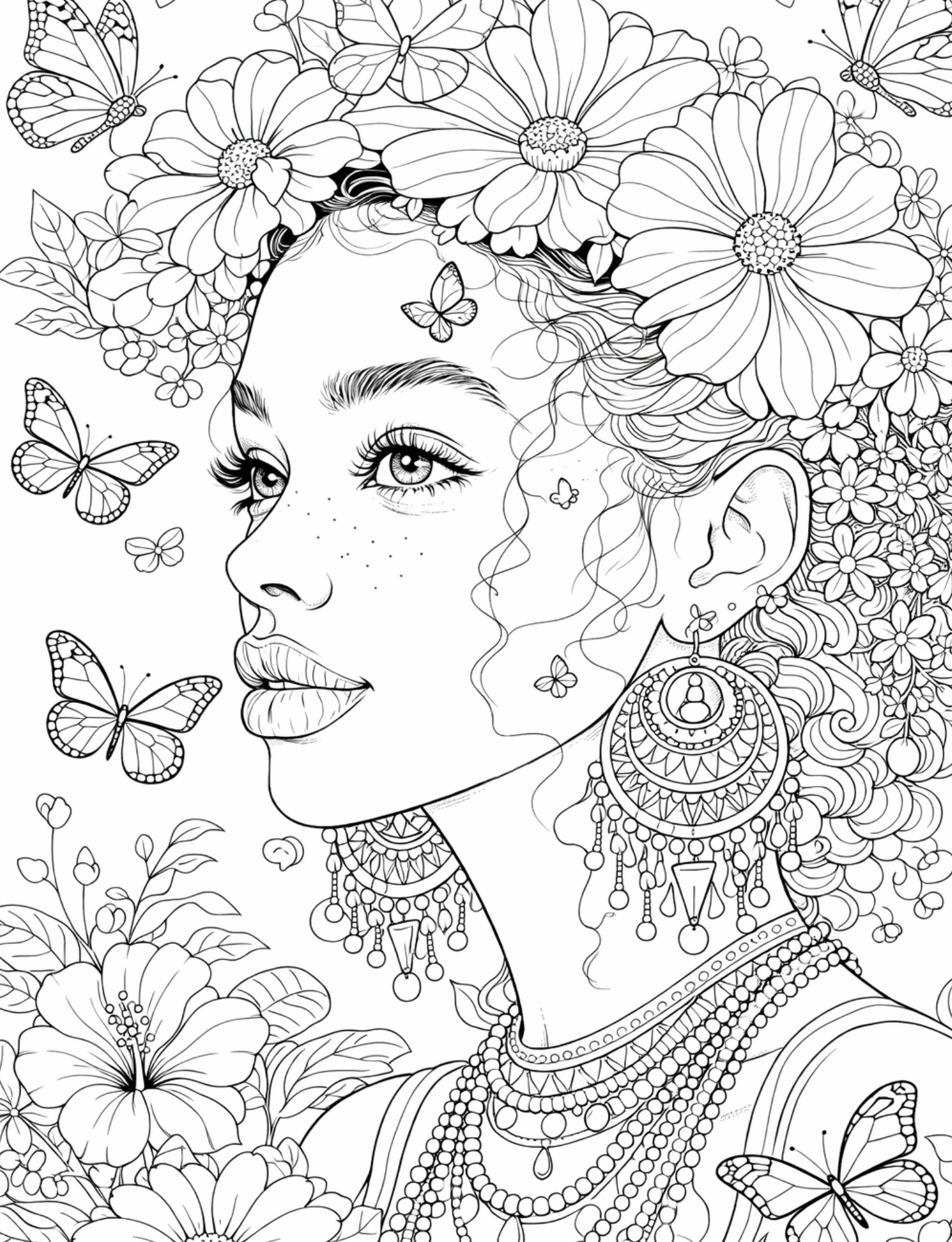
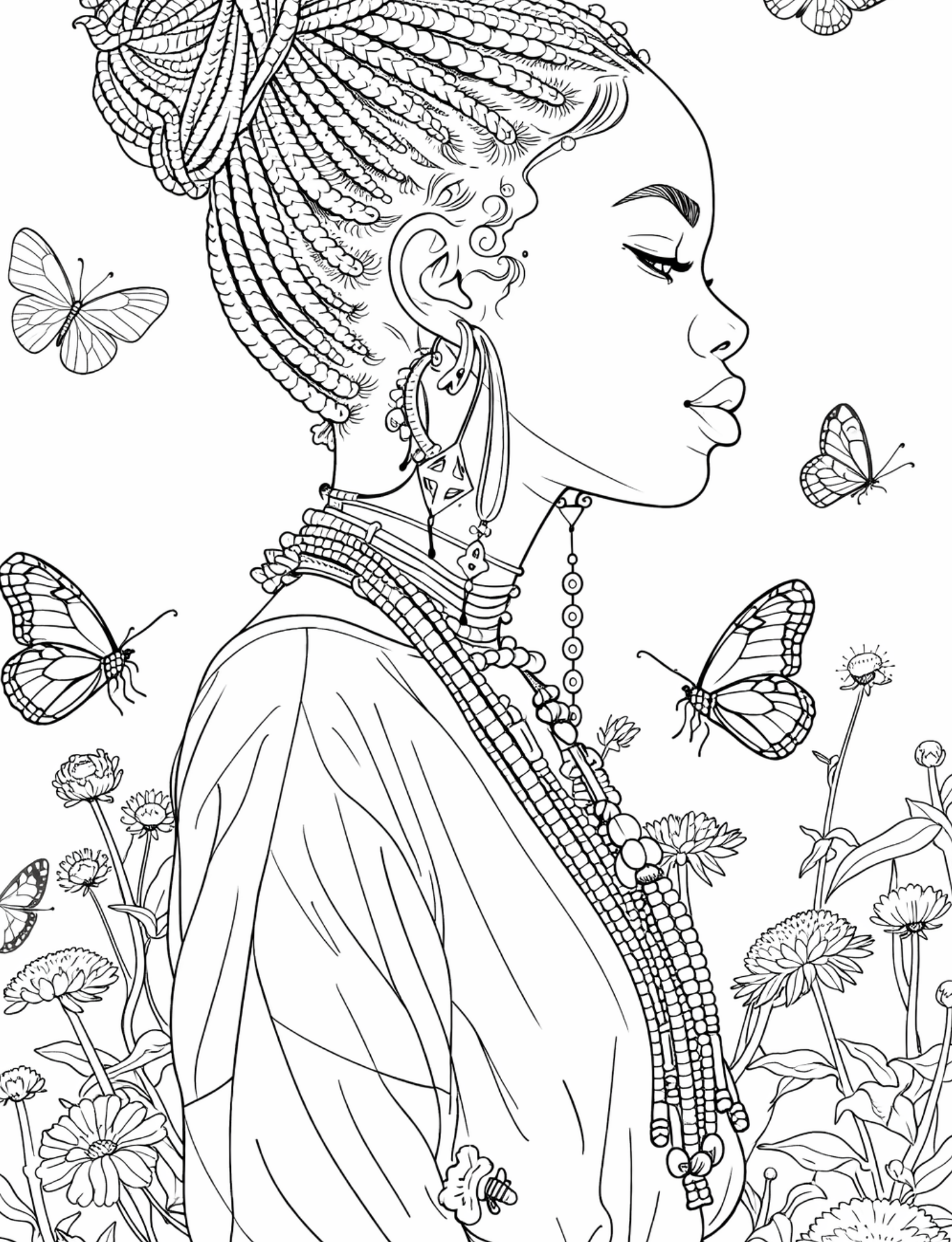
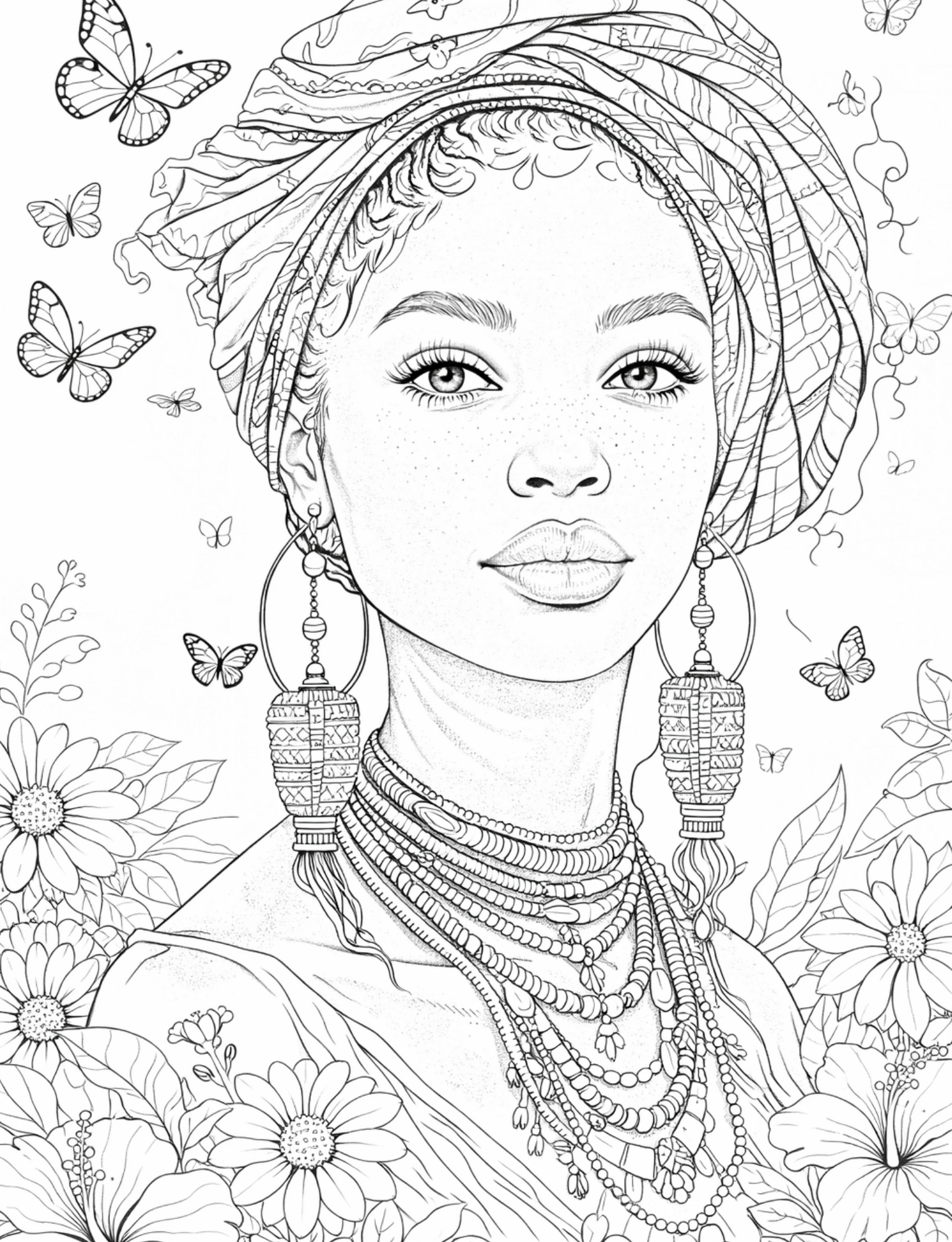
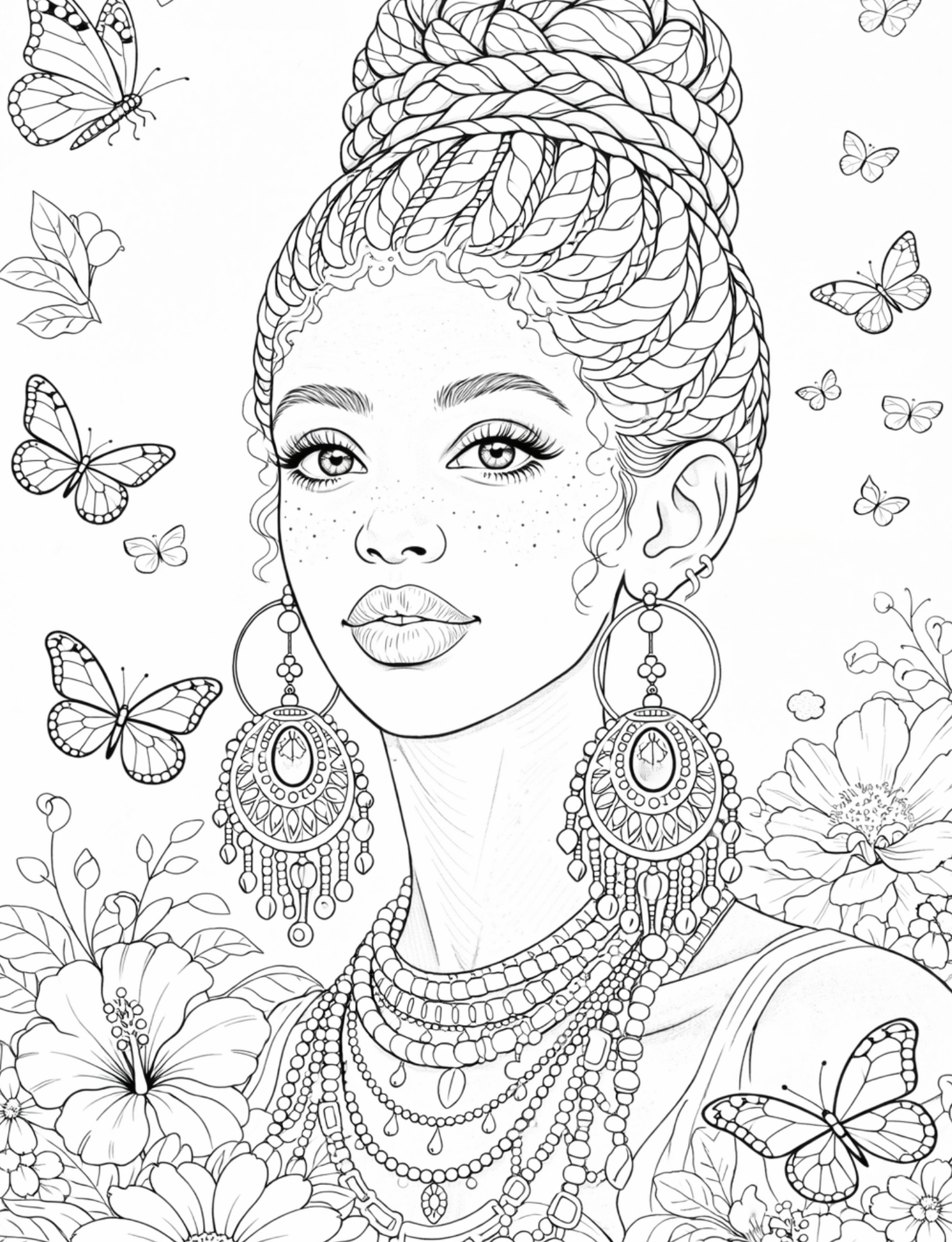
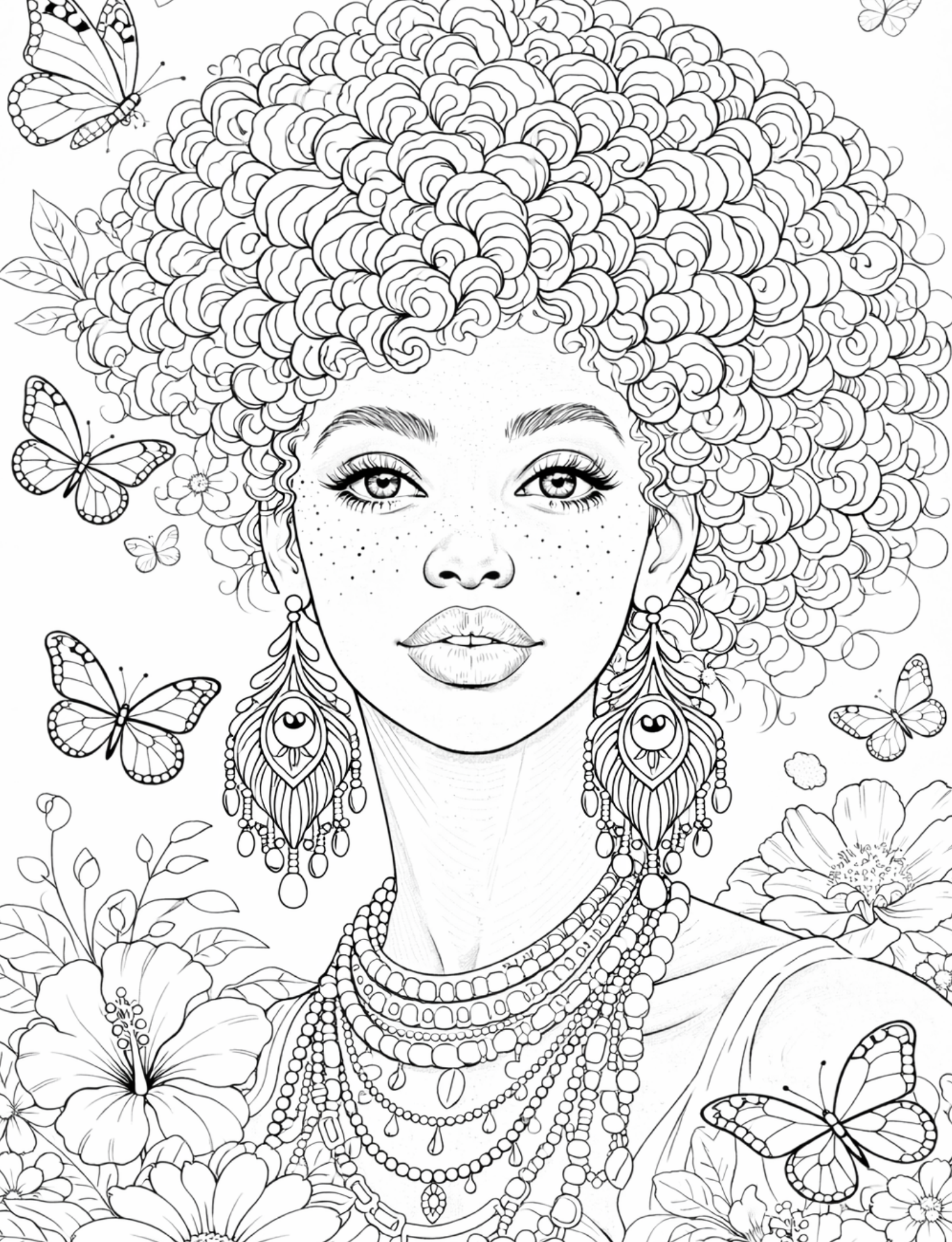
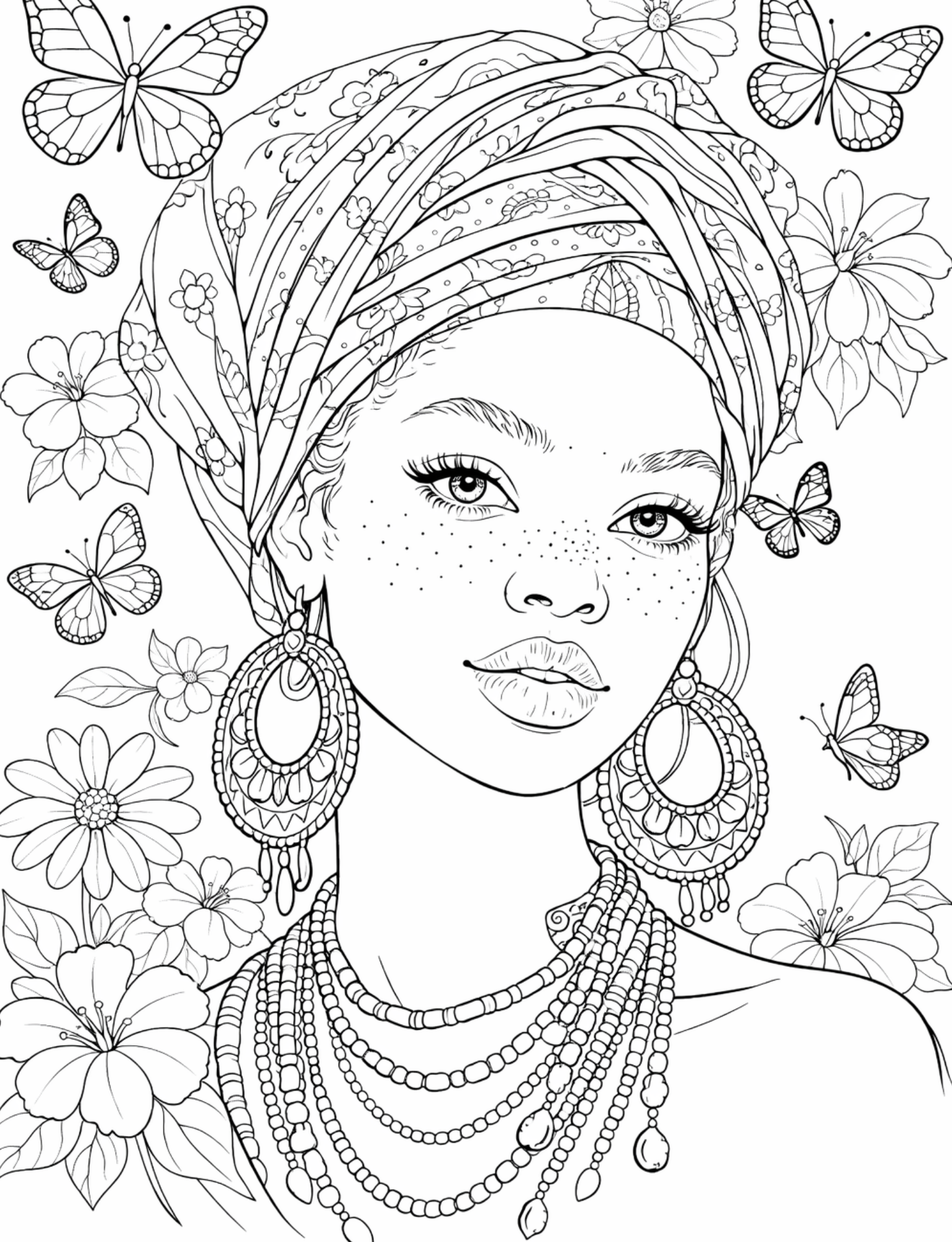
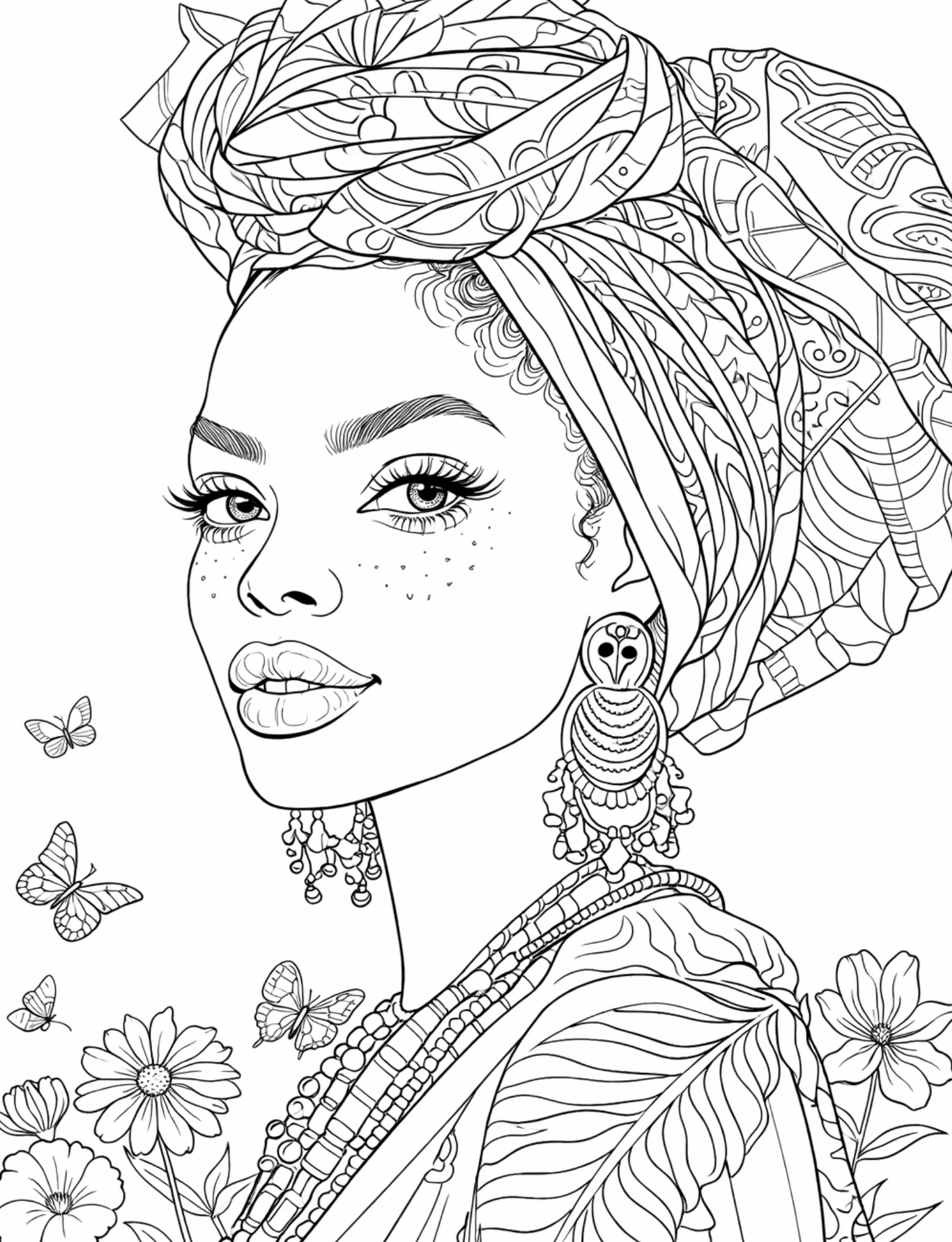
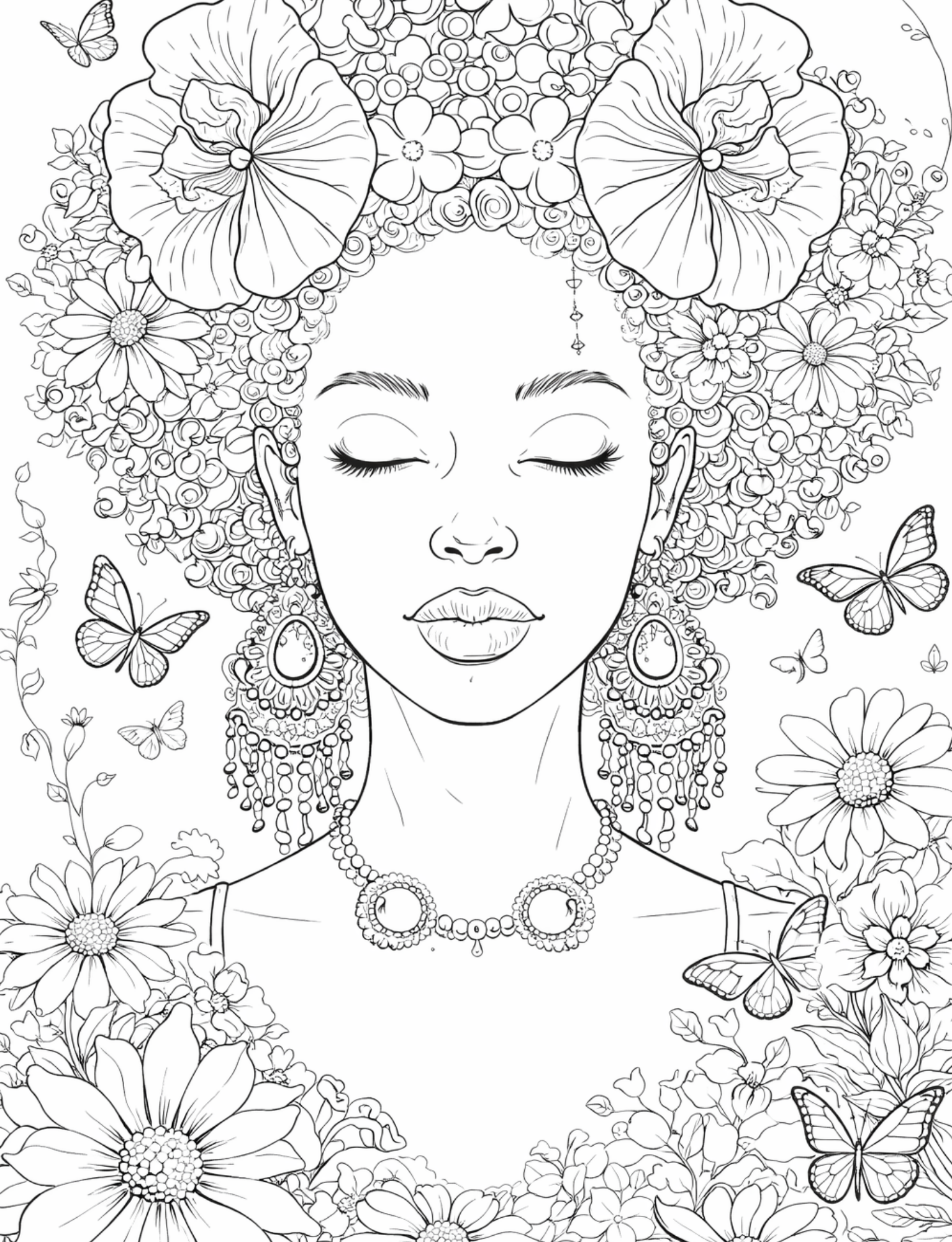
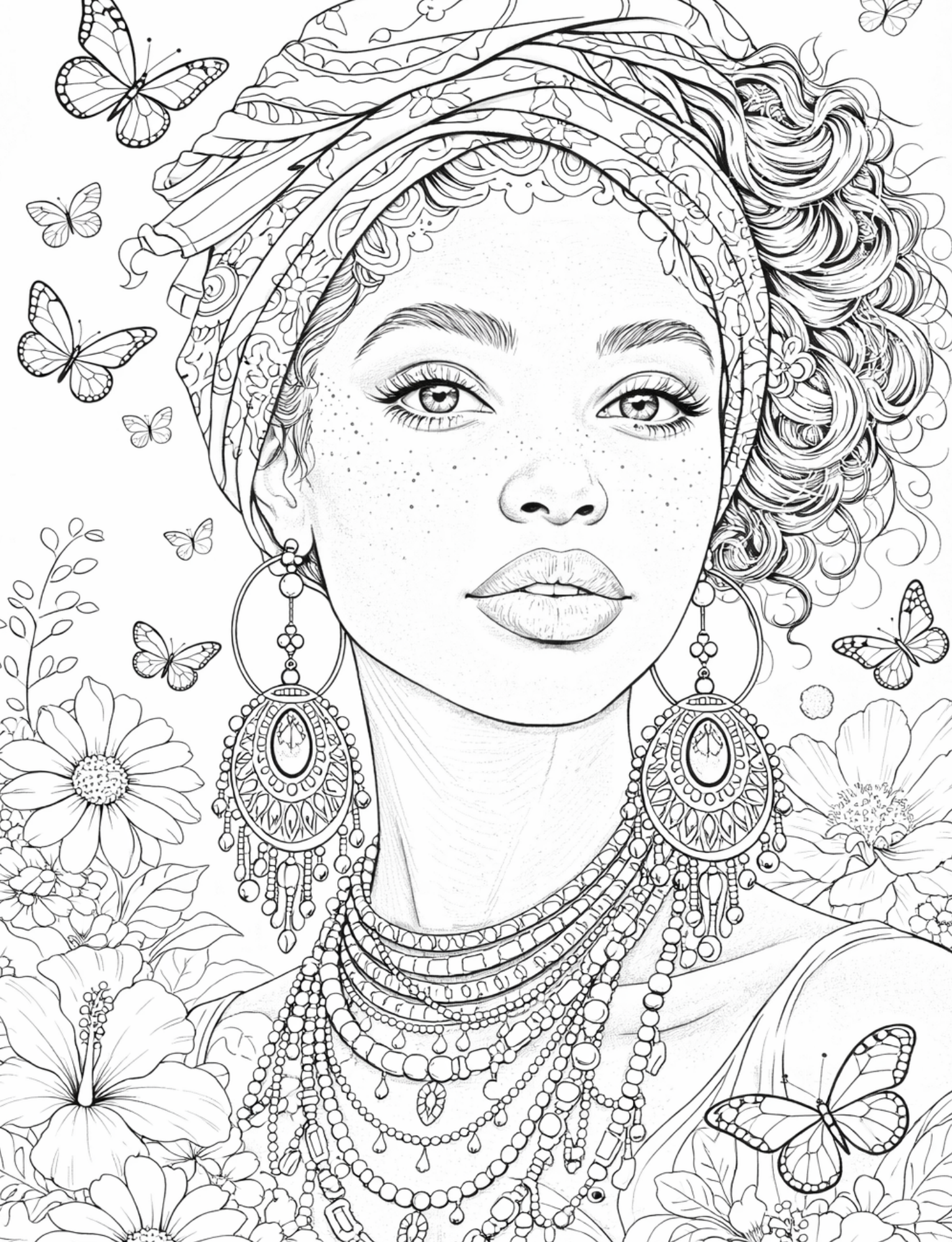
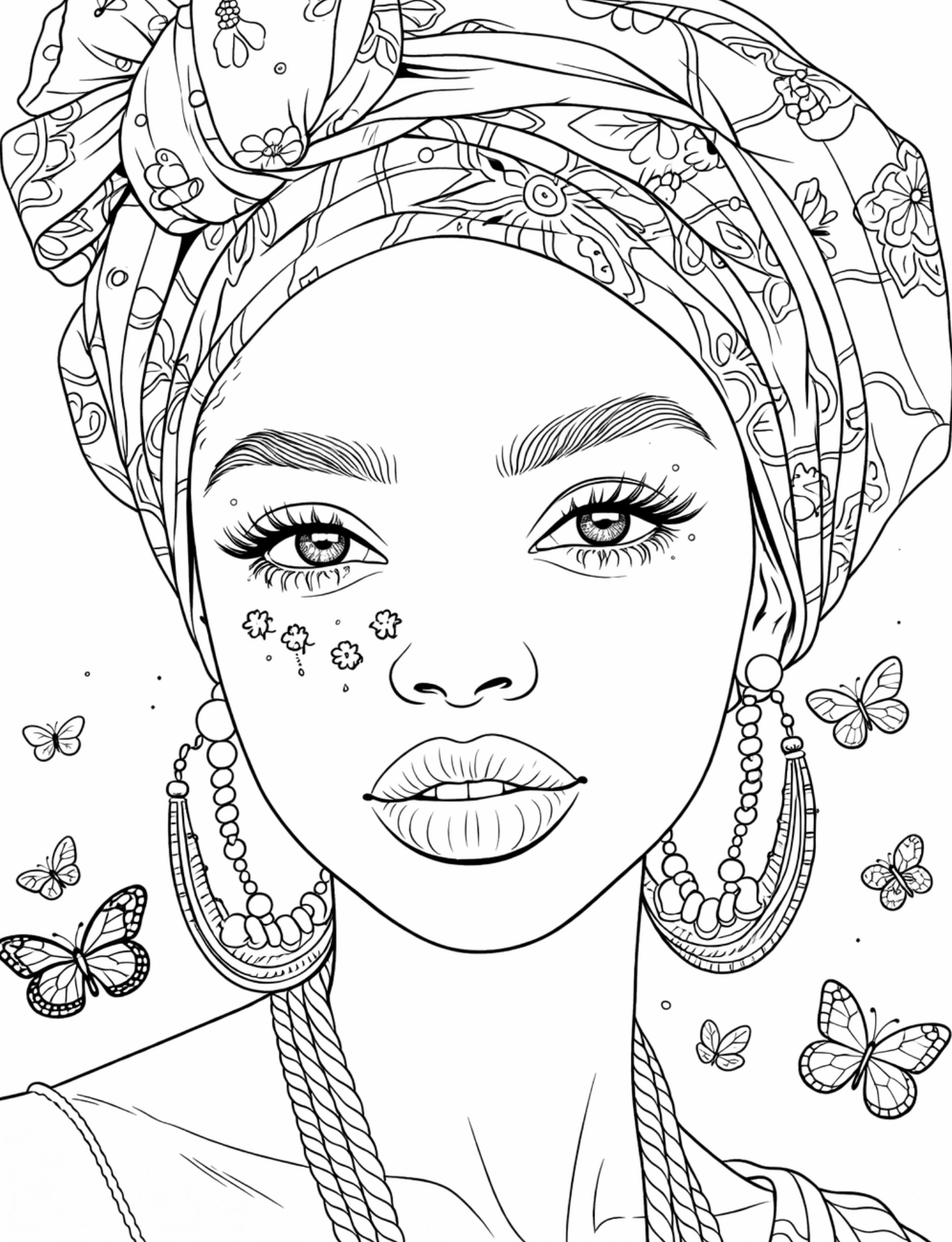
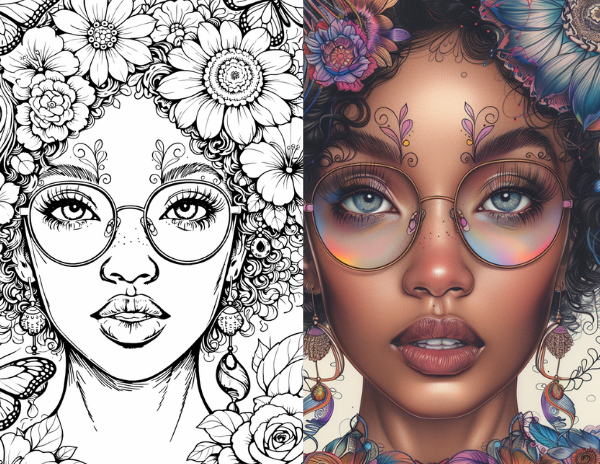
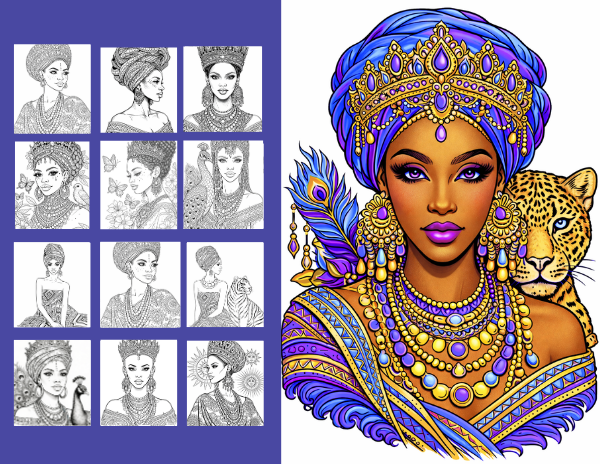
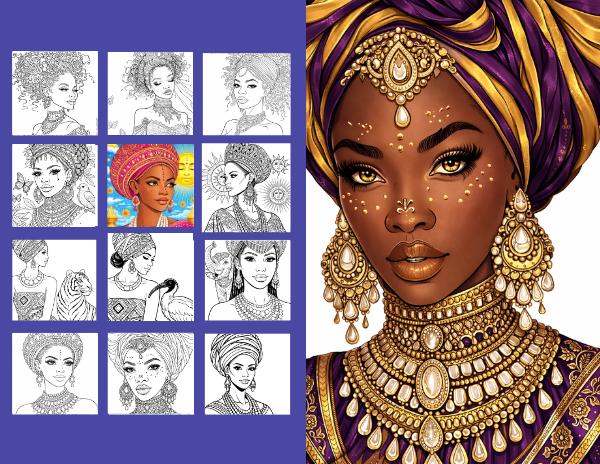
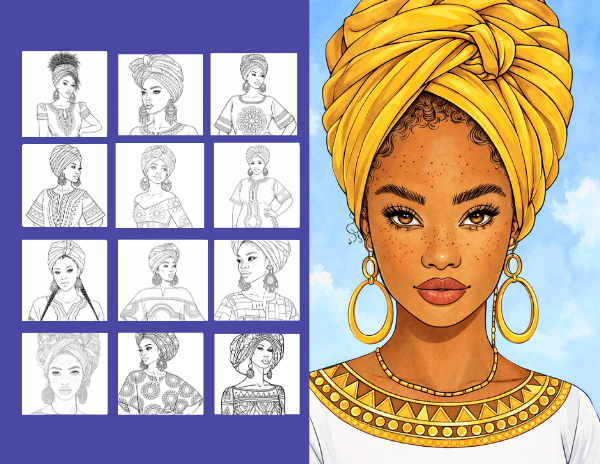
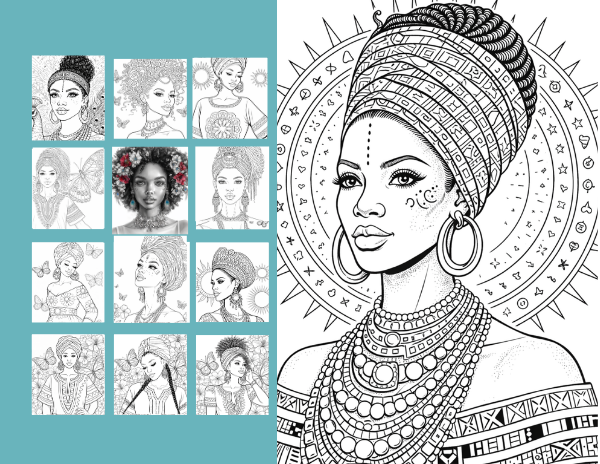
The 33-page collection offers significant variety within a cohesive aesthetic. Natural hair is celebrated across a full spectrum of styles: tight coils that spring outward from the crown, flowing locs adorned with flowers, voluminous afros that fill the frame, elegant twists and updos threaded with botanical elements. Each portrait also has a distinct emotional quality — some pages feel celebratory and bold, others more contemplative and serene.
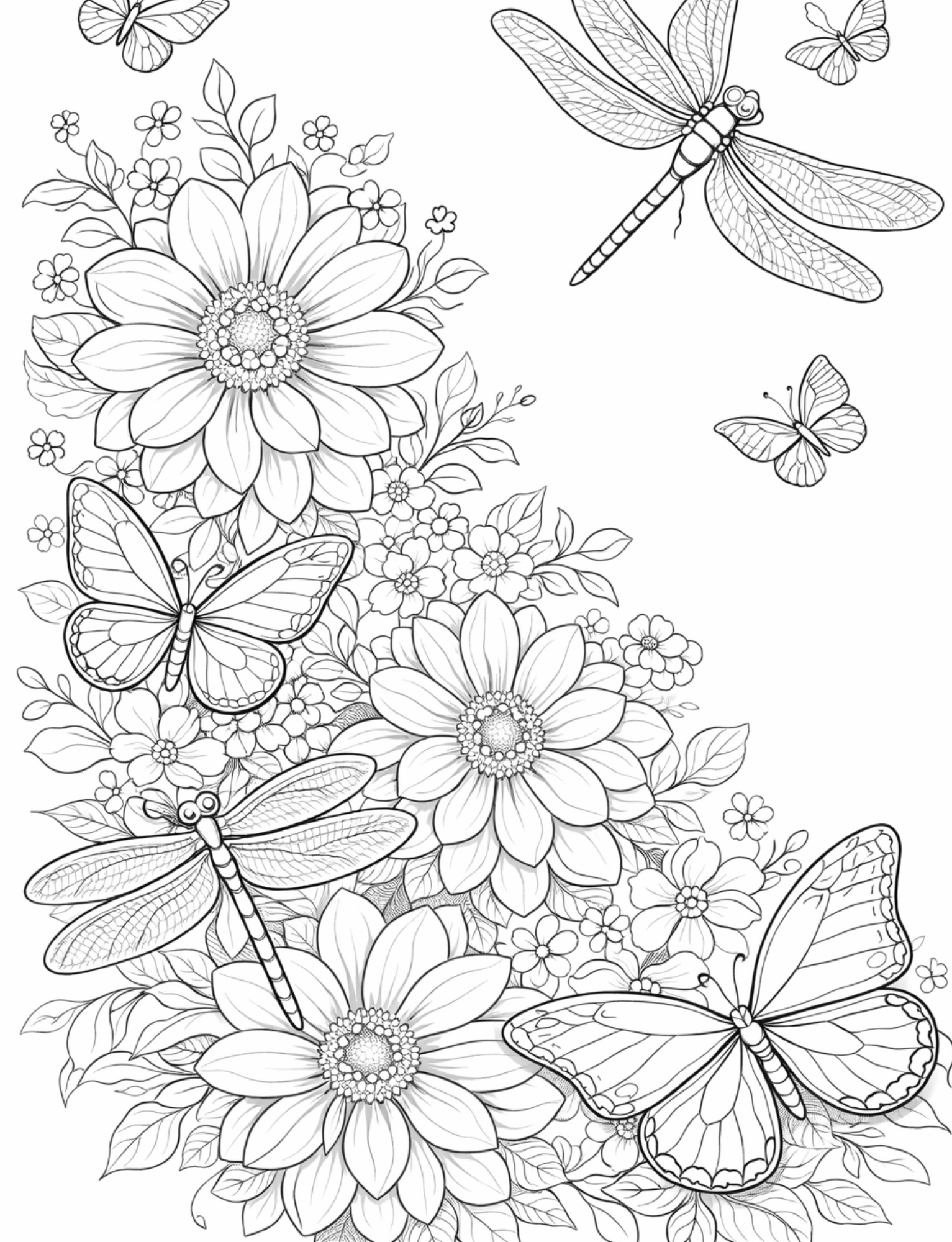
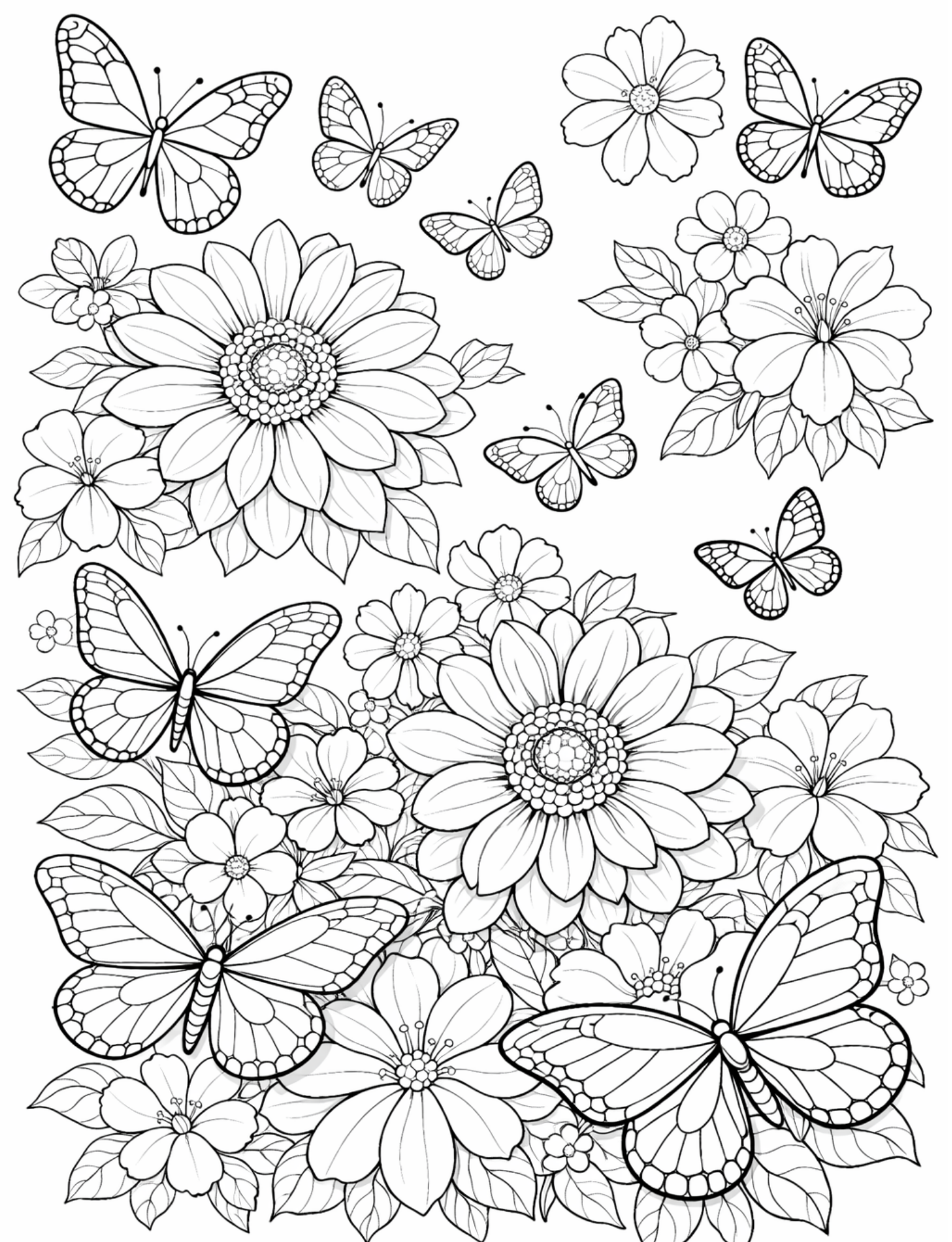
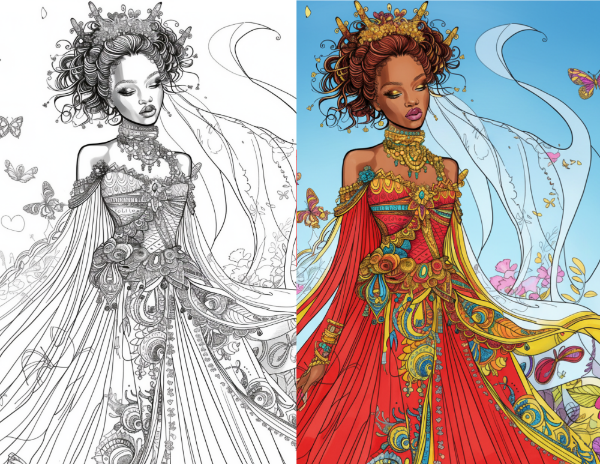
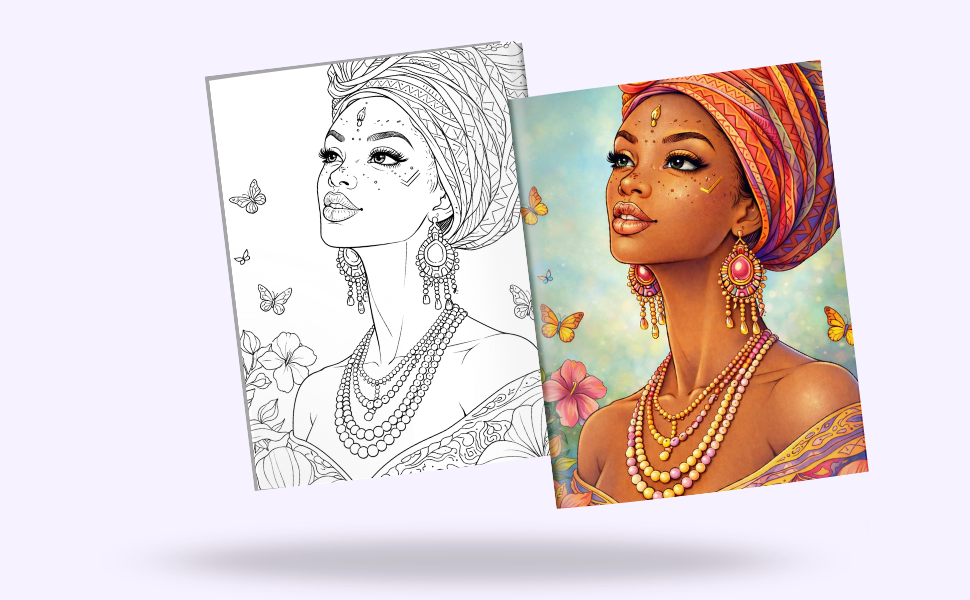
Butterfly elements appear throughout as both compositional frames and symbolic motifs. In some pages, butterfly wings extend behind a woman like a magnificent cloak. In others, a single butterfly rests in the hair among flowers. The floral elements range from elaborate crown headdresses to climbing garden vines that weave through the background. The variety ensures that even after 33 pages, the collection never feels repetitive.
Coloring Black Women's Portraits — Skin, Hair, and Detail Techniques
The most rewarding technical skill to develop for these pages is skin tone layering. African American skin tones require warm-spectrum pencils and careful layering to achieve depth and luminosity. Begin with a midtone caramel or golden brown as your base layer across all skin areas. Build toward darker tones in shadow areas — under the chin, in the eye socket creases, alongside the nose — using richer browns and finally a deep espresso or dark umber for the deepest shadows.
Natural hair is both a technical and expressive challenge. The key is directional mark-making — drawing or applying color in the direction the hair grows rather than randomly. For tight coils, use small circular motions. For locs, use long parallel strokes with occasional texture variations. For afros, use outward strokes from the center of the head. A deep navy or midnight blue underlayer beneath your brown hair tones creates the blue-black sheen that African American hair naturally has in bright light.
The Emotional Experience of Coloring Black Women Portraits
Adult coloring has documented therapeutic benefits: reduced cortisol, lowered anxiety, improved focus, and the meditative benefits of sustained attention on a simple, repetitive task. When the subject of that coloring is a portrait — a person whose beauty you're investing creative time and care into — the emotional dimension deepens. You develop an artistic relationship with the portrait over the course of a coloring session that feels genuinely connected.
For African American colorists, this connection is further enriched by cultural resonance. Spending an hour carefully rendering the natural hair of a Black woman — honoring its texture, its volume, its beauty — is an act of cultural affirmation. For non-Black colorists, it's an act of empathetic artistic engagement — an investment in understanding and celebrating beauty that may differ from your own. In both cases, the experience is richer and more meaningful than abstract pattern coloring.
Building Your Collection of Black Woman Coloring Pages
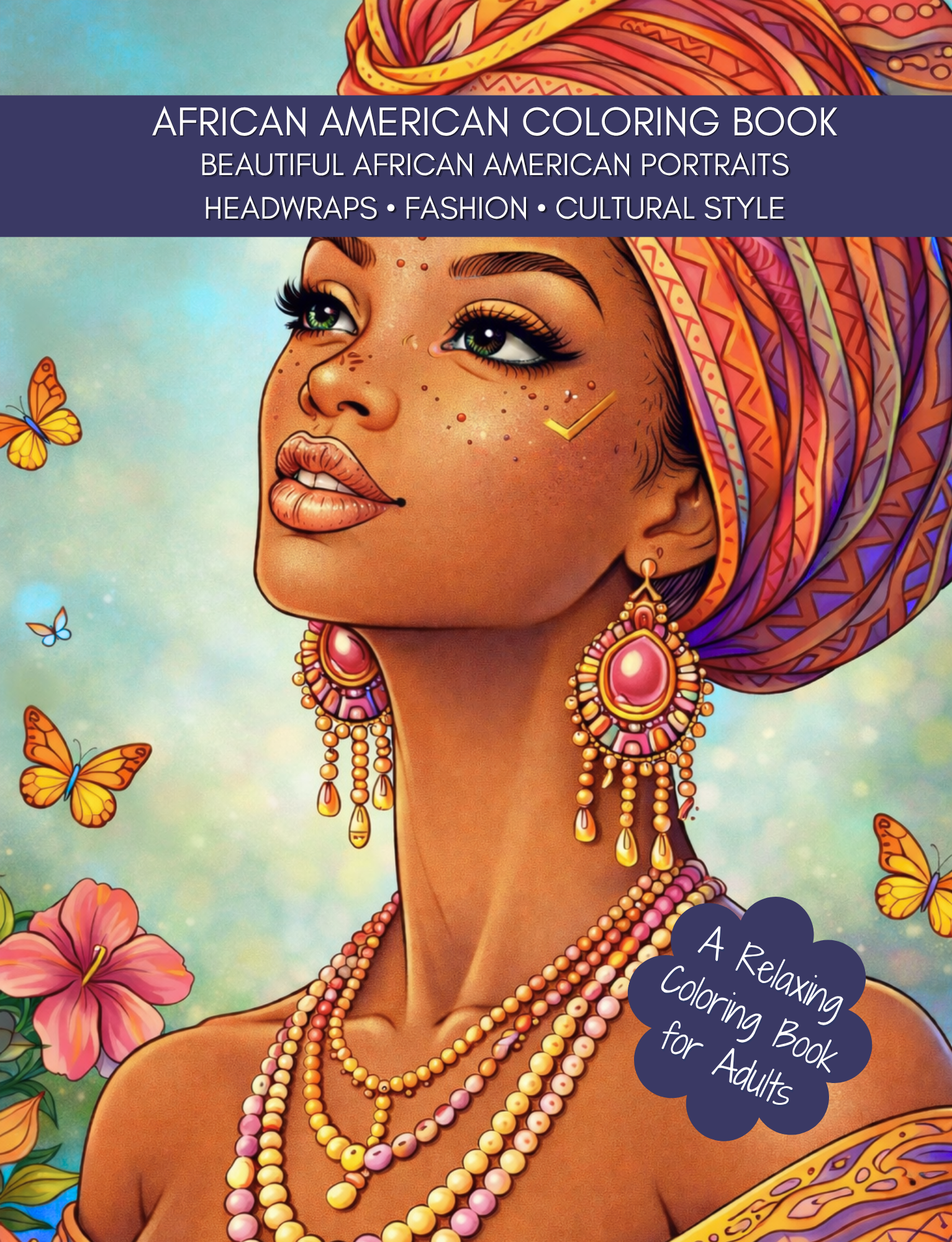
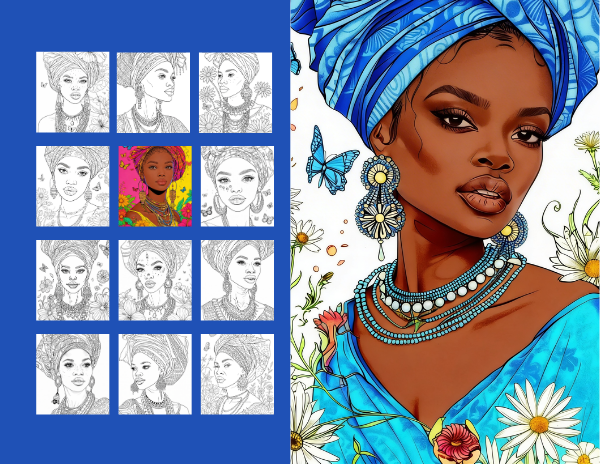
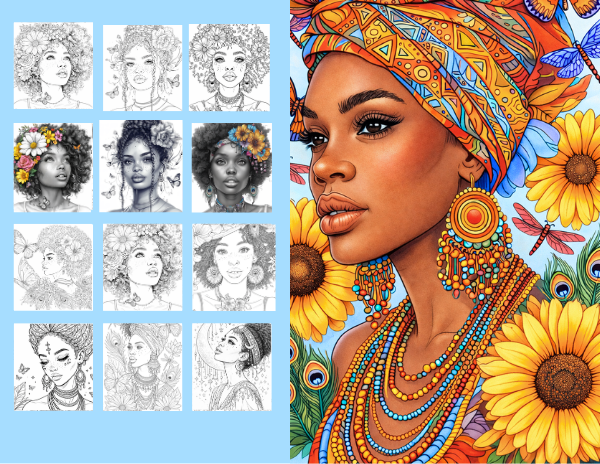
The Butterfly & Beauty series offers nine volumes, each with its own visual theme, giving you access to over 270 pages of Black woman portrait coloring art. Building a complete digital collection of all nine volumes at $2.99 each is an extraordinary value — a sustained coloring library at a fraction of what physical books would cost. Many colorists work through volumes in sequence, noticing how their skill and confidence develops from the first pages of volume one to the more complex designs in later books.
Physical books are also available through Amazon for colorists who want the traditional book experience. Owning both formats — digital for daily coloring and physical for special occasions and gifting — is a popular approach among fans of the series. The physical books also make beautiful additions to a creative home library, displaying well on a bookshelf alongside art books and creative reference materials.